Potential trafficking victims in Cambodia face detention and deportation
Frontline practitioners in Cambodia warn survivor protection gaps are leading to further harm, the U.S. TIP Report draws mixed responses to its new rankings, and a European Parliament event highlights the rights of people working at sea.
People leaving scam compounds in Cambodia are still being processed as immigration violators or detained, rather than systematically identified as potential trafficking victims, according to civil society practitioners working on the ground. The reports come amid the release of the 2026 U.S. Trafficking in Persons (TIP) Report, which again ranks Cambodia at Tier 3, the lowest level, citing allegations that senior officials profited from trafficking in scam centers and protected operations.
International pressure, including sanctions and restrictions targeting individuals and entities linked to scam operations, has contributed to significant disruption to compounds across Cambodia and the wider region. Combined with a domestic enforcement campaign, it has left many of them empty or operating at reduced capacity. As more people leave these centers, however, protection systems have failed to keep pace. Despite growing international recognition of trafficking linked to online scamming, practitioners warn that gaps in accountability and the implementation of protection measures continue to leave survivors without timely or adequate assistance.
Although numbers have not been confirmed, frontline sources estimate that thousands of survivors could remain in Cambodia, with civil society teams continuing to receive requests for help from new individuals on most days. However, practitioners say many people leaving compounds are still not being formally recorded as trafficking victims, potentially limiting their access to protection and leaving them vulnerable to criminal charges.
The typical exit process reportedly involves an immigration interview, a waiver of visa-overstay fees, and an exit stamp classifying individuals as immigration violators, which can carry a five-year ban from returning to Cambodia. Although observers say that overstay-fee waivers are being applied in some cases, repeated warnings that the arrangement may end are creating pressure to leave, potentially increasing dependence on intermediaries offering emergency travel documents, as well as the risk of exploitation.
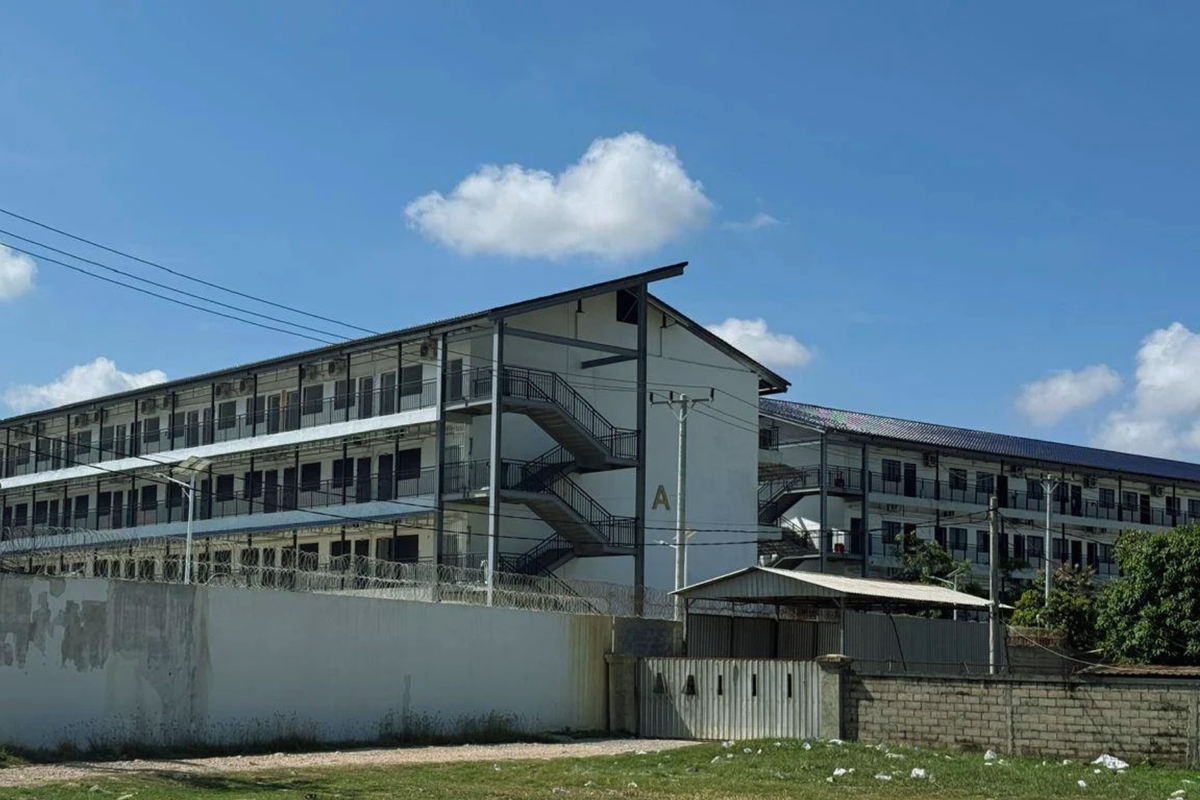
Concerns have also emerged over a former scam compound outside Phnom Penh, known as Mango Park 2, that practitioners say appears to have been converted into an immigration detention center. Civil society groups report being denied access to the site, although some remain in telephone contact with detainees, who describe extremely crowded conditions and inadequate access to medicine. According to sources, some detainees remain there until funding is found for a flight out of Cambodia. Practitioners have also described cases in which people taken for immigration interviews from shelters were reportedly transferred to Mango Park 2 rather than returned to their accommodation, and fear that individuals without the correct paperwork may also be detained.
Furthermore, civil society groups say they are in contact with several people in criminal detention who appear to be survivors of trafficking and are not receiving due process, with some cases involving human-trafficking charges or prolonged detention. There are concerns about a lack of access to lawyers, interpretation, and consular assistance, with some detainees reported to be in particularly vulnerable situations.
For those who do return, a flight home is rarely sufficient. Practitioners describe survivors arriving without money, onward transport, family support, or access to healthcare and mental-health services. Stigma and limited livelihood opportunities can leave these survivors vulnerable to renewed exploitation, and the risk of re-trafficking remains acute.
Meanwhile, the geography of scam operations appears to be shifting. Although large compounds along the Cambodia–Thailand border have reportedly closed or been destroyed, sources describe continued activity in Poipet and a recent raid involving approximately 400 people at one site. They also report movement toward smaller sites and condominiums in Phnom Penh, and towards the Cambodian side of the Cambodia–Vietnam border.
One source reports that scam operations in Cambodia’s capital appeared to have relocated shortly before the recent International Conference on Combating Online Scams, which was hosted by the Cambodian Government in Phnom Penh to promote international cooperation against cyber-scam activities. The timing, the source suggested, raises questions about the extent of official awareness of, or control over, the operations.
Currently, official pathways to identification and assistance remain extremely limited, as does support for civil society. Frontline groups are struggling to meet victims’ needs, with one team saying they are relying heavily on personal funds and crowdfunding to support survivors, and are nearing the limit of their resources.
With thanks to Nathan from The Eyewitness Project and to all our partners in Cambodia for supporting this feature and for their ongoing work on the ground.
Here’s a roundup of other noteworthy news and initiatives:
The U.S. State Department has published its 2026 Trafficking in Persons (TIP) Report, more than three months after its statutory deadline, with changes to country rankings drawing contrasting responses. Ghana’s upgrade was welcomed following increased prosecutions and victim identification, while Hong Kong rejected its downgrade, disputing the U.S. assessment of its anti-trafficking efforts. Malaysia retained its Tier 2 classification despite persistent concerns over excessive recruitment fees and the lack of prosecutions against employment agencies.
And a webinar on 19 October will review the TIP Report and examine how this year’s findings differ from previous editions. The discussion will bring together experts and political scientists including a former report contributor and a former State Department official involved in its preparation, exploring what the latest changes mean for anti-trafficking policy worldwide.
The UK Government has introduced new visa rules allowing formally recognized victims of modern slavery on Skilled Worker visas to leave abusive sponsors and take up any lawful employment without jeopardizing their immigration status. The change addresses a longstanding barrier for exploited migrant workers, particularly in the care sector, who previously risked losing both their immigration status and income by leaving an employer.
A conference at the European Parliament last week brought together fishing industry representatives, trade unions, and rights organizations to examine forced labour in global seafood supply chains and the need for stronger protections for workers at sea. Research presented at the event found that 94 per cent of fishers interviewed in the Philippines, Indonesia, Cambodia and Fiji had experienced wage theft, while an Indonesian survivor described working aboard a vessel that did not dock for 16 months. Participants highlighted limited ratification of the ILO Work in Fishing Convention and called for stronger labour standards in EU seafood imports.
A new article published by OnLabor explores the ways in which countries outside the United States could use their own laws to challenge forced labour within U.S. supply chains, particularly prison labour. Focusing on Canada, the article argues that existing import bans on goods produced through forced or prison labour could be used to restrict U.S. products, while civil litigation, competition law, and financial crime legislation offer additional avenues for accountability. It also highlights how legal tools promoted by the U.S. to address forced labour overseas could be applied to exploitation within its own borders.
A BBC investigation documents the way in which Myanmar’s military conscription system has fueled abductions, extortion, and the alleged sale of young men between local administrations struggling to meet recruitment quotas. Drawing on leaked orders and interviews with affected families, the reporting describes how officials and intermediaries profit from forced recruitment, while wealthier individuals can pay to avoid service and poorer people are disproportionately targeted. In one case, police reportedly refused to register a human trafficking complaint because the victim had not been taken abroad.
Germany’s anti-trafficking network KOK will present its latest report on trafficking and exploitation in Germany at a German-language online event today. The report documents 999 cases in 2025, an increase of 131 from the previous year. The session will share key findings and trends reported by specialist support organizations, followed by a discussion and Q&A.