Reforms to the systems that drive exploitation must be shaped by survivors
Freedom Collaborative contributes to a UN forum on anti-trafficking legislation, the Philippines steps up its efforts to end forced labour, and GI-TOC explores the links between Vietnamese migrant smuggling and wider exploitation.
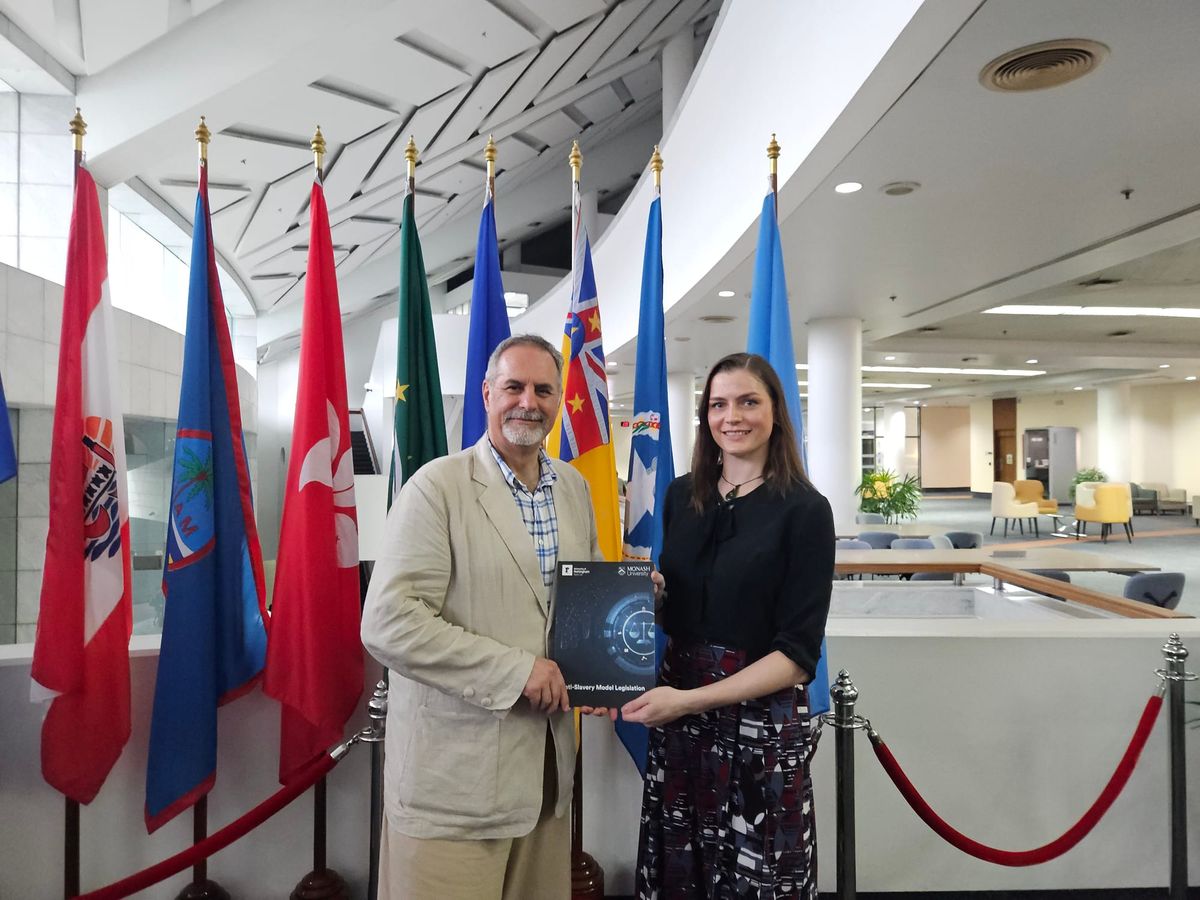
Freedom Collaborative participated in the Multi-Stakeholder Forum on Tackling Human Exploitation through Domestic Legislation in Bangkok last week, convened by UN Special Rapporteur on contemporary forms of slavery and trafficking in persons Katarina Schwarz. The forum brought together civil society, survivor advocates, migrant-worker organizations, UN agencies, national human rights institutions, and regional actors to inform the Special Rapporteur’s upcoming global consultation on domestic legislation relating to slavery, forced labour and trafficking.
The forum called for governments to look beyond criminal law and address the wider systems that create and sustain vulnerability, including labour migration and recruitment systems, immigration and work-pass regimes, and trade and business practices. Participants further noted that understanding how these systems operate – and how they can be changed – requires the expertise of survivors who have experienced them first-hand and must have a meaningful role in shaping the response.
Contributors repeatedly stressed that people with lived experience should be recognized as experts on exploitation systems and solutions, rather than engaged primarily as witnesses expected to retell traumatic experiences. Freedom Collaborative’s Head of Partnerships, Mallika Karunan, highlighted how easily survivor participation can become tokenistic, noting the way in which survivors may be invited to speak as a form of checkbox inclusion, without adequate preparation, compensation, long-term support or clarity about how their contributions will influence decisions. She also pointed to the risks of repeatedly relying on the same “well-spoken” survivors while overlooking the ongoing trauma, instability and practical barriers that can make sustained engagement difficult.
Making that participation meaningful also requires sustainable funding, governance support, and other forms of organizational infrastructure for survivor-led groups. Freedom Collaborative stressed that, without these foundations, survivor-led advocacy can remain precarious, while survivors themselves may remain exposed to further exploitation, including within advocacy spaces intended to support them.
The forum further underscored that genuine engagement depends on basic protections, and victim identification and protection from criminalization were identified as baseline conditions for survivor inclusion. When people are not recognized as victims, or are punished for acts connected to their exploitation, they may be unable or unwilling to seek assistance, report abuse, or participate in policy processes. Particular attention was given to the non-punishment principle for people trafficked into forced criminality, including cyber-scam operations, with participants calling for clearer legal guidance and stronger implementation to ensure survivors are not prosecuted for offenses they were compelled to commit.
Alongside these discussions, the forum saw the launch of the Anti-Slavery Model Legislation and the Guide to Domestic Legislation on Prohibited Forms of Human Exploitation, which are intended to help states review and strengthen domestic legal frameworks on slavery, servitude, forced labour, and related practices. Presenters observed that, despite international commitments, roughly half of states lack standalone penal sanctions for slavery or forced labour, while more than 90 per cent lack criminal-law prohibitions on servitude.
Legal reform cannot be confined to criminal offenses when exploitation is enabled by systems governing migration, recruitment, employment, business, family life and access to essential services, speakers noted. Changing those systems requires more than legislation on paper; it requires an understanding of how they operate in practice, including where they fail and how their failures are experienced.
Survivor inclusion is therefore not one element of a broader reform agenda, but essential to the agenda itself. Survivors hold knowledge that cannot be replicated through policy analysis alone: knowledge of the systems, practices and converging pressures that enabled their exploitation, as well as where interventions succeed or fail. If efforts to dismantle the wider systems driving exploitation are to be effective, that expertise must be treated not as an optional perspective, but as a source of knowledge and leadership at the heart of reform.
Here’s a roundup of other noteworthy news and initiatives:
The Philippines has developed a national roadmap to accelerate action on forced labour, child labour, human trafficking, and modern slavery as part of its bid to become an Alliance 8.7 Pathfinder country. Developed with government agencies, worker and employer organizations, civil society, and survivor networks, the roadmap identifies priorities including stronger data and coordination, survivor-centered case management, institutional capacity, legal reform, and private-sector accountability, and is expected to be submitted to the Alliance 8.7 Secretariat later this year.
The New South Wales Anti-slavery Commissioner has called on the Australian Government to build on the state’s existing “reasonable steps” framework as it considers a new criminal offense for companies that fail to prevent modern slavery in their supply chains. The submission supports stronger corporate accountability but argues that any new federal regime should focus on the practical steps organizations take to identify, manage and remediate risks to people, rather than creating a competing due diligence standard.
The Global Initiative Against Transnational Organized Crime (GI-TOC) has published a new report examining the way in which Vietnamese migrant smuggling to Europe can develop into a wider system of debt-based exploitation. It traces the role of môi giới brokers in connecting recruitment, financing, documents, transport and employment, finding that debts accumulated before and during migration can later be used to control migrants through forced labour, forced criminality, and sexual exploitation, and calls for responses that target the organized crime business model rather than migration itself.
A global survey by Swedwatch, the European Coalition for Corporate Justice, and the Business and Human Rights Centre finds that organizations working on business and human rights have lost an average of 40 per cent of their funding since 2024, with 13 per cent expecting to close if the situation does not improve. The impact is particularly severe among Global South respondents, which reported average cuts of 49 per cent, while the survey warns that shrinking resources for civil society could weaken independent monitoring, support for affected workers and communities, and efforts to hold companies accountable.
Malaysia has begun the first phase of a plan to return 5,000 Myanmar nationals, with 1,476 people scheduled for deportation today. Amnesty International Malaysia and Asylum Access Malaysia have condemned the move, warning that those returned face serious risks of persecution and other harm amid the continuing conflict in Myanmar, and arguing that the deportations risk violating the principle of non-refoulement.
The Global Alliance Against Traffic in Women (GAATW) will host a webinar on 8 October examining the application of the non-punishment principle to trafficking for forced criminality across ASEAN and Europe. Drawing on two recent regional reports, the discussion will explore why trafficked people continue to be treated as offenders despite existing legal protections, and how gender, migration status, ethnicity and other structural inequalities influence who is recognized as a trafficking victim and who is punished.
Israeli workers’ rights organization Kav LaOved has launched a crowdfunding campaign as it faces significant funding challenges that threaten its ability to sustain its work. The organization provides information, assistance and advocacy for workers including Palestinians, migrant workers, refugees and asylum seekers, as well as low-income Israelis, and is asking labour rights networks, partner organizations, and supporters to help share and support the campaign.