Anti-trafficking measures must adapt to the evolution of scam operations
Freedom Collaborative presents a new briefing paper at UNTOC COP13, the European Commission sets out priorities for combating exploitation, and a report links labour abuses in military production to the war against Ukraine.
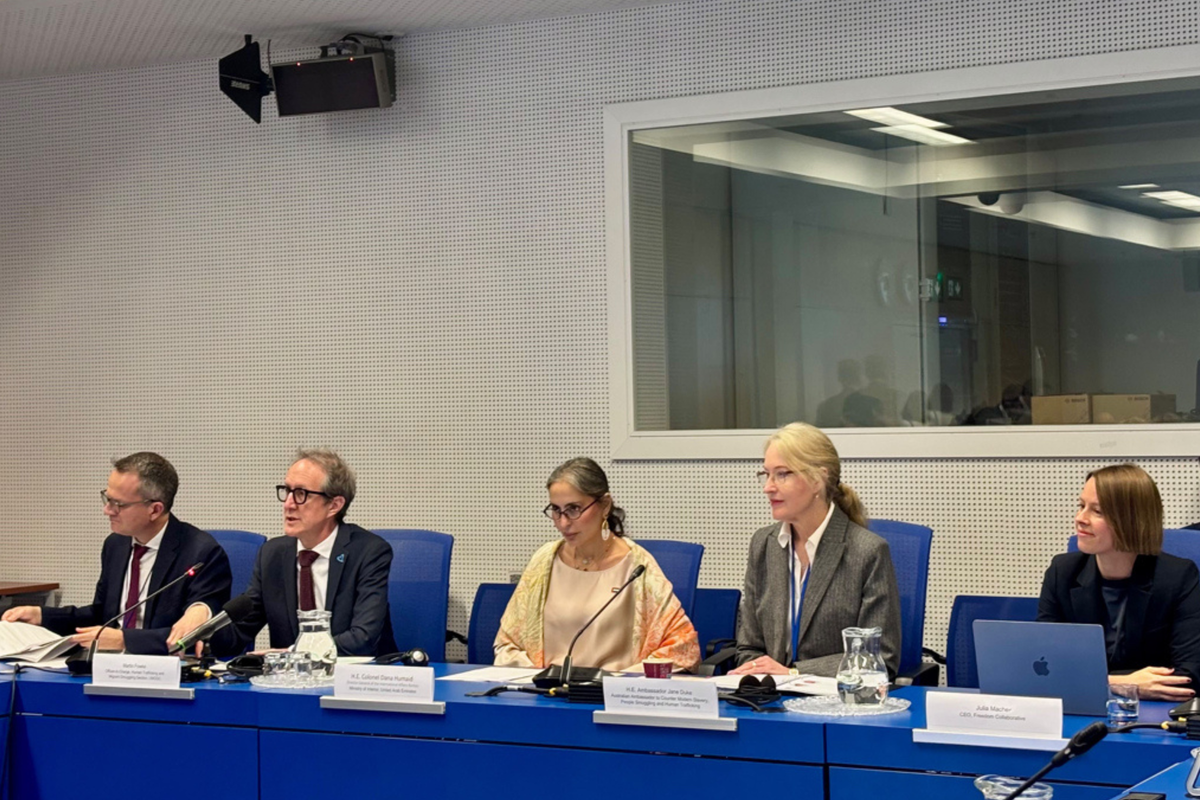
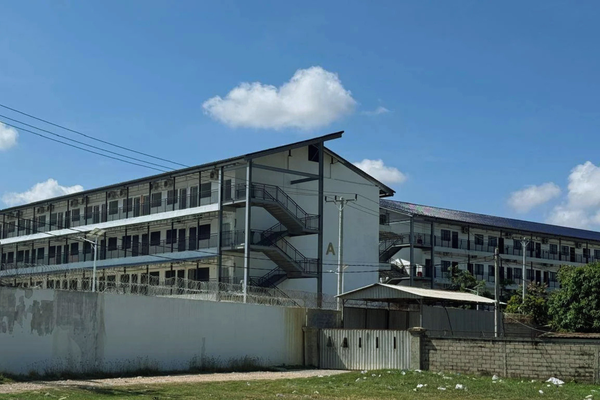
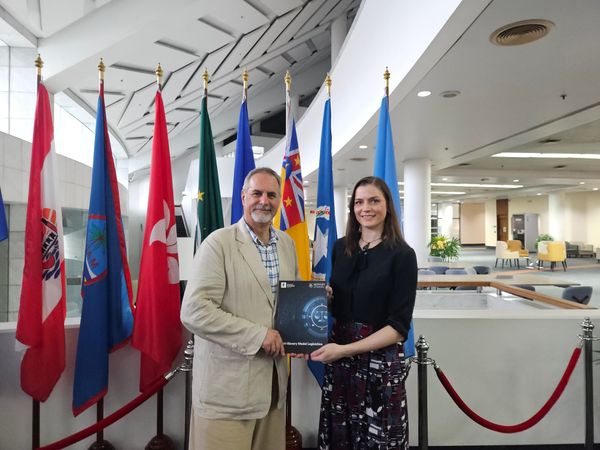
Closing a scam compound but leaving the underlying network intact means operations can move to smaller, less visible locations while utilizing the infrastructure developed around the compound industry. At a side event yesterday at the 13th Session of the Conference of the Parties to the United Nations Convention against Transnational Organized Crime (UNTOC COP13), Freedom Collaborative presented findings from our newest briefing paper, Adapting to Place, on the expansion of scam operations into new regions and their integration into local criminal economies.
The event, “Adapting and Expanding: The Evolving Organized Crime Ecosystem of Scam Trafficking”, was hosted by Australia and co-organized by Freedom Collaborative and Humanity Research Consultancy (HRC), with UNODC’s Martin Fowke as moderator. The discussion built on our 2024 side event at COP12. Australia’s anti-trafficking ambassador, Jane Duke, gave opening remarks, followed by Colonel Dana Humaid, Director General of the International Affairs Bureau at the UAE Ministry of Interior, who shared the UAE perspective. Both emphasized that protecting victims must remain at the heart of response efforts, a point that resonated throughout the discussion as panelists stressed the importance of looking beyond the scams themselves to recognize the exploitation of the individuals caught up in them.
Presenting the briefing, Freedom Collaborative CEO Julia Macher emphasized that the spread of scam operations does not in itself establish that trafficking is taking place, just as the absence of a compound does not mean that coercion or exploitation is not present. Although networks replicate methods, personnel, and technology across regions, their integration into local criminal networks, labour markets, and infrastructure shapes how operations function and how exploitation appears. The result is a range of overlapping operational forms, from large compounds to residential operations, registered businesses and remote work, rather than a series of sequential stages.
Some of the hardest cases to identify may look entirely lawful or leave no physical site to inspect, she said. These include operations run through registered businesses, recruitment linked to immigration detention, and people coerced into recruiting others who are then prosecuted as offenders. While the indicators of exploitation remain unchanged, the challenge is recognizing them in less familiar settings. Increasingly, they come to the attention of immigration and detention authorities, company registration systems, criminal justice units, and financial institutions, rather than specialized anti-trafficking units.
UNODC contributed its analysis of Latin America and the Caribbean to the briefing, presented by Panagiotis Papadimitriou. In parts of the region, scam operations appear to be integrating into existing territorial criminal structures rather than operating from enclosed compounds, he noted, and control exercised through a presence in local communities can make exploitation harder to recognize and reach. Meanwhile, the newer recruitment of adults into online fraud, alongside the long-standing recruitment of children, and new forms of exploitation, such as coercion into laundering the proceeds of online scams, present fresh challenges.
While international scrutiny and domestic enforcement have disrupted some of the larger scam compounds across Southeast Asia, reports suggest that operations are now emerging in new regions. This trend is often described as the start of a global expansion, but Eric Kasper, presenting findings from HRC’s latest Scam Compounds Brief, explained that scam operations have been documented in 45 countries over at least 16 years, and their appearance in new locations continues a long-standing pattern. Large compounds should therefore be understood not as the origin of the problem, he said, but as a more industrialized phase of transnational criminal activity, accompanied by an escalation in coercion and violence against workers.
As enforcement pressure has displaced operations from Southeast Asian hubs to South Asia, Central Asia, Africa, and the Pacific, smaller scam operations are able to draw on services developed around the compound industry, including recruitment, data, websites, and money laundering. Chinese-language online marketplaces, including Telegram channels, reportedly bundle some of these services. Experienced organizers are establishing operations in new locations, sometimes re-recruiting survivors who had previously been trafficked into scam work.
Speakers warned that responses which focused primarily on physical sites or arrest figures risk overlooking both the networks behind the operations and the people exploited within them. The briefing therefore recommends assessing the person rather than the setting, so that neither the type of site nor the paperwork determines victim status or liability. It calls for screening procedures in locations in which potential trafficking victims are already encountered, including in detention, removal, and criminal processing, before they are prosecuted, and for following the money by form, since different operational models may leave different financial signatures that red-flag guidance could reflect. Finally, it argues that the effectiveness of a response should be judged not simply by how many sites are raided or people arrested, but by whether it disrupts the networks behind the exploitation and improves outcomes for those affected.
Here’s a roundup of other noteworthy news and initiatives:
The European Commission has published a new strategy to combat human trafficking, following data showing that more than 20,000 victims were registered across the EU in 2023 and 2024, a 16.1 per cent increase. The strategy sets out six priorities, including improving the detection of online exploitation, strengthening cooperation with businesses and labour inspectors, disrupting organized crime networks, and addressing trafficking risks linked to migration and crises. It also proposes a European business coalition against trafficking, and stronger protections for victims.
A new analysis by the Jerusalem Center for Security and Foreign Affairs alleges that Iran’s Islamic Revolutionary Guard Corps benefits from sex trafficking, forced labour, and the coercive recruitment of Afghan and Pakistani refugees and children for military purposes. The analysis argues that trafficking networks operate with the involvement or protection of state officials, while existing international sanctions largely overlook the financial benefits derived from exploitation. It calls for targeted sanctions against officials allegedly involved in trafficking, and stronger monitoring of illicit financial flows linked to these activities.
Germany's anti-trafficking network KOK has published a new report documenting 999 cases of trafficking and exploitation handled by participating specialist support centers in 2025, an increase of 131 from the previous year. Women accounted for 80 per cent of those receiving support, and three cases of organ trafficking were recorded for the first time. Only 36 per cent of the cases analyzed involved a documented criminal investigation, while funding shortages have forced some support centers to reduce services. KOK calls for more reliable funding, earlier victim identification, and stronger access to protection independent of criminal proceedings.
A new report by the Center for Strategic and International Studies and the George W. Bush Institute highlights alleged human trafficking and serious labour abuses at Russia’s Alabuga drone factory, which produces Iranian-designed drones used in the war in Ukraine. The research examines North Korea’s state-sponsored trafficking practices and the roles of China, Iran and North Korea in supporting Russia’s military production, drawing attention to the links between labour exploitation, international supply chains, and the ongoing conflict.
Free the Slaves and Emmanuel World Children Foundation have published a report drawing on the experiences of women who survived sex trafficking and returned to Nigeria, to examine what successful reintegration requires. The research finds that vocational training alone is insufficient without stable housing, sustainable livelihoods, mental and physical healthcare, and supportive relationships. It calls for more comprehensive survivor-centered approaches and long-term follow-up, highlighting how short-term or fragmented support can undermine recovery and leave survivors vulnerable to re-exploitation.
Join the Thomson Reuters Foundation for a webinar on 22 October, to explore the ways in which civil society organizations can strengthen their resilience amid shrinking civic space, funding cuts, regulatory pressures, and digital risks. Drawing on lessons from the Civil Society Resilience Accelerator pilot, the discussion will bring together organizational development specialists and civil society leaders to share practical experiences of tailored, partner-led support, and explore how organizations can better respond to changing challenges and priorities.