Accountability must reach the architecture behind Cambodia’s scam compounds
Enforcement has not dismantled the protective structures enabling Cambodia’s scam industry, investigators identify trafficking victims in Europe's restaurants, and a policy brief looks at the role of AI in exploitation and responses to it.

A year of unprecedented international pressure has disrupted Cambodia’s scam industry and forced many of the country’s most notorious compounds to close or become inactive. Yet a new report shows that the political and financial structures that enabled them remain largely intact, raising broader questions about the measures required to hold the enablers of the industry accountable and dismantle the system behind these operations.
In a new report for the National Democratic Institute (NDI) and Inca Digital, analyst Jacob Sims introduces the concept of “scam state architecture” to describe the political, financial and territorial structures that have enabled Cambodia’s scam economy to become embedded and protected.
International pressure has produced significant disruption for Cambodia’s scam industry through sanctions and indictments, action by China against prominent Cambodian figures, and a sustained domestic enforcement campaign. Many compounds now sit empty or are not operating at anything close to their previous scale. However, the report distinguishes between disrupting the industry’s physical infrastructure and dismantling the political and financial structures that enable it, finding that accountability measures have reached foreign actors and visible operations more readily than the domestic networks that sustain them, with little evidence of structural reform to the protection networks underpinning the system.
The risk, the report argues, is not simply that closed compounds reopen, but that the networks behind them adapt – relocating operations, moving people and capital, or operating through proxies – and that disrupting the visible operation does not necessarily dismantle the system that sustains it.
This analysis also complements Freedom Collaborative’s work on how the framing of scam operations shapes the response. Our previous assessment examined what can be missed when fraud and enforcement are prioritized, particularly the trafficking and protection dimensions of these operations. This report approaches the problem from another direction: if enforcement is the response, what does it actually need to address to achieve meaningful accountability? Its answer shifts attention from individual compounds and operators towards the relationships and structures that allow the wider system to function.
Another central finding is the role of local actors in making accountability possible. Cambodian journalists, researchers, rescue networks, and civil society organizations have documented abuses, traced ownership and financial relationships, and built much of the evidence base on which international action depends. The report argues that independent media, civic space, and local investigative capacity should therefore be treated as part of the accountability infrastructure itself, and protected accordingly.
The study also calls for continued scrutiny of disrupted networks to see whether they reappear through successor companies, proxies or relocated sites. Durable accountability, it argues, means following the relationships connecting criminal networks to money, property, political protection, and state institutions – not simply recording that an operation has been disrupted.
Ultimately, the report makes a useful distinction between disrupting an operation and changing the conditions that allow it to operate. Its accountability lens asks not only what enforcement has stopped, but what structures, relationships and actors remain after the immediate intervention – and whether they retain the capacity to rebuild or adapt.
Here’s a roundup of other noteworthy news and initiatives:
A new report from the Global Initiative Against Transnational Organized Crime (GI-TOC) examines the expansion of Chinese-origin cyber-scam networks into South Asia, with a particular focus on the risk of Sri Lanka developing into a significant hub for scam operations. It highlights regulatory vulnerabilities that criminal networks can exploit, including weak oversight of gambling and online gambling, gaps in immigration systems, and the use of business process outsourcing operations as cover for illicit activity.
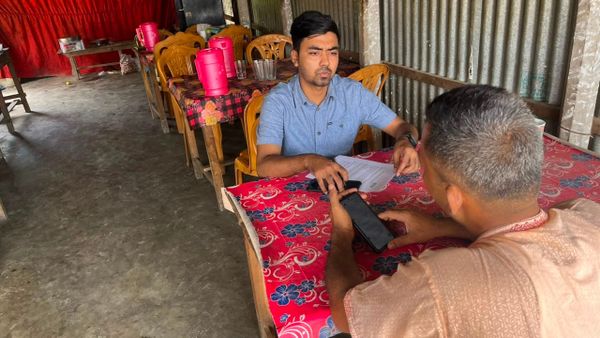
Justice & Care has published a new report examining the experiences of Bangladeshi survivors trafficked into Cambodia’s cyber-scam compounds and wider compound economy, tracing their journeys from deceptive recruitment and travel through exploitation, exit and return. Based on qualitative interviews with survivors, it found that exploitation extended beyond forced scamming to construction, manual labour and restaurant work, while survivors and their families continued to face significant debt and financial, physical and psychological harms after returning to Bangladesh.
Europol has supported a cross-border investigation into the alleged trafficking of mainly Indian workers for labour exploitation in the restaurant sector, with more than 70 potential victims identified across five European countries. Workers were allegedly recruited through a legal route intended for specialist Asian chefs, but subjected to excessive working hours, underpayment, penalty contracts, threats, and pressure on family members in India, with the suspected network estimated to have generated at least €4 million (US$4.6 million) through their exploitation.
Norwegian authorities have charged telecommunications company Telenor with complicity in crimes against humanity and sanctions violations over its operations and withdrawal from Myanmar following the 2021 military coup. The case concerns allegations that Telenor Myanmar repeatedly provided the military with sensitive customer data and later transferred sanctioned surveillance equipment as part of the sale of its Myanmar business; Telenor says it had no viable alternative to complying with military orders that placed its employees at risk, and is cooperating with the investigation. (Paywalled)
The Council of the Baltic Sea States and the Council of Europe have published a joint policy brief examining how artificial intelligence (AI) is changing both human trafficking and responses to it. It looks at uses of AI in recruitment and exploitation, including automated communications, fake profiles, fraudulent documents, and deepfakes, as well as its potential to support investigations and victim identification, while highlighting risks around bias, privacy, discrimination and over-reliance on the technology.
And Tech Against Trafficking will hold its 2026 Summit and hackathon in Seattle on 11-12 November, focusing on the responsible use of AI in anti-trafficking efforts. The event will bring together technology companies, practitioners, researchers and people with lived experience to explore AI applications, governance, and barriers to adoption, with the hackathon focused on developing practical AI-based solutions.