New research finds trafficking survivors should have more control over their stories
Models of survivor storytelling should be adapted to different regional contexts, INTERPOL calls for stronger cross-border coordination to counter child sexual exploitation, and South Korea issues guidelines to protect migrant fishermen.
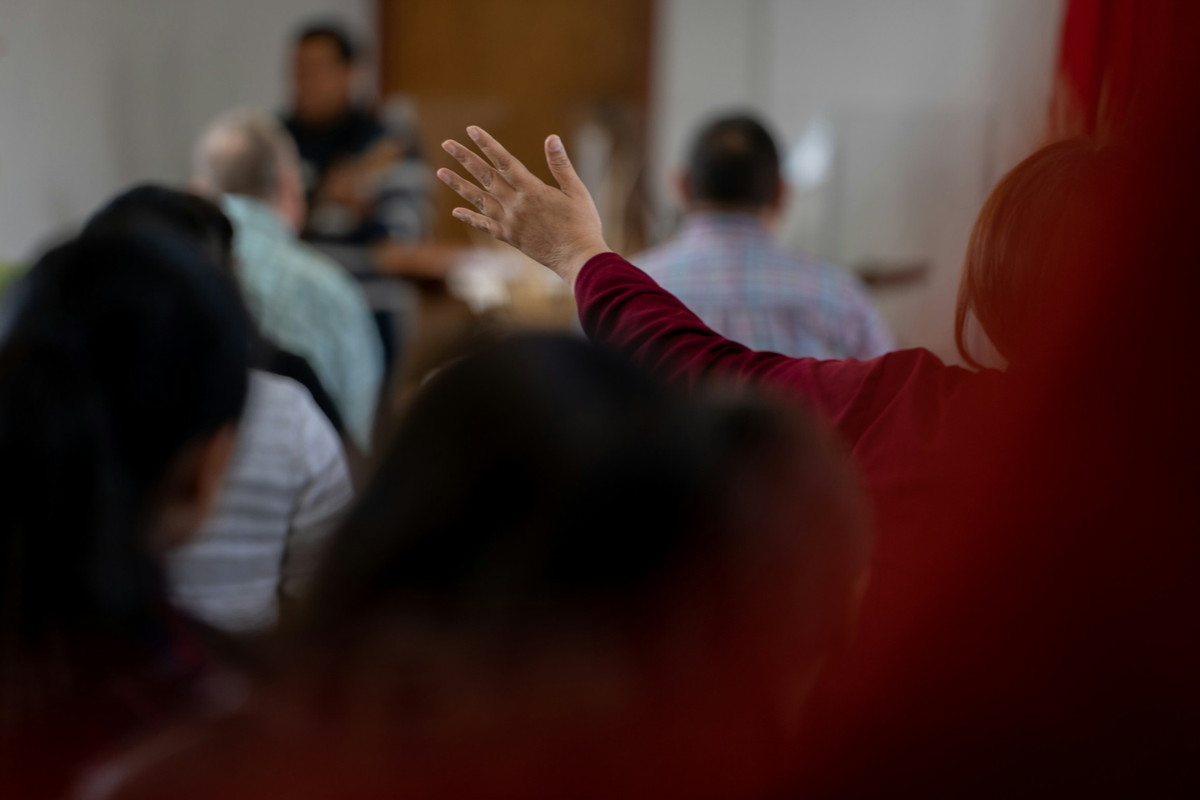
A new study of trafficking survivors in the United States and Kenya finds that survivors often want to tell their stories, but not necessarily in the ways in which organizations, audiences or the media expect. They described pressure to share traumatic details and other harms linked to public storytelling, while many preferred to focus on what helped them leave and recover, gaps in support, and wider changes needed to prevent trafficking.
Published in interdisciplinary journal Violence Against Women, the study draws on quantitative and qualitative survey data from 85 survivors and examines why they share their stories, what they experience when they do, and how storytelling practices could better meet their needs and goals.
Previous research has highlighted both the benefits and risks of sharing survivor narratives. Reports from the Modern Slavery and Human Rights Policy and Evidence Centre (PEC) have found that trafficking survivors can feel tokenized or reduced to their victimization, rather than recognized for their wider skills and expertise. Survivors have also described gatekeeping within the anti-trafficking sector, with some experiences receiving more attention than others.
The study places these concerns within a wider history of survivor storytelling which, in the U.S. and Europe, often centered the stories and advocacy of white women, while women of color and Indigenous women faced greater constraints on how they told their stories and were recognized as survivors. And yet, older traditions of storytelling by survivors of domestic and sexual violence, which have similarly focused on particular forms of white female victimhood, were at least survivor-driven and survivor-created, to meet survivors’ needs. This has not traditionally been the case in anti-trafficking work, which raises the question: what happens when storytelling models shaped by non-survivors and based on the needs of organizations are brought into global anti-trafficking projects, particularly for survivors in the Global South?
Despite different backgrounds and experiences of trafficking, survivors in both countries gave many of the same reasons for telling their stories: supporting other survivors, preventing trafficking, healing from their own experiences, and pushing for wider social change. But the opportunity to tell a story was not always empowering – some described organizations controlling who was given a platform, pressuring them to share traumatic details, changing their stories to fit a particular narrative, or expecting them to speak for free. Some survivors later experienced career and financial consequences, online harassment, or accusations that they were lying or seeking attention.
Importantly, survivors were more interested in discussing what led to their trafficking, what helped them leave and recover, what support was missing, and how their lives had changed than in recounting traumatic details – particularly survivors based in Kenya. In both countries, their main concerns were having their boundaries respected, feeling safe and supported after an engagement, and maintaining control over how their words were used.
The researchers say these findings challenge the assumption that any one model of survivor leadership and storytelling can be applied across different regions. Anti-trafficking organizations should recognize the knowledge and expertise of survivors and communities in different settings, rather than imposing Western approaches that may overlook local understandings of trafficking, recovery and leadership.
The findings also raise questions for researchers. The authors warn that publicly available survivor stories should not automatically be treated as ethically acceptable to use. Researchers should consider how a story was originally shared and whether meaningful consent was obtained.
For practitioners, the study argues that consent is not simply a yes-or-no choice. Survivors may feel pressure to share because of financial need, expectations from organizations or communities, or a desire to contribute to the sector. They recommend more substantial professional development around consent, boundaries, and the consequences of public storytelling, alongside other ways for survivors to contribute without disclosing personal experiences.
Finally, the authors highlight the need to address gatekeeping and inequality, particularly by improving access for survivors from marginalized communities while ensuring that opportunities are safe and equitable. They call for further research and more accountable approaches to survivor storytelling and public engagement.
The full study is available here – a personal, academic or employer subscription, or a one-time purchase, is required.
Here’s a roundup of other noteworthy news and initiatives:
INTERPOL has highlighted the growing global scale of child sexual exploitation, reporting that its International Child Sexual Exploitation database has helped identify around 5,800 child victims so far this year, and more than 65,000 since its launch in 2011. Marking the UN International Day of Police Cooperation yesterday, it called for stronger cross-border information-sharing and coordinated investigations, noting that child sexual exploitation, human trafficking, cybercrime, and organized crime increasingly operate across national borders.
A bipartisan group of U.S. lawmakers has asked the Department of Homeland Security for a briefing on enforcement of the Uyghur Forced Labor Prevention Act (UFLPA), due to concerns that goods linked to forced labour in China continue to reach U.S. consumers. The lawmakers are seeking information on how authorities trace products through supply chains and update the UFLPA Entity List, following the addition of more than 40 companies in July.
The New York Times has reported on a forthcoming China Labor Watch (CLW) investigation into working conditions in Shein’s supply chain, based on interviews with workers at suppliers, warehouses and corporate offices. CLW found that some garment workers put in 20 or more consecutive days without a day off and reported that working 100-hour weeks was possible, despite Shein’s supplier policy limiting working hours to 60 per week. Shein rejected CLW’s characterization of conditions and disputed the wage figures in the report. (Paywalled)
South Korea has introduced new guidelines to help inspectors and law enforcement identify trafficking and forced labour among migrant workers in the fishing industry, responding to gaps highlighted in the U.S. State Department’s 2025 Trafficking in Persons Report. Developed with labour unions and civil society, the sector-specific indicators cover practices including forced salary transfers, high-interest recruitment debt, restrictions on shore leave and internet access, and threats of blacklisting, while clarifying that initial consent to working conditions does not prevent a worker from being recognized as a victim.
The Business & Human Rights Centre (BHRC) has published a follow-up briefing to its report on migrant workers in Saudi Arabia’s renewable energy industry, finding that none of the 26 workers it re-interviewed had been offered or received remedy for previously reported abuses. Eight months after its initial investigation, workers reported that conditions largely remained unchanged. BHRC also invited the 32 companies linked to the projects to respond to its findings, with 14 providing responses by the time of publication.
An opinion piece examining trafficking during the 2026 FIFA World Cup challenges the longstanding assumption that major sporting events lead to significant increases in human trafficking. Drawing on commercial sex advertising data and law-enforcement outcomes across U.S. host cities, it points to no consistent evidence of the predicted surge and argues that trafficking detected during major events should be distinguished from trafficking caused by them, with much of the activity identified appearing to reflect existing local markets.
The Ethical Trading Initiative is offering a four-part Human Rights Essentials training series this autumn, covering human rights and business, supply-chain transparency and risk, risk management, and remedy. The online modules run from October to November and can be taken individually or as a full series.