Civil society has a critical role in strengthening EU trafficking referral systems
EU victim referral systems improve but implementation gaps remain, a Swiss court rules diplomatic immunity does not shield employers in worker disputes, and Transparentem calls for improved protections for migrant workers in Taiwan.
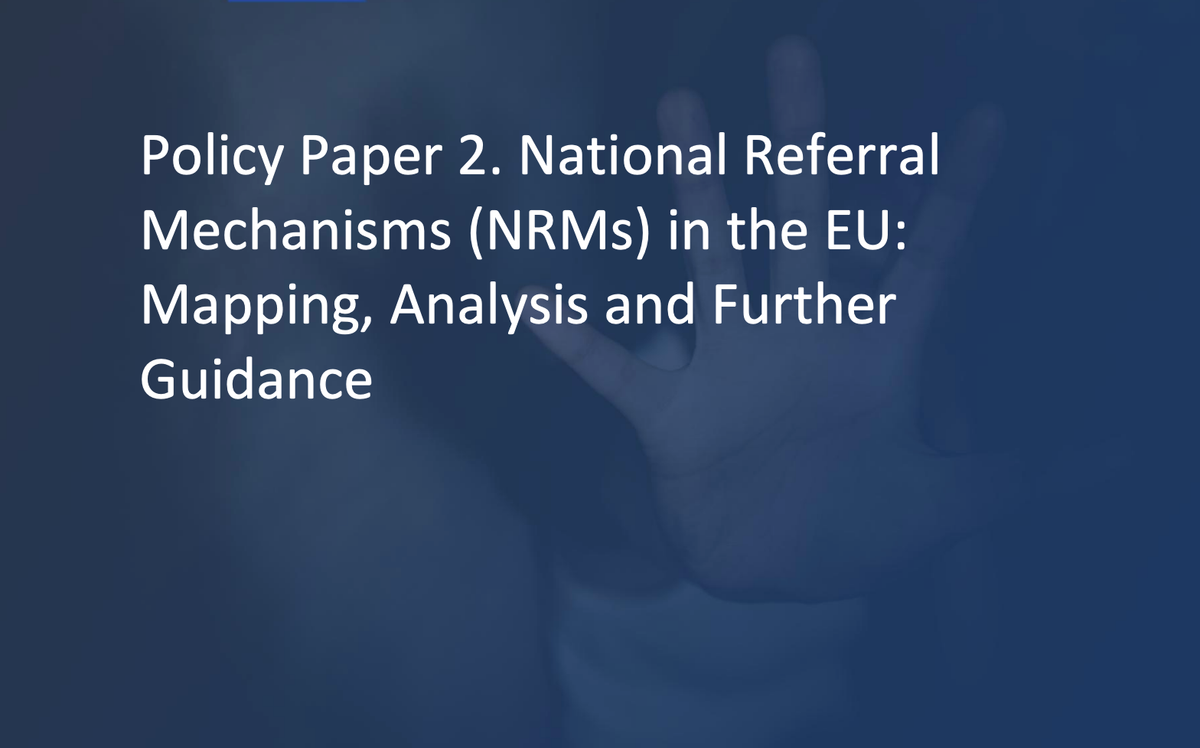
A new policy paper from the EU Anti-Trafficking Hub highlights the important role of civil society organizations in identifying, referring and supporting victims of trafficking, while examining how National Referral Mechanisms (NRMs) are developing across the European Union.
Financed by the European Commission, the paper finds that significant progress has been made in formalizing and strengthening NRMs across the 27 EU Member States, but also identifies important gaps in how these mechanisms operate in practice, including uneven early detection, limited access to longer-term support, and weaknesses in cross-border referral. Civil society organizations (CSOs) have long called for more effective NRMs, provided practical support, advocated for clear agreements among stakeholders, pushed for wider access to protection services, and developed expertise in these areas, making their experience and insights invaluable to the continued development of identification and referral frameworks.
NRMs are now established in most EU Member States and are increasingly supported by written procedures, standard operating protocols, and multidisciplinary approaches to identification, referral and assistance. This reflects significant progress towards the requirements of the revised EU Anti-Trafficking Directive, which requires states to formally establish one or more of these mechanisms and appoint national focal points responsible for the early identification of presumed victims, as well as the provision of assistance, support, and cross-border referral where appropriate.
However, the paper also highlights considerable differences across countries in terms of the legal basis, institutional arrangements, and practical implementation of NRMs. The existence of a formal framework does not necessarily translate into consistent practice, with differences in the clarity of institutional responsibilities, enforceability of procedures, and stability of arrangements. This is particularly significant for early identification, with less visible forms of trafficking, such as labour exploitation, child trafficking, and forced criminality, remaining under-detected. Furthermore, the European Commission recently announced infringement procedures against 20 Member States for failing to communicate their complete transposition of the Directive before the July deadline.
The paper further identifies challenges in the provision of long-term support. While standards of emergency assistance have improved, longer-term support, including extended accommodation, residence stability for third-country nationals, and durable reintegration can, in practice, remain conditional on cooperation with authorities, legal proceedings, or formal identification decisions. Monitoring and data collection systems are likewise developing across the EU, but tend to focus on victims identified or criminal justice outcomes rather than on how referral mechanisms themselves are functioning.
Within this context, CSOs emerge as an important component of effective NRMs. The analysis finds they are routinely involved alongside law enforcement, migration and asylum services, social and child protection bodies, labour inspectorates, and other actors, with civil society playing a particularly important role in early identification, victim support, accommodation, and cross-border continuity of care. Their involvement, however, is not always formally anchored, and cooperation can remain dependent on project-based funding or informal arrangements, raising questions about sustainability and continuity.
The same is true of cross-border referral, which the paper identifies as an area requiring further development. Cooperation already takes place through law enforcement channels, international organizations, and NGO networks, but national focal points are at different stages of development across the EU, with procedures, communication channels and follow-up mechanisms also remaining uneven. While CSOs can play an important role in bridging these gaps, drawing on established cross-border relationships and frontline knowledge, their contribution is strongest as part of a clear and functioning referral system.
The paper’s recommendations include clearer and more enforceable frameworks, greater clarity around the roles of different actors, stronger cooperation with civil society, improved early detection across all forms of exploitation, sustained access to victim support, fully operational cross-border referral structures, better monitoring and data systems, and more consistent training for frontline professionals. The development of effective NRMs is not simply a question of establishing formal structures, but of ensuring that those structures work across sectors and borders, and that the knowledge and experience of civil society organizations is reflected in how they operate.
With thanks to La Strada International for their contributions to this feature
Here’s a roundup of other noteworthy news and initiatives:
Transparentem has published a new investigation into recruitment practices at seven electronics, automotive and pump manufacturers in Taiwan, finding that migrant workers paid recruitment fees and incurred debts that placed them at heightened risk of forced labour. The report draws together repeated findings across sectors to challenge the continued reliance on corporate auditing and proposes a worker-driven model based on binding agreements between global companies and unions as an alternative approach to prevention and remediation.
Migrant Welfare Network and Fortify Rights are calling on Bangladesh and Malaysia to replace their previous migrant worker recruitment arrangements with a legally binding bilateral labour agreement, as the two governments prepare to resume recruitment of Bangladeshi workers to Malaysia. Based on new interviews with returning workers and the repeated failure of previous MOUs to prevent excessive recruitment fees, wage theft, and other abuses, they argue that reopening the corridor should be tied to enforceable worker protections and access to remedy rather than another non-binding recruitment framework.
A Swiss Federal Supreme Court ruling has opened a new route to remedy for migrant domestic workers employed by diplomats, finding that diplomatic immunity does not prevent workers from bringing employment-related civil claims against their employers. Unlike a 2022 UK ruling tied to the threshold of modern slavery, the Swiss decision applies more broadly to employment disputes regardless of the severity of the alleged violation, and is already prompting changes to Switzerland’s rules governing domestic workers in diplomatic households.
Climate disasters are driving greater risks of child marriage, teenage pregnancy, and violence against girls, and destroying the health and education services they depend on, according to a new study from Plan International. The research also identifies slow-onset drought as a form of harm consistently associated with rising rates of child marriage, yet almost entirely absent from disaster planning. The organization calls on governments and donors to keep schools open and free, fund adolescent girls’ healthcare, and do more to reach marginalized girls.
A new Monash University-led study of the FY2024 modern slavery statements of 39 major Australian financial and materials companies finds substantial gaps in what they disclose about grievance mechanisms and remediation, with companies addressing an average of just 14 of the study’s 40 assessment questions. Only five per cent disclosed remediation outcomes or whether complainants considered remedies adequate, shifting attention from whether grievance channels exist to whether companies can demonstrate that they actually deliver remedy.
A newly published open-access paper introduces AIMS-QA, an AI-assisted framework for assessing modern slavery statements beyond basic legal compliance. Its main contribution is to consolidate 473 metrics from 13 existing academic and civil-society benchmarking methodologies into a common taxonomy, while explicitly separating statutory requirements from broader stakeholder expectations, then using that structure to support scalable, human-reviewed analysis of corporate disclosures.
A training series on participatory research and lived experience engagement launches on 19 October, with the first session offering practical introductions to different approaches for working collaboratively with communities and people with lived experience. Participants who complete the full series will be eligible for a certificate.