Why forced labour linked to online scam operations is hard to identify
Our latest briefing examines the limited visibility of scam-center exploitation, new research explores the effect of scam economies on Cambodia’s communities, and modern slavery reforms advance in New Zealand and Australia.

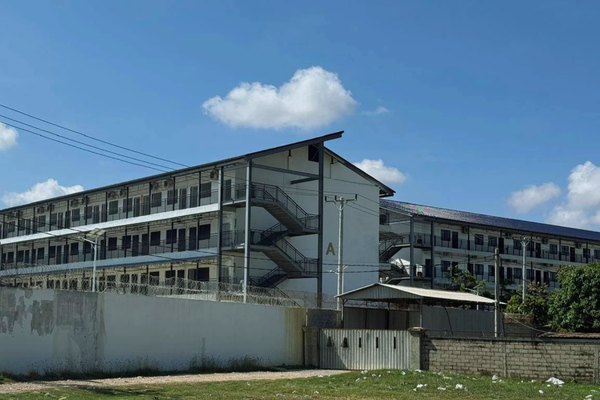
Our third briefing paper, The Indicators Are Familiar, the Visibility Is Not, examines why trafficking for forced criminality linked to online scam operations can be difficult to identify, even where the indicators of forced labour are well established.
It builds on our previous briefing, which explored how the same information concerning the experience of scam compound workers may be understood through different lenses — including human trafficking, cyber-enabled fraud, financial crime and irregular migration — and how these differing approaches can shape whether an individual is protected, prosecuted, or processed through an immigration system. This paper considers a different challenge: why identification and protection may still fall short even when trafficking is recognized as the appropriate interpretation.
The difficulty does not lie in the absence of an appropriate legal or conceptual framework. Survivors consistently describe deceptive recruitment, debt, document confiscation, restrictions on movement, isolation, abuse of vulnerability, threats, violence, and coercive control. These are well-established indicators of forced labour that have long been used to identify exploitation across sectors such as agriculture, fishing, manufacturing and construction. The indicators are familiar. What differs is where evidence of those indicators becomes visible.
In more traditional labour settings, evidence is often concentrated around an identifiable workplace, employer or recruitment chain. Labour inspections, recruitment records, wage documentation and worker complaints may all provide opportunities — however imperfect — for detection and intervention. Online scam operations offer few equivalent points of observation, while relevant evidence is often generated across digital, financial, immigration, and criminal justice systems.
Different institutions therefore encounter different parts of the same case. A technology platform may detect recruitment activity. A bank, financial intelligence unit or cryptocurrency exchange may identify suspicious financial patterns. Immigration or consular officials may encounter an individual without valid documentation. Cybercrime investigators may identify digital infrastructure or criminal networks. Civil society organizations may later receive a survivor’s account of coercion, confinement and abuse. Each actor may hold an important part of the same case, but the information is collected at different stages, for different purposes, and in different forms.
Thus, these cases are not necessarily going wholly undetected. Rather, they may be detected repeatedly, but in fragments. Recruitment, movement, coercion, financial activity, criminal conduct, and survivor disclosure may all be visible somewhere without being connected in a way that enables timely identification, protection or investigation. As a result, survivors may be treated primarily as suspected offenders or immigration violators before the conditions under which criminal conduct occurred are properly understood.
The challenge is therefore less about identifying indicators of forced labour than about connecting fragmented evidence while protecting survivors. This is not simply a question of increasing information-sharing. The organizations involved operate under different mandates, evidentiary standards, confidentiality obligations, and protection responsibilities. Survivor information may also create risks of re-identification, retaliation, or use beyond the purpose for which it was originally collected.
As a result, our paper calls for practical referral and coordination arrangements between anti-trafficking, anti-fraud, immigration, and financial-crime actors. These should establish clear referral triggers, define what information may be shared, under what legal or consensual basis, with what safeguards, and for what protective or investigative purpose. It also highlights the importance of early screening for trafficking for forced criminality and recognizes civil society organizations as important sources of operational insight, subject always to appropriate consent and protection safeguards.
Traditional forced labour tools remain essential. However, they were not designed for an exploitation model in which relevant evidence is dispersed across technology platforms, financial institutions, immigration systems, criminal investigations, and survivor-support organizations. The indicators are familiar. The challenge is ensuring that institutions encountering different parts of the same case can connect them safely, lawfully, and in time to support protection, accountability, and effective investigation.
Here’s a roundup of other noteworthy news and initiatives:
The Global Initiative Against Transnational Organized Crime has published a policy brief examining the way in which Cambodia’s online scam industry is reshaping communities, local economies, labour markets, land use, and livelihoods beyond scam compounds themselves. Drawing on field research across eight locations, it argues that responses focused primarily on criminal enforcement and trafficking victims risk overlooking the wider conditions that allow scam economies to become embedded in communities, particularly in secondary cities and rural areas.
A major cross-border investigation, supported by Journalismfund Europe and the Investigative Journalism for Europe (IJ4EU) fund, has exposed the largely hidden financial infrastructure enabling human trafficking and other organized crime across Europe. Drawing on more than 23,000 financial transactions and thousands of court records, journalists revealed how underground hawala networks move vast sums beyond conventional banking oversight, facilitating the financing of human-trafficking networks and providing escrow services for migrant smugglers.
The Trump administration has awarded anti-trafficking organization Our Rescue a six-month no-bid US$158 million contract to provide legal services to unaccompanied migrant children, prompting questions from immigration advocates about the organization’s experience in this area. Separately, Samaritan’s Purse has declined a planned US$300 million State Department grant under a new U.S. funding program for faith-based and community organizations, while saying it would continue partnering with the government on emergency responses.
New Zealand’s Education and Workforce Select Committee has recommended that the country’s Modern Slavery Bill proceed, bringing a proposed disclosure-based framework a step closer to becoming law. The Bill would require companies with annual revenue above NZ$100 million to report on how they identify and address modern slavery in their operations and supply chains, with penalties for non-compliance, but would not require mandatory due diligence.
Australia, meanwhile, is considering moving beyond its existing reporting regime by introducing a criminal “failure to prevent” modern slavery offense for larger companies. The proposed reform would apply to companies with annual revenue above A$100 million, with a defence available to those that can demonstrate they have taken reasonable steps to prevent modern slavery in their supply chains; recent accounts of exploitation among migrant agricultural workers have added to calls for stronger protections and enforcement.
A Global Voices analysis examines China’s new cotton regulation in the Uyghur region, which introduces detailed traceability across production but does not address concerns about forced labour. It argues that the system builds on existing land and labour-transfer policies that shift control from Uyghur farmers to state-approved cooperatives and companies, warning that greater supply-chain traceability does not demonstrate whether workers and farmers are able to make free choices about their land and labour.
Polaris’s National State of the Field Study is closing on 4 September, and U.S. anti-trafficking organizations are encouraged to take part. The 20 to 30-minute survey will help map connections and gaps across the field and identify priorities for stronger coordination and investment over the next five years.