How sustained advocacy helped deliver a CSO-drafted trafficking law in Bangladesh
Government-CSO engagement leads to new anti-trafficking legislation, a report finds labour improvements in Taiwan’s textile industry, and rising costs linked to the Iran war are disrupting education for vulnerable children.
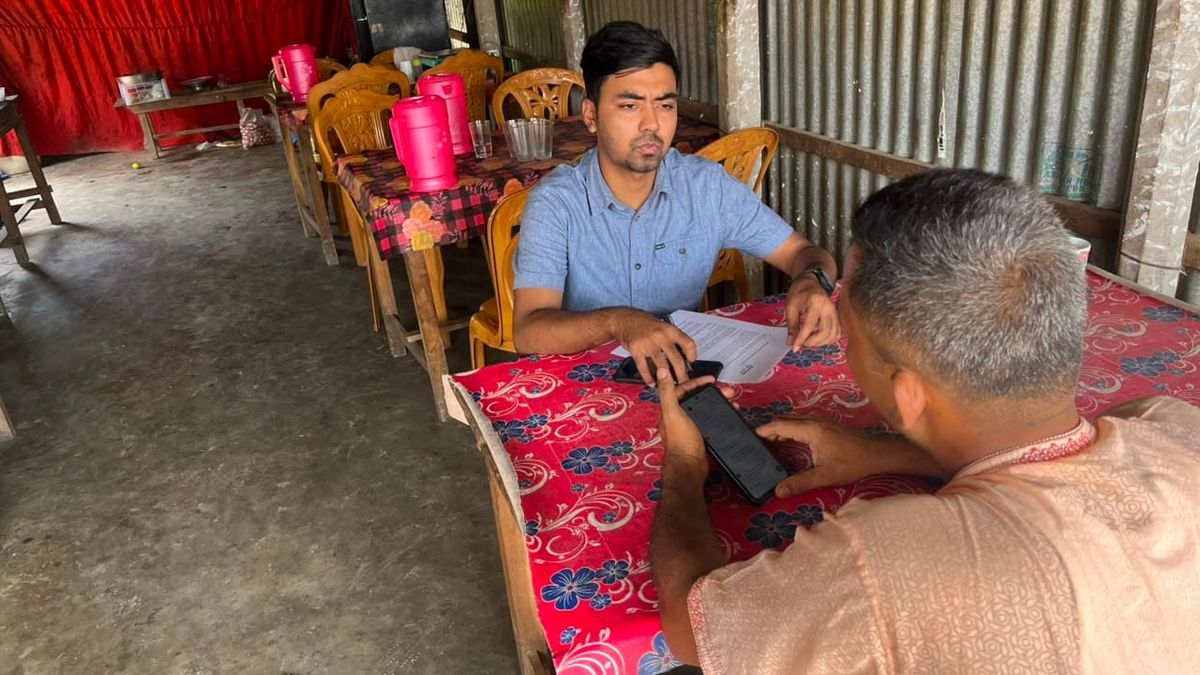
Anti-trafficking organization Justice & Care leveraged sustained engagement with government counterparts to help secure a landmark policy win in Bangladesh earlier this year. Rather than a narrow amendment to a single provision, the reform resulted in the passage of an entirely new law after the scale of the proposed revisions exceeded the threshold for directly amending the previous 2012 legislation.
Significantly, the new law recognizes forced criminality in cyber-scam operations within the legal definition of exploitation as a form of human trafficking. This provides a stronger legal basis for identifying people caught in these situations as victims of exploitation rather than offenders, helping close a gap that had previously left such cases poorly categorized or without an appropriate legal pathway.
Tariqul Islam, Justice & Care’s Country Director for Bangladesh, notes that the explicit recognition also strengthens the foundation for protecting and supporting survivors while holding those who exploited them to account, while its legal team highlights that casework can now focus on documenting the circumstances of exploitation and coercion and securing appropriate protection and legal treatment. The clearer framework, alongside stronger investigative provisions, can in turn help direct attention toward the traffickers and networks responsible.
The law also draws a clearer distinction between trafficking in persons and smuggling of migrants, which had previously been conflated with migration-related offenses spread across multiple laws. The new legislation fully criminalizes migrant smuggling and introduces a number of other reforms, including making adoption for the purpose of exploitation a criminal offense, and recognizing cases in which trafficked people are forced to commit drug-related crimes as part of their exploitation. It also expands investigative powers, allowing officers handling trafficking and smuggling cases to exercise authorities available under the Money Laundering Act, including seeking to freeze accounts, restrict travel, and access tax-related information.
Justice & Care sees the reform as a highly replicable advocacy model for other countries: one grounded in frontline evidence, technical legal analysis, sustained government engagement, and political will. The organization hopes the experience will serve as a case study for civil society groups elsewhere seeking stronger legal recognition of trafficking for forced criminality, stressing the value of an evidence-based, outcome-focused approach underpinned by trust and credibility built over time with government stakeholders.
The organization also emphasized that the reform was possible because government actors recognized both the seriousness of the problem and Justice & Care’s credibility in developing practical solutions. The process encountered broad support rather than major resistance, in part because the issue was already understood as a matter of national urgency.
The reform process grew directly out of Justice & Care’s prosecution and case-support work. Its team had been supporting around 400 cases across 18 tribunals, giving it direct insight into practical gaps in the existing legal framework. These included the lack of provisions covering migrant smuggling cases, instances in which cases were misidentified under trafficking law, and gaps in court jurisdiction over related crimes linked to trafficking. The group distilled these findings into a two-page document, which it submitted to the Law Secretary before being redirected to the Ministry of Home Affairs, which became the lead government counterpart. From there, the proposal moved through inter-ministerial consultation, with support from the Ministry of Home Affairs, the Cabinet Division, the Ministry of Law, Justice and Parliamentary Affairs, and Police Headquarters.
The organization is now working closely with the Ministry of Home Affairs on implementation, including training for judges, prosecutors, investigating officers, and police departments such as the Criminal Investigation Department (CID) and Special Branch. It also plans to expand awareness-raising beyond central government stakeholders to reach more local and remote communities.
Justice & Care works to empower individuals, families, and communities impacted by human trafficking to live in freedom. Established in Bangladesh in 2016, it also maintains an operational presence in Romania, the UK, and the U.S. Its work is built around a four-pronged approach — Restore, Pursue, Protect, and Change — combining frontline survivor support with systemic advocacy to pursue those responsible for trafficking and drive change at scale.
Here’s a roundup of other noteworthy news and initiatives:
The ILO has issued new guidance for identifying state-imposed forced labour, providing a practical framework based on international labour standards for determining when state compulsion crosses from legitimate public authority into prohibited practices. It outlines structural risk factors, indicators of coercion, and a legal test for identification, while highlighting the distinct legal, administrative, and institutional mechanisms through which states may compel labour.
Transparentem has published a follow-up report on remediation efforts in Taiwan’s textile industry, finding that suppliers have corrected nearly all problems identified in audits and that recruitment-fee reimbursements to migrant workers are underway or complete at almost all investigated suppliers, so far totaling more than US$4 million. It also highlights new commitments in Taiwan to eliminate recruitment fees, while noting that remediation remains slow, some suppliers are lagging or refusing repayment, and only some global buyers are contributing to reimbursement costs.
A new Asia Society Policy Institute analysis examines how China and the United States are responding to Southeast Asia’s cyber-scam industry, and where tactical cooperation may be possible. It finds that Beijing has relied on regional security partnerships and joint operations, while Washington has focused on sanctions, indictments, asset seizures, and online infrastructure takedowns, arguing that their shared interest in disrupting scam networks could create opportunities for coordination despite broader geopolitical tensions.
Four women formally recognized as trafficking victims in connection with former Harrods owner Mohamed Al Fayed have accused London's Metropolitan Police of failing to refer them to the UK’s National Referral Mechanism when they reported their experiences. The women instead sought referrals through anti-slavery charity Unseen, raising questions about whether police fulfilled their responsibilities to identify and support potential trafficking victims, as investigations continue into people who may have facilitated Al Fayed’s abuse.
A new Global Initiative Against Transnational Organized Crime analysis looks at the way in which organized crime has become embedded in Italy’s agricultural sector, where the caporalato gangmaster system can expose migrant workers to forced labour and human trafficking. It highlights transnational recruitment networks that charge workers large fees and exploit legal migration channels, arguing that stronger oversight of labour brokers, anti-trafficking enforcement, and supply-chain due diligence are needed to address exploitation across Italy’s food industry.
An Associated Press report examines how rising fuel and food costs linked to the Iran war are disrupting education for vulnerable children, particularly in lower-income countries across Asia and Africa. It highlights cases in Vietnam where children have left school to work as family incomes fall, warning that economic pressures and school dropout can increase children’s vulnerability to labour exploitation, trafficking, homelessness, and child marriage.
Equidem has welcomed the adoption of the ILO’s Decent Work in the Platform Economy Convention, the first binding international labour standard dedicated to platform work. Reflecting on the significance of the new Convention, it highlights protections around employment status, algorithmic management, pay, collective bargaining, and accountability across subcontracting chains, while stressing the need for governments and companies to ensure implementation reaches migrant, outsourced, and other workers vulnerable to forced labour and exploitation.