The missing links weakening the institutional response to forced online scamming
A fragmented system is undermining progress in the response to forced criminality, a report looks at promising practices in modern slavery prevention programming, and the UK proposes mandatory due diligence to address forced labour.
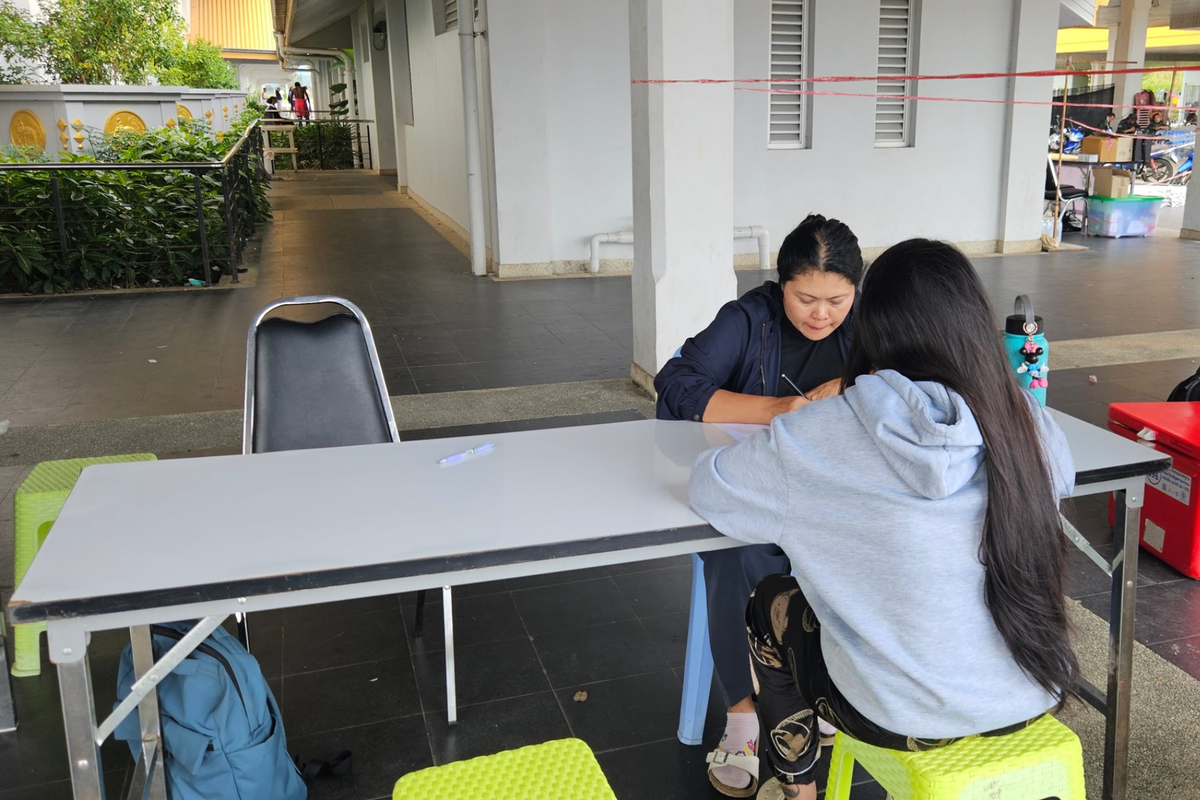
While the response to trafficking for forced criminality has advanced considerably since 2023, frontline civil society organizations continue to bridge gaps between victim identification, protection, and repatriation for people leaving scam compounds. Their ability to find practical solutions has helped people move through fragmented systems, but it can also make those systems appear more functional than they are. In our latest briefing paper, the fifth in our series on forced scamming, we examine why these gaps persist despite the considerable experience governments and other institutions have gained in responding to people leaving scam operations. There is no single pathway that works across contexts, and no institution is consistently responsible for moving a person through the process from identification to return, leaving some victims stuck in detention and lacking adequate protection.
Practitioner evidence points to three distinct kinds of response gap. Capacity gaps arise when an institution is willing to act but lacks the staff, expertise, facilities or resources required. Political constraints appear when pressure from authorities limits an organization’s ability to operate and the legal and administrative space available to it. Architectural gaps are different again, and occur when each actor performs its part but the parts do not connect. For example, screening may be separated from immigration investigation, case information may not follow a person between agencies, and urgent cases may have no agreed route to an embassy or immigration authority.
These distinctions are significant because the solutions are not interchangeable. The architectural gaps frontline groups have highlighted require clearer responsibility allocation, agreed procedures, and defined interfaces, rather than simply extra resources or greater freedom.
Moving a case forward also requires secure channels through which information can advance. Different institutions hold different pieces, such as identity and nationality, screening and immigration status, immediate protection needs, consular contacts, and receiving-partner details, and no process reliably carries that information across the boundaries between one part of the system and another. Safeguards often exist, but there is no clear agreement on what information should be shared, with whom, and how.
In the early stages of the crisis, frontline civil society organizations developed practical responses where formal procedures were absent, building relationships and working practices across borders. A case may move forward because an organization finds accommodation, locates a consular contact, sources an interpreter, or identifies a receiving partner. Yet the systemic gap it has worked around may go unrecorded, allowing the underlying weakness to persist.
Building more reliable institutional arrangements remains essential, without losing the speed and trust that make civil society networks effective. Governments and international organizations should take responsibility for functions within their mandates, including emergency assistance, return support, and coordination during large-scale movements. Civil society, on the other hand, may be best placed to provide first contact, sustained trust, contextual knowledge, rapid documentation, and cross-border referral. Other functions, including interpretation, minimum case-information flows, and surge preparedness, require established arrangements between institutions.
The briefing therefore calls for funding not only direct services, but also the functions that connect each stage, such as case navigation, consular liaison, interpretation, and cross-border referral. It recommends maintaining capacity that can be activated quickly, ensuring assistance is possible when formal victim identification is unavailable or withheld, and requiring funded programs to explain how their work connects to the next stage. Building on the progress of the past three years means turning the relationships, procedures, resources, and responsibilities developed through ongoing efforts into lasting capacity. The question is no longer whether frontline civil society belongs in the response, but whether people can move between systems without depending on informal workarounds.
Here’s a roundup of other noteworthy news and initiatives:
The Modern Slavery and Human Rights Policy and Evidence Centre has published a new report examining promising approaches to modern slavery prevention and the ways in which programs can be better designed, monitored, and evaluated. Drawing on existing research and consultations with policymakers and organizations delivering prevention programs, it argues that effective prevention must address the wider inequalities, power imbalances, and systems that enable exploitation, while building on existing knowledge across labour rights, migration, and international development, and incorporating the perspectives of people with lived experience.
The UK Government has announced plans to introduce mandatory human rights due diligence for large businesses, after finding that its existing approach to preventing forced labour is fragmented and overly reliant on voluntary measures. The proposed regime would apply to businesses exceeding £350 million in relevant turnover, requiring them to identify and address human rights risks in their operations and supply chains, while giving regulators powers to withdraw goods made with forced labour from the Great Britain market where companies have failed to meet their due diligence obligations.
The U.S. Treasury has imposed new sanctions on four individuals and 41 companies linked to Cambodia’s Prince Group, targeting the international business networks allegedly used to conceal assets, launder proceeds from online scams, and evade previous sanctions. The measures focus on offshore companies and financial facilitators supporting operations linked to trafficking and forced labour in Southeast Asian scam compounds, while separately targeting a Malaysian national accused of running a fraud network in Madagascar, highlighting the expanding geographical reach of these criminal operations.
And The Financial Action Task Force (FATF) has published new guidance on disrupting the financial networks that sustain online scam compounds, examining how criminal proceeds are generated, transferred, laundered and reinvested through banks, digital assets, and underground financial services. It sets out practical principles for governments and financial institutions to identify and target the infrastructure and financial facilitators that enable these operations, emphasizing the need to disrupt entire criminal networks rather than focusing on individual compounds or transactions.
Human Rights Watch has raised concerns over violence surrounding garment workers’ protests in Bangladesh, where police have used batons and tear gas against thousands of workers demanding higher wages and improved working conditions. One worker has died amid reported attacks by individuals allegedly linked to factory owners, while labour leaders have been detained and police have brought cases against thousands of unnamed people. Human Rights Watch calls for accountability for abuses and urges global fashion brands to ensure their purchasing practices support living wages rather than contribute to labour exploitation.
A new analysis by La Strada International examines the European Commission’s decision to launch infringement proceedings against 20 EU Member States for failing to fully transpose the revised Anti-Trafficking Directive by the July 2026 deadline. The Directive strengthens protections for trafficking victims, including referral mechanisms and the non-punishment principle, while expanding provisions addressing different forms of exploitation. The analysis warns that delays, limited transparency, and insufficient civil society consultation risk undermining effective implementation, stressing that legal reforms must translate into meaningful protection, support, and access to justice.
We are deeply saddened by the passing of Terry Collingsworth, founder of International Rights Advocates, whom we were fortunate to know and deeply respected. Terry dedicated his life to standing up for exploited workers and challenging powerful corporations, particularly in the fight against child trafficking and forced labour in cocoa supply chains. A recent tribute honors his legacy, and we will remember his courage, determination, and unwavering commitment to justice. Our heartfelt condolences go to his family, friends and colleagues.