Our joint awareness campaign on deceptive recruitment launches in Sri Lanka
Survivor insights are key to effective trafficking prevention measures, La Strada International urges governments to ensure protection access for all victims, and a report highlights exploitation risks in Latin America and the Caribbean.
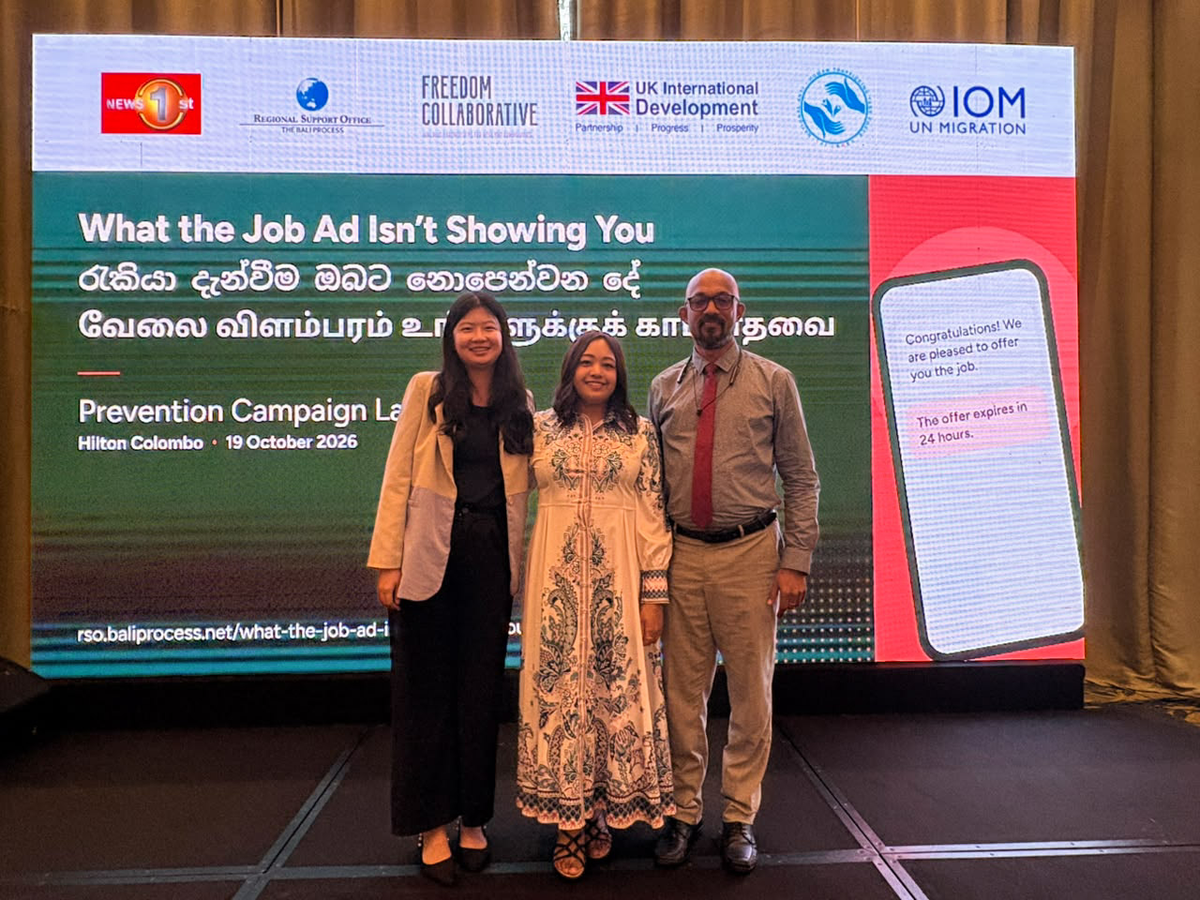
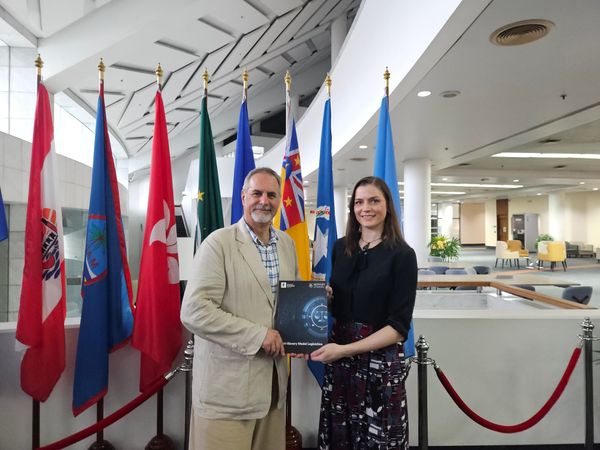
Last week, Freedom Collaborative, in partnership with the Regional Support Office of the Bali Process (RSO), the International Organization for Migration (IOM), and local partners, launched the Sri Lankan rollout of its What the Job Ad Isn’t Showing You trafficking prevention initiative in Colombo. Supported by UK International Development, the wider campaign was first introduced in July, aiming to prevent trafficking for forced criminality into cyber-scam centers by helping prospective migrant workers recognize deceptive overseas employment notices. It encourages jobseekers to identify recruitment warning signs, verify employment offers, and seek reliable information before making decisions about working abroad.
Discussions at the Colombo launch, which brought together representatives from government, international organizations, and civil society, highlighted the increasingly sophisticated tactics used by trafficking networks to recruit unsuspecting jobseekers. These include professional-looking job advertisements, fabricated company identities, convincing interviews, and attractive employment packages. Such tactics can make fraudulent opportunities difficult to distinguish from legitimate offers, underscoring the need for accessible, timely prevention messaging that reaches people at the earliest stages of the recruitment process.
A key highlight of the event was the official launch of Sinhala and Tamil versions of the campaign materials, complementing the existing English-language resources. This multilingual approach recognizes the importance of reaching workers in languages they are comfortable using, and tailoring prevention messaging to the cultural contexts, communication preferences, and trusted information channels of different communities. It also enables civil society organizations, grassroots groups, and community-based partners to more easily share campaign materials through established networks, including community outreach initiatives, migrant worker support programs, and pre-departure information channels.
During a panel discussion on the evolving threat of trafficking for forced criminality and the need to strengthen prevention efforts, Mallika Karunan, Head of Partnerships at Freedom Collaborative, emphasized the importance of placing survivor perspectives at the heart of prevention messaging. Survivor engagement is not an additional consideration, she noted, but can help ensure that campaigns reflect the realities of recruitment and provide practical guidance at critical decision-making moments.
Freedom Collaborative worked closely with civil society and survivor-led organizations across South Asia and East Africa during the campaign’s development, and their insights helped shape its four core recruitment warning signs: pressure to make a decision quickly; instructions to keep a job offer secret; requests for upfront payments; and offers that appear too good to be true. These red flags reflect patterns reported by survivors, and Mallika highlighted how meaningful survivor engagement can strengthen the relevance and credibility of prevention messaging by identifying the points at which prospective workers may still be able to question an offer, seek further information, or avoid exploitation altogether.
However, while grassroots groups often have the local knowledge, established relationships, and community trust needed to reach workers effectively, Freedom Collaborative stressed that the responsibility for preventing trafficking cannot rest solely with civil society organizations or individuals seeking employment abroad. Governments, recruitment authorities, and other relevant stakeholders must also address the recruitment practices and systemic vulnerabilities that enable trafficking networks to exploit people pursuing work opportunities. Effective prevention therefore requires coordinated action to ensure that prospective migrant workers can access reliable information, verify suspicious offers, report concerns safely, and seek appropriate guidance.
Ultimately, the campaign’s impact will depend not simply on how widely its materials are distributed, but on whether they reach people at the right time and help them make safer, more informed decisions. Whether it prompts a prospective migrant worker to question a suspicious offer, consult someone they trust, or verify an employment opportunity before traveling, even a single informed decision can represent a meaningful step towards preventing trafficking for forced criminality.
Here’s a roundup of other noteworthy news and initiatives:
The Inter-Agency Coordination Group against Trafficking in Persons (ICAT) has published a new issue brief on trafficking for forced criminality, covering exploitation in online scams, drug-related offenses, and armed conflict. The brief includes a practical checklist for authorities and calls for stronger victim identification, consistent application of the non-punishment principle, and investigations targeting the criminal networks behind the exploitation.
A joint operation coordinated by Europol and the European Labour Authority across 34 countries has led to 27 arrests, the identification of 248 potential trafficking victims, and 182 new investigations into labour exploitation. Among the cases uncovered was a trafficking network exploiting more than 70 Indian workers in restaurants across five EU countries, allegedly generating more than €4 million (US$4.5 million) through long working hours, underpayment, and threats.
Marking European Anti-Trafficking Day, La Strada International has called on European governments to ensure that trafficking victims can access identification, assistance, and protection regardless of their immigration status or where exploitation occurred. The statement highlights how asylum transfer procedures and cross-border cases can leave victims without recognition or support, and urges authorities to prioritize protection over immigration enforcement, prevent unsafe transfers, and ensure that assistance is not dependent on victims’ provision of evidence or cooperation with criminal proceedings.
A new regional analysis by R4V and REDLAC examines growing protection risks facing refugees, migrants, and displaced people across Latin America and the Caribbean, including trafficking, exploitation, violence against children, and discrimination. Drawing on regional monitoring, it reports that 43 per cent of surveyed households said discrimination affected their relationships with host communities, while barriers to documentation and regularization continue to restrict access to formal employment, essential services, and protection.
The Council of Europe’s network of specialized lawyers and NGOs providing legal assistance to trafficking victims held its seventh annual meeting in Strasbourg last week, to discuss barriers to accessing rights and justice. Discussions focused on secure accommodation, compensation, and unpaid wages, as well as protecting trafficking victims in asylum and migration procedures, with particular attention to children in residential care and new GRETA guidance on residence permits for trafficking victims.
Police in Guinea-Bissau have rescued 71 people from a suspected trafficking network that allegedly lured migrants with promises of jobs abroad, then held them against their will and forced them to recruit others into fraudulent schemes. Four suspects were arrested following raids in the capital, Bissau. The operation comes as tighter migration controls along the West African coast are pushing departure routes further south, exposing migrants to longer and more dangerous Atlantic crossings and increasing their vulnerability to exploitation.
Global Rights Compliance will host an event in Brussels on 3 November presenting new investigative findings on the ways in which North Korea extends its control over citizens working and living abroad. The first session will examine a labour broker allegedly using student visas to bring North Korean workers into Russia, while the second will explore how the regime monitors and intimidates North Koreans in China and Russia, and what European governments can do to address these practices.