A new campaign highlights the hidden trafficking risks of overseas job offers
New resources publicize recruitment red flags linked to trafficking for forced criminality, CSOs mark World Day Against Trafficking in Persons, and inconsistent practices limit the quality of EU trafficking data.
To mark the UN World Day Against Trafficking in Persons, Freedom Collaborative, in partnership with the Regional Support Office of the Bali Process (RSO) and IOM, supported by UK International Development, is launching “What the Job Ad Isn’t Showing You”, a new survivor-informed prevention campaign designed to expose the deceptive overseas job recruitment tactics that can lead to trafficking into cyber-scam centers.
This year’s World Day theme, “Trapped Behind the Scam”, shines a spotlight on the growing threat of trafficking for forced criminality in scam compounds. Across South Asia, East Africa, and beyond, criminal networks are increasingly using misleading online job advertisements, social media, messaging apps, and personal referrals to recruit people with promises of well-paid work abroad, only for many to find themselves trapped in cyber-scam centers.
Rather than relying on fear-based messaging, “What the Job Ad Isn't Showing You” equips people with practical tools to recognize recruitment red flags before accepting an overseas job or traveling abroad, or to help someone they believe may be at risk. The campaign includes a suite of prevention resources, including videos, infographics, and social media content, all designed to help people make safer, more informed migration decisions.
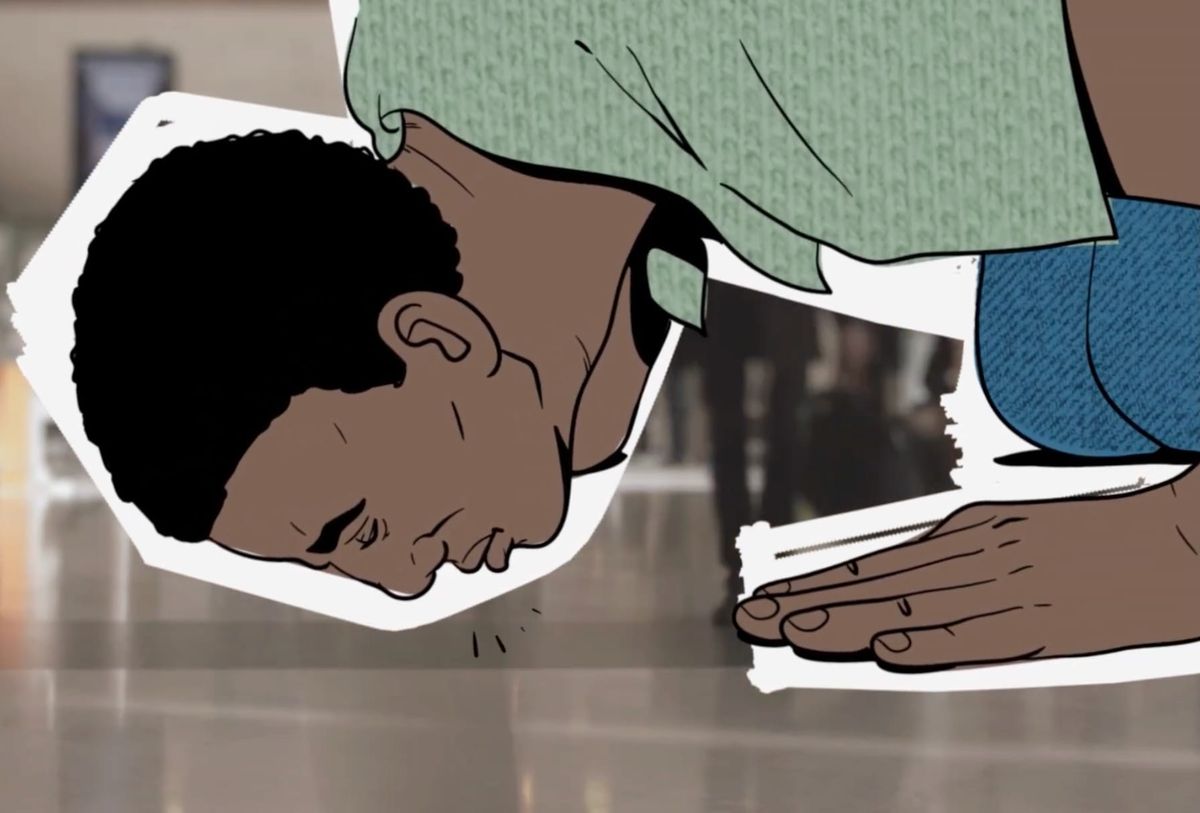
At the heart of the campaign is the animated short film “Why I Kissed the Ground”, which follows a survivor’s journey from recruitment and arrival at a cyber-scam compound through exploitation, rescue, and eventual return home. Drawing on patterns consistently documented by frontline organizations and informed by survivor experiences, the film shows how seemingly legitimate job opportunities can quickly become situations of trafficking. It encourages viewers to pause, ask questions, and seek trusted information before accepting an overseas role.
Viewers are directed to a dedicated website, which serves as the campaign’s central hub for practical guidance on identifying deceptive recruitment practices, staying safe when considering overseas employment, and supporting friends or family who may be at risk. The site also provides country-specific support information, including trusted organizations, helplines, and contact details for people seeking advice before departure or assistance while overseas. An integrated translation feature helps make these resources accessible across multiple regions.
The campaign was co-created with civil society organizations across South Asia and East Africa, drawing on frontline expertise and survivor insights to ensure its messaging reflects the recruitment tactics and lived realities experienced within affected communities. By combining survivors’ testimonies with practical, actionable guidance, “What the Job Ad Isn’t Showing You” aims to move beyond raising awareness alone. Instead, it seeks to give people the knowledge and confidence to recognize deception, make informed decisions, and access trusted support before exploitation can occur.
We are also marking World Day Against Trafficking in Persons with a statement on the need for a more effective protection response amid increasing enforcement against cyber-scam operations, co-signed by many of our civil society partners. Consistent screening and victim identification procedures, trauma-informed support, implementation of the non-punishment principle, and formal coordinated protection systems must be prioritized to reduce exploitation, improve justice and accountability measures, and strengthen intelligence gathering around online fraud.
Here’s a roundup of other noteworthy news and initiatives:
The Global Alliance Against Traffic in Women (GAATW) is commemorating World Day Against Trafficking in Persons with the release of two regional reports on trafficking for forced criminality, focusing on women’s experiences in scam centers and migration and legal responses that criminalize trafficked women and children. And La Strada International calls on governments and law enforcement to strengthen efforts to identify victims of forced criminality, with both groups highlighting a lack of adherence to the non-punishment principle and calling for victim-centered responses that prioritize protection over punishment.
A new EU study finds that differences in national definitions, reporting systems, and data-sharing practices continue to limit the quality and comparability of trafficking statistics across Member States. It recommends including presumed victims in Eurostat data, strengthening criminal justice reporting, improving coordination and quality checks, and fully implementing the revised Anti-Trafficking Directive’s data requirements.
A new Thorn report finds that young people continue to face overlapping forms of online sexual harm, including sexual solicitation, non-consensual image sharing, deepfake nudes, and sexual extortion. It also highlights widespread use of age-restricted platforms, growing reluctance among preteens to seek in-person help, and increasing reliance on AI chatbots for advice, calling for stronger platform safeguards and age-appropriate support.
This blog article highlights the rapid global spread of forced labour import prohibitions and argues they can create meaningful pressure on companies to clean up supply chains. It points to their potential to support worker remediation, recover unpaid wages, reduce unfair competition, and block goods linked to state-imposed forced labour, while stressing that impact depends on strong laws, effective enforcement, and civil society involvement.
Thomson Reuters has published its second annual report examining the links between Missing and Murdered Indigenous Women and Girls (MMIWG) and human trafficking in Canada and the United States. The report highlights how missing Indigenous women can be trafficked within days, maps trafficking corridors and online demand, and calls for sex-ad analysis, including buyer reviews, to become standard practice in investigations.
This article argues that the detention of Rohingya refugees in Malaysia reflects broader failures in refugee protection, social planning, and platform accountability rather than a conflict between refugees and host communities. It calls for legal recognition and work rights for refugees, greater responsibility for digital platforms that amplify hostility, and a regional framework to prepare for future displacement driven by climate and economic pressures.
The Freedom from Slavery Global Forum will take place in Nairobi on 5-6 October 2026, bringing together survivor leaders, civil society, governments, UN agencies, businesses, unions, and other stakeholders. The program will focus on survivor leadership, corporate accountability, fair labour practices, and wider systems change, with workshops and panels intended to produce shared priorities, commitments, and next steps for the global anti-slavery movement.