A GDPFL workshop explores opportunities to strengthen forced labour data sharing
Technological advances unlock new possibilities for data collaboration, a recent investigation links military personnel to exploitation in Cambodia, and Thailand’s Court of Appeal acquits human rights defenders of criminal charges.

Freedom Collaborative joined partners from the Global Data Partnership Against Forced Labour (GDPFL) last week for a Road to MVP workshop, which focused on development of an initial working version of the initiative’s proposed data-sharing system. Workshop discussions explored potential applications, the role of artificial intelligence, and the governance and partnership arrangements needed to support implementation of a more collaborative and intelligence-led approach to identifying and addressing forced labour.
The partnership is centered around the opportunity created by technological developments that make it possible to connect and analyze information held across different organizations in ways that were previously difficult to achieve. For years, information about recruitment practices, working conditions, exploitation patterns, and the actors involved has remained fragmented across civil society organizations, businesses, government agencies, and other stakeholders, limiting the ability to identify connections and contributing to gaps between exploitation realities and the information available to guide institutional decisions. Businesses routinely assess and price risks across their operations, yet the threat of forced labour may remain underestimated when reliable information is hard to access or connect with other intelligence sources.
Historically, bringing such information together has often required organizations to transfer data into centralized systems or share it with others. However, companies may be reluctant to disclose commercially sensitive supply chain information, while civil society organizations cannot easily share confidential data concerning vulnerable individuals and exploitation cases. Federated technology offers a different approach, potentially enabling information held in separate systems to be analyzed collectively while organizations retain control over their data. Although the conditions for federation, access, and information exchange still need to be negotiated, the technology creates new possibilities for overcoming longstanding barriers to collaboration.
Much of the workshop focused on how these capabilities could be applied in practice. Participants considered how specific use cases could help identify connections across datasets, address gaps in available information, and support better-informed decisions, while emphasizing the importance of data quality, transparency, and expert interpretation. Even reliable information may support only partial conclusions, and indicators of forced labour risk should not be confused with evidence establishing that exploitation has occurred.
These developments also present opportunities for civil society organizations and the rights-holders they work with. Frontline organizations hold valuable knowledge of recruitment journeys, labour practices, and experiences of exploitation that is often absent from institutional datasets. Connecting this knowledge with other sources could help reveal patterns that remain difficult to identify in isolation, strengthen research and advocacy, and inform more targeted prevention and response efforts. Access to wider intelligence could also help organizations better understand gaps in existing interventions and support efforts to improve protection, access to remedy, and accountability for affected workers.
At the same time, participants recognized that technology alone cannot establish the trust, governance, and cooperation required to make these possibilities useful. As one observer noted, the data mesh is not the partnership, and the partnership is not the mesh. Questions about access, safeguards, incentives, and the responsibilities of participating organizations will remain important, particularly where information sharing could create risks for workers or compromise sensitive activities.
Ultimately, the workshop highlighted an opportunity to approach longstanding information-sharing challenges differently. Whether the resulting capabilities lead to more effective responses to forced labour will depend on how they are governed, how stakeholders can use them, and whether better information can be translated into practical action that benefits affected workers.
Here’s a roundup of other noteworthy news and initiatives:
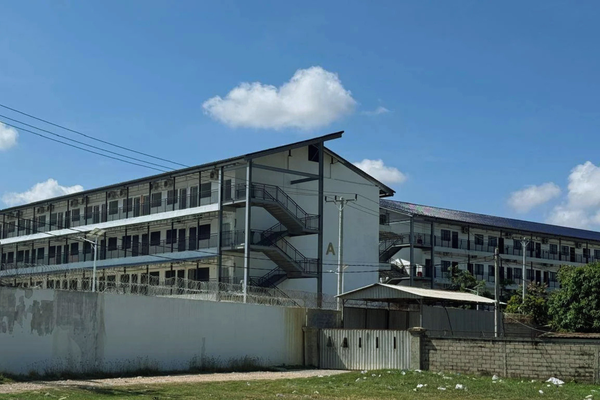
Amnesty International has published a new investigation identifying five private security companies linked to scam compounds in Cambodia, where guards allegedly facilitated trafficking, forced labour, torture, and sexual violence. Drawing on survivor testimonies, public records, and social media evidence, the report links more than 20 military and police personnel to security operations at the compounds, raising further concerns about official involvement. Amnesty calls for independent investigations into the companies, their owners, and connections to state authorities, warning that government crackdowns have yet to address those responsible for enabling the abuses.
Finnish police have launched an investigation into suspected labour trafficking involving a large group of Chinese workers at a battery factory in Kotka, with concerns that workers lacked sufficient information about their rights and employers’ obligations in Finland. Nine people have been arrested, four of whom remain in pre-trial detention, as authorities investigate suspected trafficking and aggravated facilitation of illegal entry involving a Finnish staffing agency and a Chinese company.
Thailand’s Court of Appeal has upheld the acquittal of three women human rights defenders on 30 criminal defamation charges brought by poultry company Thammakaset, following a seven-year legal battle over social media posts supporting Myanmar migrant workers who had reported abusive working conditions. Fortify Rights welcomed the ruling but called for stronger protections against lawsuits used to intimidate human rights defenders, including the decriminalization of defamation, and legislation to prevent legal harassment of those speaking out about labour rights.
Oxfam has published a new briefing paper examining the structural exploitation of domestic workers, particularly migrant, Indigenous, Afro-descendant and other marginalized women, who remain among the least protected workers worldwide. The paper explores how discriminatory labour and immigration laws, economic policies, and digital platforms contribute to exploitation, while highlighting the role of domestic workers’ own organizing in securing rights. It calls for universal social protection, protected freedom of association, an end to discriminatory laws, and stronger regulation of digital platforms, alongside recognition of care as a human right and public good.
The European Commission has proposed expanding Frontex’s powers over deportations, border surveillance, and digital monitoring, alongside plans to nearly double its budget to €12 billion for 2028–2034. In a new statement, civil society coalition Protect Not Surveil warns that the proposed changes, including social media monitoring, increased data sharing, and the ability to carry out deportations between non-EU countries, could undermine migrants’ rights and expose people seeking protection to greater risks without stronger safeguards and accountability.
UNHCR has published a new report examining displacement and migration routes across South and South-East Asia, with a particular focus on people fleeing conflict, persecution, and statelessness in Myanmar. The report maps movements towards Bangladesh, India, and Thailand, alongside onward journeys by Rohingya refugees to Malaysia and Indonesia, emphasizing that these movements remain largely driven by protection needs, even when people continue travelling in search of greater safety, family reunification, or livelihoods.
A new analysis by the Global Initiative Against Transnational Organized Crime (GI-TOC) examines two major outcomes of the 13th Conference of the Parties to the UN Convention against Transnational Organized Crime, held in Vienna in October. Governments agreed to begin reforming the Convention’s long-criticized implementation review mechanism and to launch negotiations on a new international protocol addressing environmental crimes. GI-TOC welcomes these developments but stresses the need for greater transparency, independent evidence, and meaningful civil society participation to ensure the decisions lead to effective action.