Training supports Bangladeshi officials to identify trafficking for forced criminality
A Freedom Collaborative workshop enhances frontline trafficking identification, the International Rescue Committee urges investment in AI tools to support refugees, and rights groups say a new UK bill could weaken modern slavery protections.
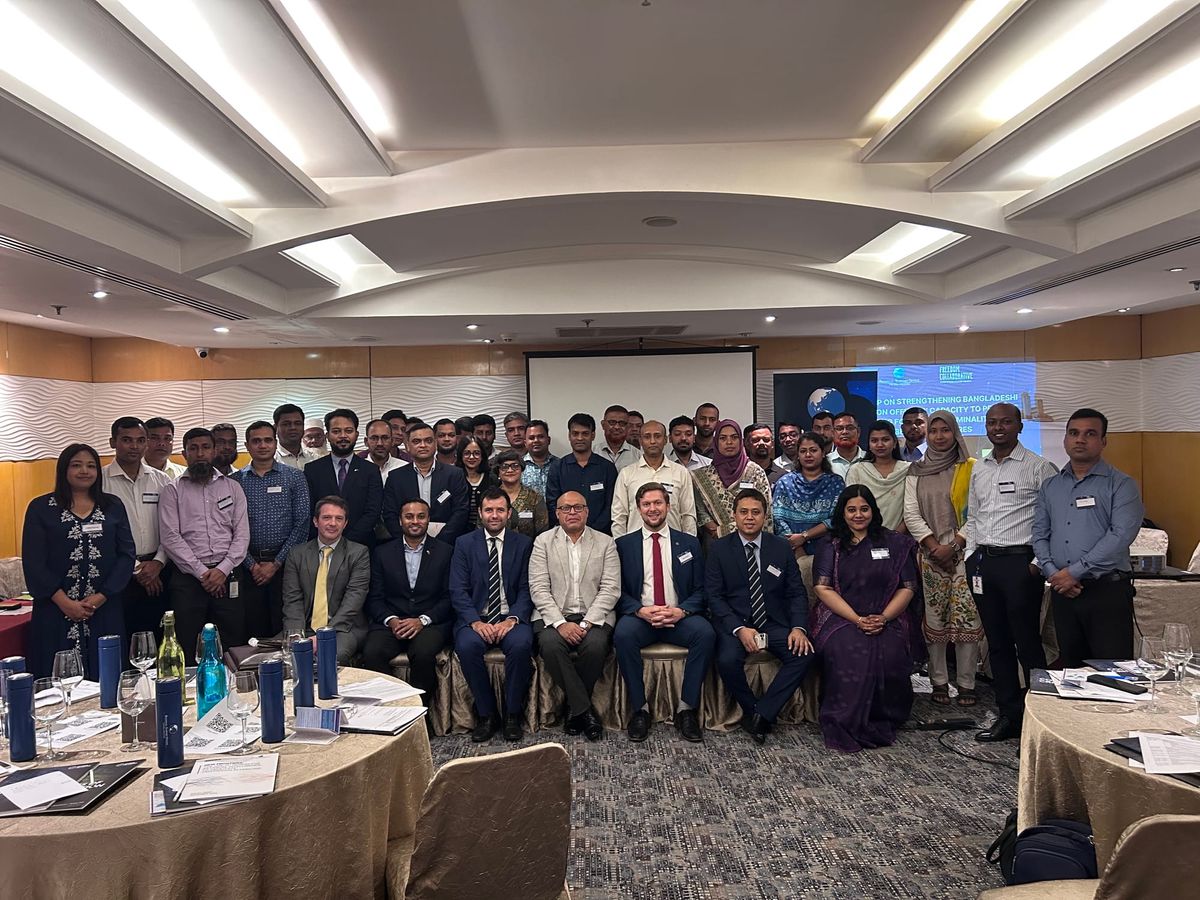
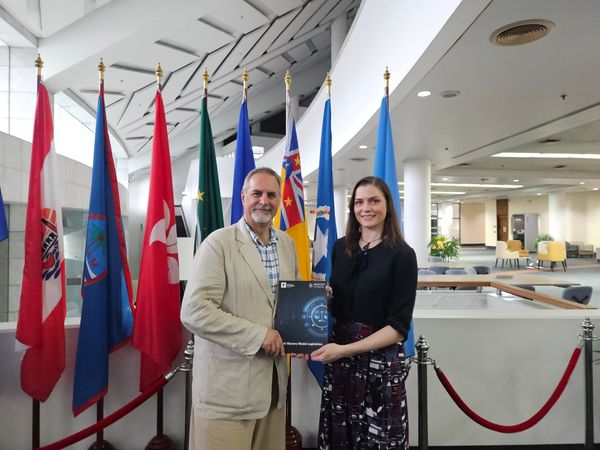
Freedom Collaborative, in partnership with the Regional Support Office of the Bali Process and supported by the UK’s Foreign, Commonwealth & Development Office, recently delivered a two-day workshop for Bangladeshi immigration officers in Dhaka aimed at strengthening frontline capacity to identify and respond to trafficking, including emerging forms of trafficking for forced criminality linked to cyber-scam center operations.
As trafficking patterns continue to evolve, so too must the frameworks used to identify and protect victims. This is particularly important in the context of trafficking into cyber-scam centers, where indicators of exploitation may be less familiar and more difficult to detect through traditional screening approaches. Individuals may enter or become trapped within these situations through deception, coercion, abuse of vulnerability, or a combination of factors that do not fit neatly within conventional victim identification models. As a result, frontline officials increasingly require updated tools and approaches to identify potential victims and ensure that appropriate protection responses are in place. The workshop was designed to address this challenge by strengthening participants’ understanding of emerging trafficking typologies and their implications for victim identification.
Bangladesh is a source country for recruitment and trafficking into cyber-scam centers, and a significant number of Bangladeshi nationals have been stranded in Cambodia following recent enforcement actions targeting scam compounds. Furthermore, Bangladeshi nationals have been identified among those exiting cyber-scam centers in Myanmar over the past year. Strengthening the capacity of immigration officers to identify and support potentially trafficked individuals, including returning victims, is therefore an increasingly important priority.
Freedom Collaborative delivered four core sessions designed to provide immigration officers with practical tools for use in their day-to-day work at inbound and outbound checkpoints. The program explored survivors’ experiences of trafficking to strengthen understanding of the realities faced by victims; examined victim identification in cases of trafficking for forced criminality, including indicators specific to cyber-scam center operations; applied learning through case-study-based exercises; and strengthened officers’ skills in conducting sensitive and effective victim screening interviews.
The workshop was designed to strengthen officers’ ability to identify potential trafficking cases at key points of contact, including during travel document inspections, assessments of travel history, primary and secondary screening procedures, and other stages of the migration journey at which indicators of trafficking may emerge.
Freedom Collaborative was pleased to be joined by Justice and Care Bangladesh, which led a session on legal frameworks and trafficking for forced criminality. The session provided officers with up-to-date information on Bangladesh’s anti-trafficking legislation, including recent amendments that explicitly recognize victims of forced criminality and forced online scamming. These reforms strengthen protections for victims, reinforce the principle of non-criminalization, and increase penalties for trafficking-related offenses, reflecting sustained advocacy and systems change efforts undertaken by Justice and Care in close collaboration with relevant authorities.
As trafficking typologies continue to evolve, particularly in relation to forced criminality and cyber-scam center operations, sustained investment in frontline capacity remains essential. This workshop reflected that need by equipping immigration officers with the knowledge and practical skills required to identify potential victims at critical touchpoints and facilitate timely protection and referral responses.
Here’s a roundup of other noteworthy news and initiatives:
A three-day USTR hearing has opened in Washington on a proposed tariff plan targeting 60 economies over alleged failures to enforce forced-labour import prohibitions. The plan, which would impose additional duties of 10 or 12.5 per cent, has drawn opposition from 22 Democratic state attorneys general, who argue that the measures are legally questionable, insufficiently linked to forced labour concerns, and risk raising costs for U.S. consumers.
An RSO- and IOM-commissioned assessment of legal and policy frameworks in Cambodia, Indonesia, Laos, and Malaysia finds that existing trafficking laws broadly reflect international and regional standards, but are not always applied consistently to emerging forms of exploitation. Focusing on trafficking for forced criminality in cyber-scam operations, the report highlights gaps in victim identification, application of the non-punishment principle, inter-agency coordination, data sharing, and cross-border cooperation.
The International Rescue Committee (IRC) is urging technology companies and philanthropists to invest in responsible AI tools that improve access to information, education, healthcare, disaster preparedness, economic opportunity, and protection for refugees and crisis-affected communities. Speaking ahead of the UN AI for Good Global Summit in Geneva this week, the IRC highlighted its existing AI-enabled initiatives, while stressing the need for privacy, human oversight, and data protection safeguards.
Anti-Slavery International and a coalition of UK anti-trafficking and migrant rights organizations have warned that the UK’s new Immigration and Asylum Bill would significantly weaken modern slavery protections. The groups argue that the bill would penalize survivors through strict disclosure deadlines, restrict access to recovery-based leave, expand disqualification from support, and create new risks of homelessness, re-trafficking, and impunity for traffickers.
The Medaille Trust has published a new report on Albania’s Creative Hubs Programme, based on evidence from 105 recent returnees. The report highlights how the program used locally accessible “hubs” to combine vocational training, business development, mentoring, psychosocial support, and community engagement, and argues that reintegration programs should address misinformation, trust, wellbeing, and local opportunity alongside employment.
DW Akademie and OHCHR have opened applications for a practice-oriented training program on responsible reporting on migration and trafficking linked to online scams. Open to journalists and freelance reporters based in Bangladesh, Pakistan, Thailand, Myanmar, Malaysia, and Indonesia, the workshop will cover how fraud-related exploitation targets migrants, while also addressing disinformation, algorithmic amplification, online scam operations, and survivor dignity in reporting.