Thai seafood study shows accountability must follow scrutiny for lasting reform
A new report identifies the drivers of meaningful change for Thai seafood workers, the UK proposes expanded human rights obligations for businesses, and Equidem looks at the risks facing FIFA World Cup construction workers.
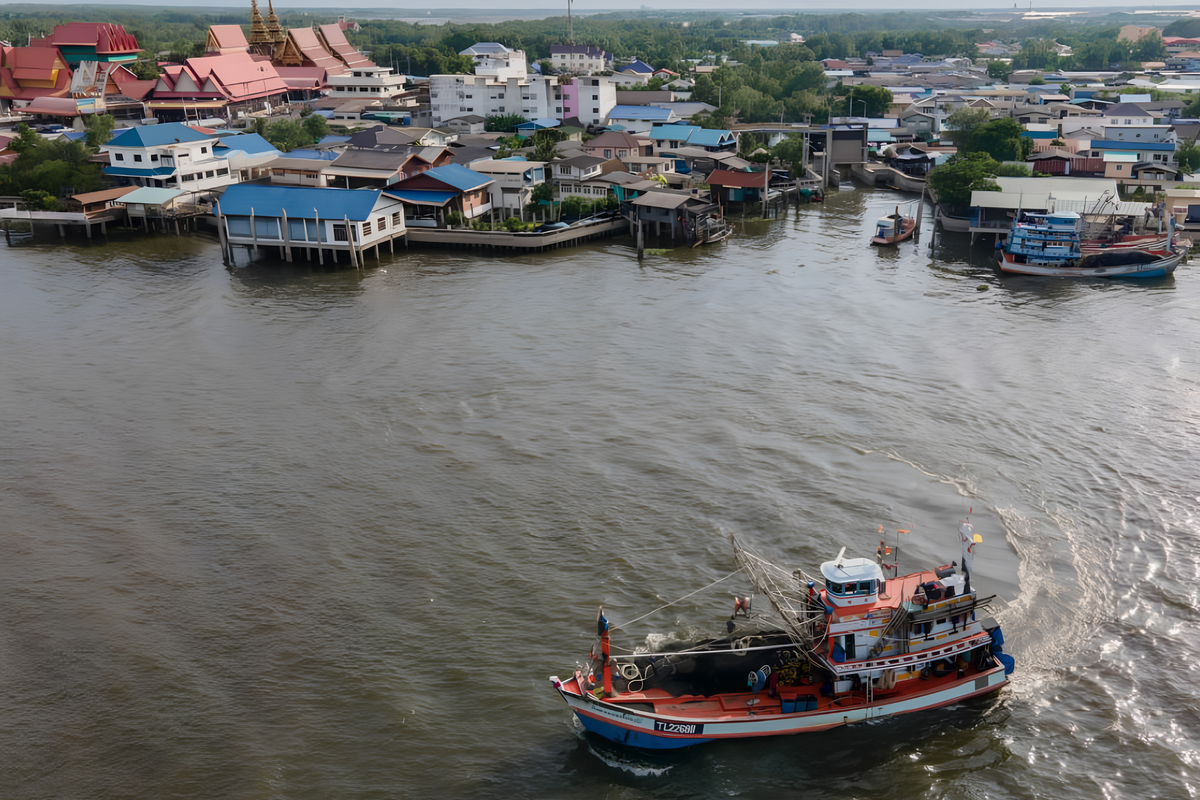
A recent 10-year study by PolicySolve examines the key conditions and reforms that led to significant legal and regulatory transformation in the Thai seafood industry from 2014 to 2024, following investigations by journalists, civil society, UN agencies, and the U.S. TIP Office, which exposed widespread forced labour and human trafficking. Its central insight is that the conditions that trigger reform are not always the same as those that sustain it.
Commissioned by Humanity United and the Freedom Fund, the study drew on insights from workers, civil society organizations (CSOs), businesses, government actors, and other stakeholders, and reviewed more than a decade of reporting and analysis on reforms to address forced labour and human trafficking in the Thai seafood sector. In 2014, investigations showed it was rife with forced labour and human trafficking due to an unregulated supply chain, lack of governmental oversight, and demand for the mass production of cheap seafood by retailers, with more than 80 per cent of workers saying they never felt “free”.
While forced labour and trafficking risks remain, particularly in the fishing sector, the study found substantial improvements across the industry over the decade. Workers reported lower levels of violence and coercion, greater use of formal employment contracts, improved access to identity documents, and higher wages, with most seafood processing workers now receiving at least the minimum wage. Some of the sector’s most exploitative workplaces have been closed, fewer workers reported paying recruitment fees to brokers, and stronger monitoring, traceability, and worker-protection systems have improved the industry’s ability to prevent and identify abuse. In the fishing sector, the decline of long-haul voyages has reduced workers’ isolation at sea, while the increased use of contracts and electronic wage payments has improved transparency, even as debt bondage and document confiscation continue to pose serious risks.
The most dramatic reforms emerged during periods of intense international scrutiny, including media investigations, the threat of trade restrictions, and diplomatic consequences. This helped generate political will and accelerate action by both government and industry. However, the report notes that progress often slowed as international attention diminished. This distinction is important because it shows that crisis-driven pressure can open a window for reform, but lasting change depends on whether accountability becomes embedded in law, business practice, civil society capacity, and worker participation.
The study found that lasting change was most likely when legal reforms were combined with sustained civil society pressure, meaningful worker participation, responsible recruitment practices, and collaboration across the supply chain. Thai CSOs and international NGOs were identified as particularly important drivers of change, providing evidence, legal advocacy, worker support, and accountability throughout the decade. Compliance mechanisms were also most effective when complemented by worker voice initiatives, legal advocacy, and accessible grievance systems.
The findings further distinguish between more and less effective purchasing practices. While many international buyers required suppliers to meet higher labour standards, reforms were more difficult to sustain when those expectations were not accompanied by fair pricing or long-term investment. According to the report, market dynamics that prioritize low-cost production remain one of the greatest obstacles to eliminating forced labour, highlighting the need for increased attention to the ways in which purchasing decisions and recruitment relationships shape conditions for workers.
The report concluded that improvements were most successful when pressure from governments, markets, civil society, and philanthropy aligned, but warned that gains remain fragile where implementation is inconsistent and underlying market incentives remain unchanged. While crisis-driven reforms can produce rapid change, lasting progress ultimately depends on stronger institutions, sustained accountability, and greater worker voice.
Here’s a roundup of other noteworthy news and initiatives:
The UK has introduced the Commercial Organisations and Public Authorities Duty (Human Rights and Environment) Bill, proposing mandatory human rights and environmental due diligence obligations for businesses and public authorities. If enacted, the Bill would move the UK beyond the disclosure-based model of the Modern Slavery Act by requiring organizations to identify, prevent, mitigate, and remedy adverse impacts across their operations, subsidiaries, and value chains, with proposed enforcement measures including fines and exclusion from public procurement.
Japanese police have arrested Hu Xiaowei, an alleged associate of Cambodia’s sanctioned Prince Group, in Osaka, on charges related to falsified official records while he was seeking permanent residency. The arrest comes as reporting points to the wider relocation of Southeast Asia-linked cyber-scam networks, with Sri Lanka seeing an increase in alleged scam operations that raise concerns around online fraud, money laundering, trafficking, and forced labour.
More than 750 garment workers in Guatemala who produced clothing for Target have received nearly US$6 million in owed wages and severance following the closure of the Koa Modas factory. According to the Worker Rights Consortium, the payout, funded by Sae-A Global Trading, represents the largest amount secured for garment workers at a single factory in Central America, and covers 95 per cent of the legally owed compensation.
Equidem has published a new report on the human rights risks facing workers involved in FIFA World Cup 2026 stadium construction and maintenance across the United States, Canada, and Mexico. Drawing on heat-risk analysis, worker testimony, and field research, the report examines the threat of heat stress at stadium sites, with findings pointing to concerns around worker health and safety, retaliation risks, migrant worker vulnerabilities, and the responsibilities of FIFA, host governments, contractors, and sponsors to protect workers’ rights. Alongside the report, Equidem is also launching an interactive FIFA 2026 Heat Risk Observatory, developed with students from the Tata Institute of Social Sciences, mapping heat stress risks across World Cup stadiums and team base camps.
Uyghur activists in the United States have expressed disappointment that human rights concerns, including the detention of Uyghurs in China, did not appear to feature at the recent Trump-Xi summit. The concerns have raised questions about the direction of U.S. policy on human rights in China, amid stalled updates to the Uyghur Forced Labor Prevention Act entity list, continued calls for the release of political prisoners, and growing fears of transnational repression targeting Uyghur diaspora communities.
The Federation of African Journalists and the Federation of Eastern Africa Journalists have concluded a regional meeting in Mombasa, Kenya, on responsible reporting on migration and labour mobility across Eastern Africa. Supported by the ILO’s Better Regional Migration Management Programme, the forum launched the ILO Toolkit on Migration Reporting and adopted the Mombasa Statement, reaffirming commitments to ethical, fact-based coverage of migration, forced labour, human trafficking, fair recruitment, and legal labour mobility pathways.
Join Better Trade Collective and the Tendai Initiative for a webinar on 25 June on building credible forced labour import prohibition frameworks, drawing on lessons from the U.S. enforcement experience. The discussion will focus on how governments can design and implement worker-centered trade enforcement systems that address forced labour risks while avoiding unintended economic and labour impacts, engaging trading partners and industry, and keeping worker protection and remediation central to implementation.