Coordination among immigration officers is key to protecting trafficking victims
An inter-regional conference strengthens immigration cooperation to address trafficking into cyber-scam centers, Australia plans to tighten its modern slavery laws, and La Strada International calls for stronger NRMs in EU states.
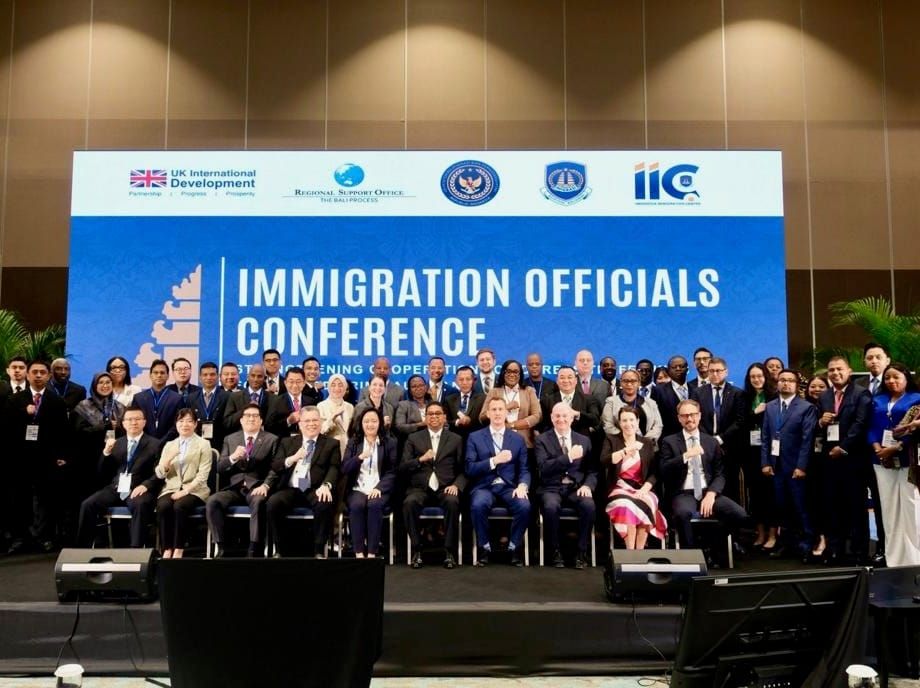
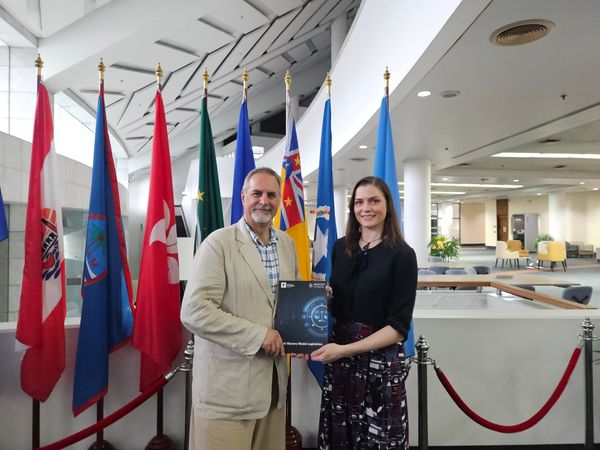
Strengthening real-time regional coordination and intelligence-sharing among frontline immigration officers could significantly improve efforts to identify and protect victims of trafficking into cyber-scam centers, Freedom Collaborative’s Project Coordinator, Jalil Muyeke, told participants at an inter-regional immigration conference convened by the Regional Support Office of the Bali Process and Indonesia’s Directorate General of Immigration.
Supported by the UK Government, the two-day conference brought together immigration and border officials, criminal justice practitioners, international organizations, and civil society representatives from countries across Asia, the Middle East, and Africa affected by trafficking for forced criminality. Discussions focused on strengthening immigration responses to trafficking into cyber-scam operations, improving awareness of trafficking indicators, sharing operational good practices, and identifying practical strategies for sustained cross-border cooperation.
As cyber-enabled trafficking networks increasingly operate across multiple jurisdictions, immigration and border authorities are often the first and sometimes the last opportunity to identify potential victims before they are exploited or as they return home. While formal information-sharing mechanisms exist between many countries, these channels remain underutilized, and practical, real-time communication between frontline immigration focal points is still limited in many regions. The conference sought to address these gaps by creating a platform for direct exchange between immigration authorities from countries of origin, transit, and destination, while exploring opportunities to strengthen long-term regional coordination and operational partnerships.
This information is not just crucial for trafficking victims: a new UNODC report details the way in which the shift in organized crime from goods to services such as cyber-enabled fraud in scam compounds means criminal groups are now weaving different types of crime into a single, shared financial and operational infrastructure. Previously fragmented syndicates have merged into a transnational, tech-driven criminal economy sophisticated enough to outpace conventional law enforcement, leading to a surge in trafficking in persons and threatening governance, economic stability and development globally.
Drawing on both his lived experience as a survivor of trafficking for forced criminality and his work supporting survivors through civil society advocacy, Jalil emphasized the impact of regional cooperation. Sharing intelligence on emerging recruitment methods, high-risk travel patterns, and known cyber-scam compounds, he noted, would enable immigration officers to identify evolving trafficking trends in real time. He also shared practical recommendations for strengthening victim identification at border crossings.
He highlighted that the vast majority of trafficking victims are transported on tourist visas rather than work visas, meaning conventional questions about employment or labour contracts often fail to uncover exploitation. Traffickers routinely coach victims to present themselves as tourists or visitors, making their travel appear legitimate. Instead, immigration officers should be alert to broader travel patterns and behavioral indicators, including young travelers carrying one-way or short-duration tickets, limited access to funds, similar travel profiles from high-risk recruitment areas, or signs that another individual is controlling their documents or movements.
Jalil also encouraged officers to use open-ended, non-confrontational questions that allow inconsistencies to emerge naturally, such as asking travelers about their plans, accommodation, return arrangements, or local contacts. Careful observation of hesitation, rehearsed responses, missing travel details, or indications that someone else is directing the conversation can provide valuable indicators that further screening may be warranted.
He further underlined the importance of recognizing trafficking victims upon their return. Survivors often arrive home exhausted, traumatized, fearful, or reluctant to speak about their experiences, he said. Clear referral protocols, including private screening, immediate connection to specialist anti-trafficking services, and a victim-centered approach that prioritizes protection over immigration enforcement can transform a routine border encounter into the first step toward recovery.
While officers cannot stop every case, greater awareness of tourist visa recruitment tactics, better questioning techniques, and stronger cross-border coordination would allow many more victims to be identified before exploitation occurs.
Here’s a roundup of other noteworthy news and initiatives:
Australia has announced plans to make large companies criminally liable if they fail to prevent modern slavery in overseas supply chains, alongside new civil penalties for breaches of existing reporting duties. The proposed reforms follow criticism that Australia’s current framework is too weak and come shortly after the United States threatened tariffs over the country’s approach to forced-labour imports.
La Strada International has called for stronger and more consistent National Referral Mechanisms as EU Member States implement the revised Anti-Trafficking Directive. It is urging formal civil society involvement, unconditional access to support, safer reporting and referral pathways, stronger cross-border coordination, sustainable funding, mandatory training, and independent evaluation to ensure victims receive effective protection regardless of immigration status or cooperation with criminal proceedings.
A new study finds that responsible recruitment policies based on the Employer Pays Principle are rarely implemented effectively across supply chains in Japan, Malaysia, and Thailand. Drawing on interviews with almost 4,000 migrant workers, it reports widespread recruitment fees, debt, and limited reimbursement, and calls on multinational companies to adopt fairer contracting practices and share responsibility for repaying affected workers.
A UNHCR report reviews progress on Global Refugee Forum pledges concerning protection from trafficking, alternatives to immigration detention, and protection at sea. It highlights ongoing challenges including dangerous sea journeys, expanding detention, shrinking humanitarian space, and the criminalization of humanitarian action, while calling for stronger coordination, route-based approaches, peer learning, and greater leadership by displaced and stateless people.
Cambodian rights group LICADHO has called on the government to recognize intimate image abuse as a serious form of technology-facilitated gender-based violence. It urges stronger and more consistent criminal enforcement, survivor-centered legal and support services, strict privacy safeguards, and greater protection for women and girls subjected to threats, coercion, extortion, and non-consensual distribution of intimate images.
Walk Free has warned that communities displaced by the recent earthquakes in Venezuela face heightened risks of modern slavery and human trafficking. It called for anti-trafficking protections to be integrated into humanitarian recovery, including safe reporting pathways, reliable information on deceptive recruitment, targeted support for children and displaced people, and closer coordination between governments, businesses, and local organizations.
A webinar on 25 August and 26 August will bring together civil society advocates and experts to discuss how forced labour import bans can strengthen corporate accountability and protect workers. Speakers will examine legal design and enforcement across several jurisdictions, drawing on experience from sectors including cotton, fishing, and critical minerals.