How a federated data system can safely connect forced labour information
Rights experts discuss responsible data sharing to counter forced labour, the UN urges action on trafficking for sexual exploitation by armed groups, and a report documents the abuse of Filipino domestic workers in Saudi Arabia.
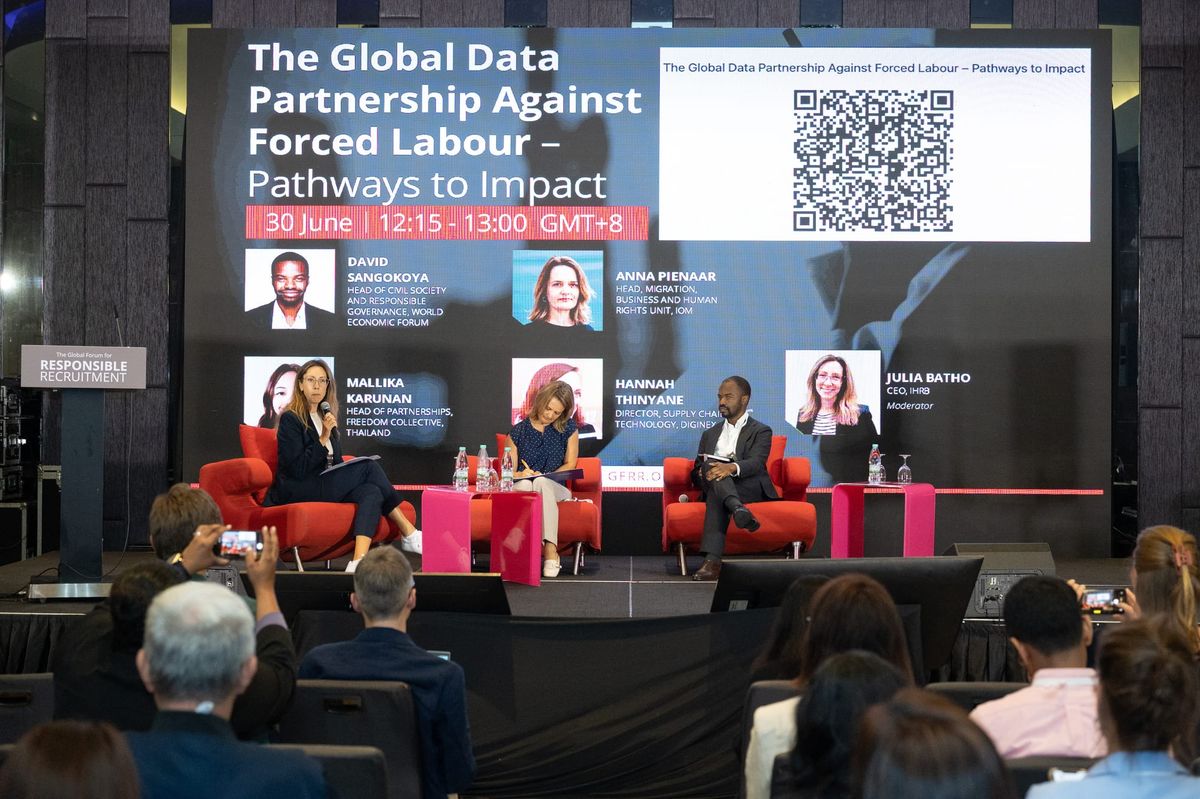
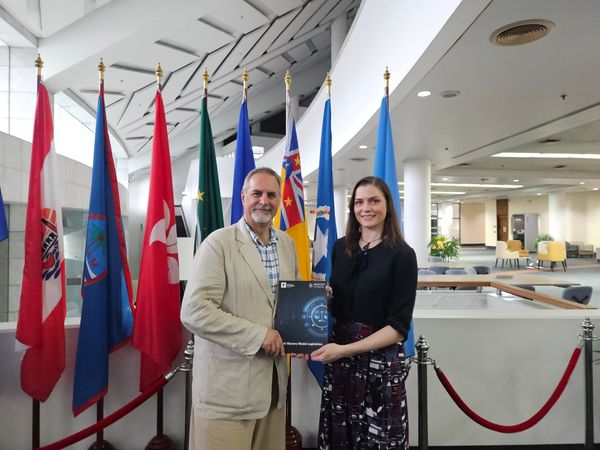
Freedom Collaborative recently joined a panel of experts to discuss the fragmentation of data across civil society, business, and government, which continues to hinder efforts to address forced labour. The discussion took place during the Global Forum for Responsible Recruitment hosted by The Institute for Human Rights and Business (IHRB), and reflected on initial progress made by the World Economic Forum’s Global Data Partnership Against Forced Labour (GDPFL), an initiative bringing together companies, governments, international organizations, and civil society to explore how better use of data can accelerate efforts to prevent forced labour in global supply chains.
The panel explored the challenge of moving from fragmented data and siloed responses toward shared insight, coordinated action, and practical accountability. The issue is not a lack of data, they noted: across the anti-trafficking sector, organizations collect a wealth of information through case management, worker interviews, hotlines, legal services, and frontline outreach, and these datasets contain critical insights into recruitment fees, migration pathways, labour brokers, worker grievances, referral outcomes, and other indicators of exploitation.
The problem is that these insights often remain fragmented, spread across organizations, and carried by overstretched frontline teams. Many civil society organizations are also operating under significant strain following the sharp contraction in international funding, making additional reporting or data-sharing requests difficult to absorb. As a result, valuable information that could help identify emerging risks and strengthen prevention often remains siloed.
Sharing sensitive data also raises legitimate concerns that extend beyond privacy. Organizations need confidence that they will retain ownership of their information, that the context behind the data will not be lost, that it will not be misinterpreted, and that participation will generate practical value rather than becoming another extractive exercise. Civil society contributes far more than datasets alone: it provides the background needed to understand why workers make certain decisions, where vulnerabilities emerge, and how protection systems succeed or fail. Preserving that context is essential if data is to inform meaningful action.
For many organizations, participation in collaborative data initiatives will therefore depend on several factors, such as transparency about how information will be used, strong governance and privacy safeguards, clear value returned to contributors, and the ability to retain full control over their own data.
The GDPFL offers a promising model, and panelists discussed progress on a proof of concept in Thailand focused on responsible recruitment in global supply chains. Rather than creating a centralized database, the Partnership is building open-source federated infrastructure that allows organizations to connect their datasets while maintaining full ownership and sovereignty over the underlying information. Existing systems, including worker hotlines, grievance mechanisms, case management platforms, audits, and government databases remain in place, but can securely generate shared insights across organizational boundaries. Common standards and governance protocols allow participants to identify patterns across multiple sources while preserving organizational control, while federation, combined with advances in AI, makes it possible to connect signals from worker grievances, recruitment records, labour inspections, migration flows, and other sources to expose risks that may be invisible when viewed in isolation.
Panelists also emphasized that technical innovation alone is not enough. Any collaborative data initiative must demonstrate practical value for those contributing to it – better visibility can support earlier identification of forced labour risks and more informed decision-making by governments, businesses, and civil society, but data alone will not solve systemic problems. Participants also highlighted the growing role of online recruitment and AI-enabled recruitment channels, creating new risks that future data systems will need to capture more effectively.
If implemented well, federated approaches could help transform fragmented frontline knowledge into collective intelligence while respecting data sovereignty, reducing extractive dynamics, and ensuring contributors retain ownership of their information. In doing so, data has the potential to become not just a record of exploitation, but a tool for earlier risk identification, stronger coordination, and more effective prevention.
Here’s a roundup of other noteworthy news and initiatives:
The UN has called for stronger international action against trafficking for sexual exploitation by armed and terrorist groups, ten years after the adoption of Security Council resolution 2331. Citing continuing abuses in the Sahel, South Sudan, and Haiti, it urged improved data collection, stronger legal and investigative frameworks, wider use of targeted sanctions, closer cooperation, and survivor-centered support, including medical care, reparations, family reunification, and livelihood assistance.
Germany’s national anti-trafficking coordination network has warned that the government’s draft law implementing the revised EU Anti-Trafficking Directive falls short in protecting survivors and safeguarding their rights. While welcoming proposed criminal-law reforms, it called for stronger protections for residents, sustainable funding for specialist counseling services, appropriate accommodation, improved victim identification, and access to support regardless of nationality or immigration status.
Amnesty International has documented widespread exploitation and abuse of Filipino domestic workers in Saudi Arabia, including excessive working hours, denial of rest days, passport confiscation, restrictions on movement, degrading treatment, and sexual abuse. The organization is calling for investigations, equal labour-law protections, stronger enforcement, and the dismantling of the kafala sponsorship system.
Praeveni Global has launched a dedicated website for its data index, which tracks government spending on modern slavery prevention, expanding the analysis to include France, Italy, Malaysia, and Zambia. The index finds that annual prevention spending amounts to less than US$3 for each of the estimated 830 million people living in extreme poverty and vulnerable to exploitation, highlighting a significant global funding shortfall.
The UK government has announced funding of £25 million to expand the Independent Child Trafficking Guardians service to every local authority in England and Wales. Delivered by Barnardo’s, the service provides independent advocacy and practical support to children affected by trafficking, exploitation, and modern slavery, amid rising referrals and growing concern over criminal exploitation, including drug transportation over county lines.
This article by the Remedy Project highlights a series of UK legislative developments pointing towards stronger corporate human rights and supply chain accountability. These include proposed tougher modern slavery reporting requirements and financial penalties, planned deforestation due diligence rules, and the reintroduction of a Human Rights and Environmental Due Diligence Bill, reflecting a wider shift from voluntary disclosure towards mandatory risk assessment, prevention, and remediation.
UN Women is offering free online courses on gender equality, women’s empowerment, human rights, leadership, and sustainable development, with certificates available for eligible courses.