Survivor voices remain sidelined in anti-trafficking program design
A lack of survivor inclusion undermines the effect of anti-trafficking policies, the International Labour Conference adopts the first global labour standard for platform workers, and trafficking for criminal exploitation increases in Europe.
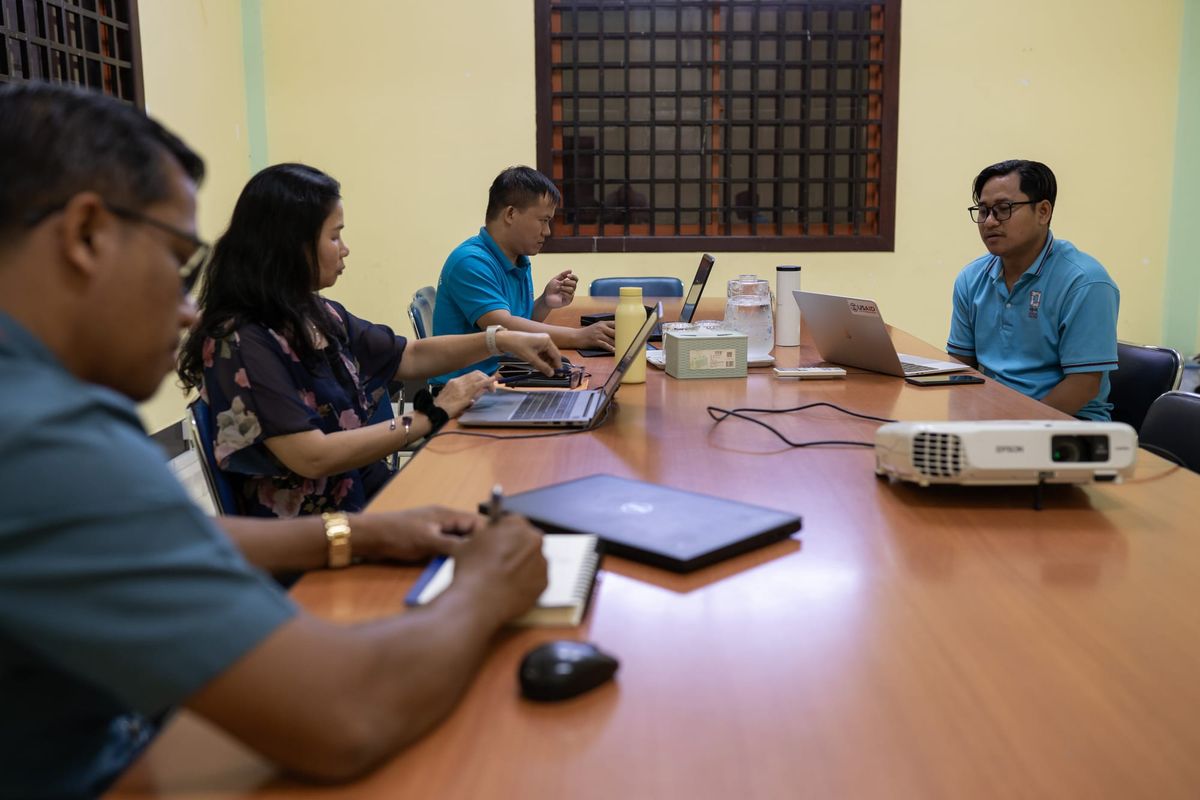
An article published in the Journal of Human Trafficking examining how Cambodian stakeholders have responded to recommendations made by trafficking survivors has found a significant disconnect between survivors’ priorities and implementation practices, despite broad support for survivor-centered approaches. Drawing on feedback from NGOs, local authorities, law enforcement, and other stakeholders to recommendations generated through Chab Dai’s Butterfly Longitudinal Research Project, the study found that community-based awareness programs are often prioritized over the institutional reforms survivors say are needed. It also identified resource constraints, institutional barriers, and cultural factors as major obstacles to implementing structural change and meaningfully involving survivors in decision-making.
Despite the adoption of anti-trafficking laws, policies, and specialized enforcement mechanisms in many countries, significant gaps often remain between formal commitments and effective implementation. The authors argue that a contributing factor to this gap can be the limited incorporation of survivor perspectives into anti-trafficking policymaking and program design. This failure to meaningfully include survivor voices continues to hinder the development of effective anti-trafficking strategies, they note, underscoring the need for greater survivor participation while acknowledging the complex challenges that implementation can present.
The Butterfly Longitudinal Research Project seeks to address this issue through its unprecedented 10-year panel study of 128 survivors of human trafficking in Cambodia. By building long-term, trust-based relationships with participants, the project has generated detailed insights into survivors’ experiences and their recommendations for improving services and support. Chab Dai itself has shifted to a survivor-centered model in recent years, emphasizing empowerment, community support, and leadership development.
The study suggests that stakeholders often focus on implementing recommendations that fit within existing services rather than those requiring additional resources or institutional change. In Cambodia, NGOs reported high levels of family support and protection programs, but some acknowledged that limited budgets constrained what they could offer. One organization described providing struggling families with occasional assistance of just 60,000 riel (about US$15) from commune funds, illustrating the practical limits on support. Local authorities reported regularly running community awareness sessions, yet more resource-intensive activities such as monitoring migration patterns and maintaining contact with trafficking returnees presented more of a challenge. The clearest gap emerged around survivor participation — although survivors repeatedly called for a greater role in shaping anti-trafficking responses, only three of the ten NGOs surveyed reported involving survivors extensively in organizational decision-making, while half reported no survivor involvement at all.
The authors argue that effective implementation of survivor recommendations requires addressing both structural barriers and local implementation challenges. They call for survivors to be given a formal role in designing, implementing, and evaluating policies and programs, alongside stronger accountability mechanisms to track whether recommendations are being acted upon. They also highlight the need for strategic investment in both local capacity building and structural reform initiatives, recognizing that resource constraints often mask deeper institutional resistance.
Key priorities include meaningful survivor inclusion in NGOs’ decision-making processes, moving beyond consultation to genuine participation in program design and evaluation. Collaboration between NGOs, local authorities, law enforcement, and the private sector should be addressed as a critical gap, particularly in high-risk industries. Local authorities also require additional resources and training to implement comprehensive support services, while developing trauma-informed reporting systems and strengthening cross-sector collaboration protocols would significantly improve service delivery to survivors. Finally, the authors underline that concerns around corruption, gender-sensitive services, and institutional resistance to change must be addressed.
The study concludes that, while stakeholders generally understand what survivors are asking for, meaningful change will require a shift from consulting survivors to sharing power with them. Without formal mechanisms for survivor participation and accountability, anti-trafficking efforts risk continuing to prioritize short-term interventions over crucial systemic reforms.
Here’s a roundup of other noteworthy news and initiatives:
The International Labour Conference last week adopted the Decent Work in the Platform Economy Convention, 2026, establishing the first global labour standard for platform workers. The Convention affirms the application of fundamental labour rights in the platform economy and includes provisions on worker misclassification, algorithmic management, social protection, minimum remuneration, data protection, and safeguards against unfair deactivation.
In its latest annual report, the Group of Experts on Action against Trafficking in Human Beings (GRETA) warns that trafficking for criminal exploitation is increasing across Europe, with victims being compelled to engage in activities including drug trafficking, property crimes, money laundering, and online scams. The report highlights growing concerns around the online recruitment of victims, particularly children and young people, and calls on governments to strengthen measures to identify victims and prevent their criminalization.
Several countries across the Americas have advanced measures aimed at preventing goods produced with forced labour from entering domestic markets. Canada has introduced legislation that would establish a standalone framework for identifying high-risk goods, requiring enhanced supply chain traceability information and prohibiting imports linked to forced labour. In Brazil, a substitute text for Bill 2799/2015 would expand a proposed forced labour import and sales ban beyond the cocoa sector to cover all industries, while Ecuador has adopted Resolution No. 005-2026, introducing import restrictions targeting products made with forced labour.
U.S. Customs and Border Protection has published new Forced Labor Enforcement Guidance for importers, consolidating information on enforcement mechanisms under the Uyghur Forced Labor Prevention Act (UFLPA), Countering America’s Adversaries Through Sanctions Act (CAATSA), and Withhold Release Orders (WROs). The guidance includes process maps, explanations of detention and exclusion procedures, and examples of supply chain documentation and due diligence measures that companies can use to support compliance efforts.
China has published its National Human Rights Action Plan for 2026–2030, the fifth iteration of the framework since its introduction in 2009. Among its business and human rights commitments, the plan calls for strengthened corporate awareness of human rights responsibilities and promotion of the implementation of human rights due diligence in line with the UN Guiding Principles on Business and Human Rights.
A new investigation by MRRORS documents the impact of the recent Iran war on migrant workers across Gulf Cooperation Council (GCC) states, with workers reporting abrupt job losses, unpaid wages, forced returns, and periods of unpaid leave following disruptions to key sectors including energy, hospitality, and security. The findings highlight how conflict-related economic shocks can exacerbate vulnerabilities for migrant workers whose employment, residency status, and access to basic services remain closely tied to their employers.
The Danish Institute for Human Rights has published a report synthesizing findings from six National Human Rights Institutions on the human rights impacts of climate change and related policy measures. The analysis finds that climate change is already undermining a range of fundamental rights, disproportionately affecting vulnerable groups, while highlighting gaps in adaptation measures, accountability, and access to information, participation, and justice.
Blue Dragon will host a webinar on 23 June (repeated on 24 June) on its roadmap to end human trafficking, focusing on community-based intervention models and practical examples of how it is collaborating with the Vietnamese Government to replicate and scale up its initiatives to protect people from exploitation.