Why overlooking the trafficking behind online scams is a strategic choice
Responding to online fraud solely as a financial crime does little to dismantle scam operations, the U.S. cites forced labour concerns as grounds for proposed tariff hikes, and the EU and Ukraine examine trafficking risks in crisis contexts.
Freedom Collaborative is pleased to announce the publication of a second briefing paper on the scam trafficking crisis, examining how governments evade their responsibilities to trafficking victims leaving compounds in Southeast Asia by framing the issue solely as a financial crime problem.
When governments, international organizations, law enforcement agencies, and civil society groups respond to scam compounds, they are often responding to fundamentally different interpretations of the same phenomenon. Some view compounds through the lens of human trafficking, activating legal obligations to identify and protect victims; others treat the issue as cybercrime or organized fraud, focusing on financial crime and network disruption; and some approach it through immigration enforcement. In reality, scam trafficking encompasses all these elements, but existing response systems were designed to address them separately rather than as a single, interconnected problem.
This fragmentation has consequences. Different framing produces different policy responses, and trafficking concerns are often deprioritized when the issue is treated primarily as cyber-enabled fraud or irregular migration. Our briefing argues that this is not a legal issue: the definition of trafficking under the Palermo Protocol already covers the vast majority of individuals coerced into scam operations, and the legal basis for victim protection is well established. Nor is it simply a product of institutional inertia or conceptual confusion. Instead, it reflects deliberate choices in framing the problem — and those choices determine who gets protected, who gets prosecuted, and what obligations governments are expected to fulfill.
Recognizing workers leaving scam compounds as trafficking victims would trigger requirements for victim identification, protection services, repatriation support, and accountability for failures to provide them. By contrast, approaching the issue as a financial crime problem allows governments to demonstrate action through raids, asset seizures, and investigations without assuming broader responsibilities. These measures can disrupt elements of scam networks, but they also provide a politically attractive response that avoids the commitments associated with victim protection.
Cambodia offers a clear example of how this dynamic operates in practice. The scam industry is now deeply embedded within the country’s economy, creating strong incentives to be seen to respond while avoiding meaningful disruption. One of the most telling findings from our coordination meetings with civil society partners earlier this year was the frequency with which compounds appeared to receive warning of inspections. Survivors reported being released before police arrived, with officers often never observed by those who remained inside. Rather than reflecting robust enforcement, these accounts suggest a system in which the industry manages its exposure while continuing to operate largely uninterrupted, as documented in a new report by Amnesty International.
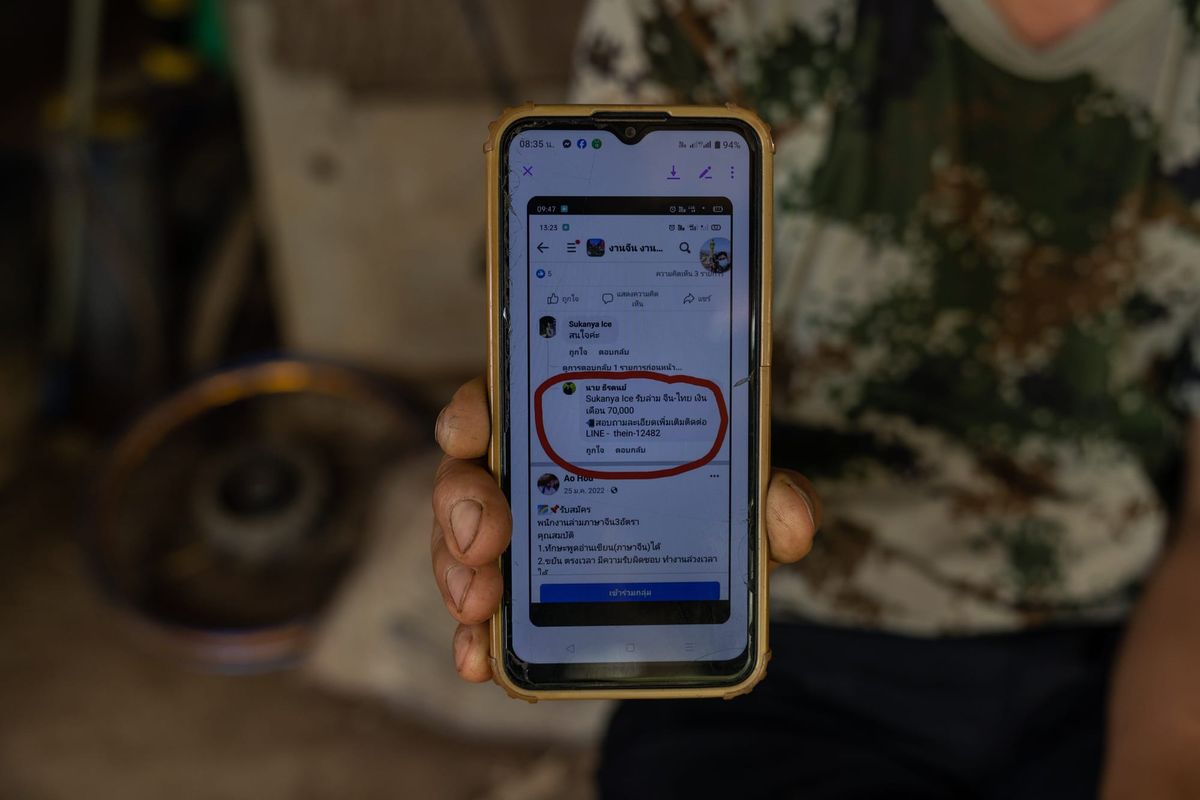
The consequences extend far beyond the compounds themselves. When governments fail to identify trafficking victims, survivors are frequently treated as immigration offenders, deported, fined for overstays, or left to rely on overstretched civil society organizations for support. As discussed in our previous briefing, this approach creates significant gaps in protection while doing little to address the conditions that make exploitation possible. Furthermore, it creates opportunities for further exploitation. Practitioners in Cambodia have documented an increase in predatory “rescue” operations, with individuals posing as rescuers on social media, colluding with compound operators, and extracting money from survivors and their families.
Meanwhile, the industry’s continued geographic expansion follows a similar pattern — when enforcement pressure increases in one location without addressing the underlying system, operations simply relocate. Traffickers have also shown a remarkable ability to adapt their recruitment routes. For instance, when direct pathways from East Africa were disrupted, victims were quickly rerouted through Malaysia and transported overland to evade immigration scrutiny.
Addressing these challenges does not require significant new funding, but it does require a more effective use of existing resources. Survivor testimony should be recognized as a valuable source of intelligence for investigations, while victim protection must be integrated into enforcement strategies rather than treated as a separate concern. Existing assistance funding should be made accessible through more flexible mechanisms, and greater support should be directed toward the organizations that identify, assist, and repatriate survivors. Strengthening victim identification systems, practitioner networks, and coordination between civil society and law enforcement would improve outcomes for survivors while also making efforts to disrupt scam networks more effective.
Here’s a roundup of other noteworthy news and initiatives:
The Trump administration has proposed additional tariffs of 10-12.5 per cent on imports from 60 economies, arguing that their failure to prohibit or effectively prevent the import of goods made with forced labour creates unfair competition for U.S. producers. The EU, China, Vietnam, Singapore, Switzerland, the UK, and others rejected or disputed findings underpinning the proposal, arguing they already have measures in place to address forced labour risks in supply chains.
A new investigation by Global Rights Compliance documents the exploitation of North Korean workers employed in Russia, with violations including passport confiscation, excessive working hours, surveillance, and extensive wage deductions. The findings have prompted calls for the EU to include North Korea’s overseas labour program in the risk database being developed under its new Forced Labour Regulation.
Representatives from EU Member States, international organizations, and Ukraine met last week as part of the EU Network of National Anti-Trafficking Coordinators and Rapporteurs to discuss the ways in which trafficking risks can be addressed during emergencies and humanitarian crises. The meeting highlighted lessons from the response to displaced people fleeing Russia’s war against Ukraine, while also identifying funding constraints and gaps in national action plans as ongoing challenges to effective anti-trafficking efforts.
The Council of Europe’s GRETA panel has published its fourth evaluation report on Norway, highlighting growing concerns around child criminal exploitation by gangs, and the increasing number of Norwegian children identified as victims of sexual abuse through digital platforms. The report also points to persistent vulnerabilities among migrant workers and notes that Norway still lacks a formal and systematic mechanism for collecting data on identified trafficking victims.
A new report by Repatriate the Children Sweden argues that the collapse of Al Hol camp in northeast Syria in January 2026 demonstrates the unsustainability of the prolonged detention of thousands of people with perceived links to ISIS, the majority of them children. The analysis warns that continued non-repatriation exposes detainees to violence, trafficking, exploitation, and recruitment by armed groups, while calling for the urgent repatriation of third-country nationals as the only durable way in which to safeguard children’s rights, support reintegration, and enable accountability through due process.
Accem has launched a consultation on trafficking for the purpose of surrogacy, seeking input from organizations and practitioners on legal frameworks, identified cases, and responses across different countries, by 15 June.