Soaring costs increase children’s vulnerability to exploitation in Vietnam
The closure of the Strait of Hormuz leads to family hardship and school dropout in Vietnam, an Equidem report calls for stronger protections for migrant workers in platform-based jobs, and Germany approves trafficking prosecution reforms.
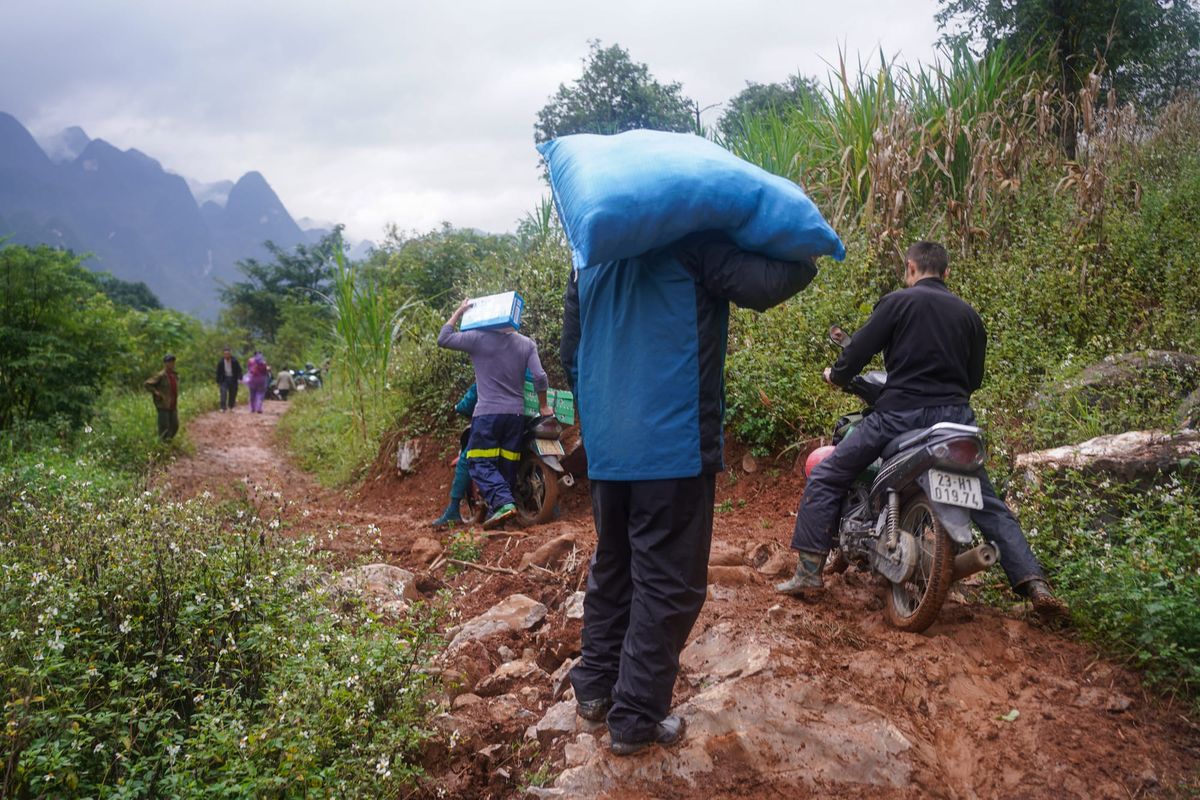
Families in Vietnam are facing increased risks of child labour, school dropout, and human trafficking as rising fuel prices following the closure of the Strait of Hormuz place growing pressure on household incomes. According to Blue Dragon Children’s Foundation, many families are experiencing financial hardship severe enough to threaten children’s continued participation in education, increasing the likelihood they will leave home in search of employment and become vulnerable to exploitation.
The closure of the Strait, a consequence of the U.S.-Israel war with Iran, has contributed to higher global fuel prices, increased shipping costs, and broader inflationary pressures across Asia. For Vietnam, these developments have affected both household expenditure and economic activity. Rising transportation and production costs have increased the price of essential goods and services, while also reducing the viability of many businesses and livelihoods. As a result, families are confronting a combination of rising living costs and declining income, a situation that is particularly acute among poorer households.
The impacts are evident across multiple sectors of the economy. Businesses facing higher operating costs and lower levels of consumer spending have been forced to reduce their workforce or cease trading altogether. For agricultural households, the cost of production has increased substantially; fertilizers, pesticides, seeds and animal feed have all become more expensive, reducing already limited profit margins and, in some cases, leaving families unable to cover their costs. In urban areas, workers in the informal economy, including street vendors and motorbike taxi drivers, are similarly affected, as higher fuel prices directly increase their expenses.
These pressures are felt most acutely by low-income households, which typically spend a larger proportion of their income on food, energy and transport, and possess few financial reserves. As a result, even relatively modest increases in expenditure or reductions in income can have significant consequences for family welfare. In some communities, families report struggling to afford food, rent and other basic necessities, Blue Dragon reports.
These economic burdens can make it challenging for children to continue in education. Families facing financial hardship may be unable to afford school-related expenses or may require children to contribute to household income. Additional barriers arise as educational institutions themselves struggle with rising costs. In mountainous regions, Blue Dragon’s team members report that increased transportation expenses have made travel to school more costly, while boarding schools serving remote communities face growing difficulties in providing meals and other essential services. Some schools have sought additional contributions from parents, creating further challenges for families already experiencing severe financial strain.
According to Blue Dragon, children who leave education as a result of these pressures face an elevated risk of labour exploitation and trafficking. Some travel to urban centers in search of work, while others enter informal or hazardous forms of employment. The organization warns that the economic consequences of the fuel price crisis are therefore extending beyond household finances, creating conditions that increase children’s vulnerability to exploitation and undermine their long-term educational opportunities.
In response, the organization has launched a fundraising appeal to help families and young people affected by the crisis. Supporting children’s access to education is a central component of the organization’s work — it provides assistance through scholarships, fee relief, tutoring, school supplies, transportation, and online learning support. Blue Dragon also identifies and assists children and young people experiencing crisis situations, including trafficking, labour exploitation and extreme poverty, while advocating for stronger laws and policies to protect vulnerable populations. In addition, it works with families, schools, communities and government institutions to strengthen systems designed to prevent exploitation.
Here’s a roundup of other noteworthy news and initiatives:
Human trafficking into scam compounds across Myanmar and Southeast Asia continues to adapt despite repeated crackdowns, according to new research by Myanmar Witness. Drawing on satellite imagery, victim testimonies, and open-source investigations, the analysis documents how people continue to be forced into online fraud operations while scam networks increasingly shift locations to evade enforcement. And this article contrasts the profiles and narratives surrounding Chinese and Vietnamese survivors of forced criminality, showing how ideas of deservingness and blame shape public and institutional responses, and calling for more nuanced understandings of coercion into the online scam industry.
Workers’ rights continued to deteriorate globally in 2026, with record levels of arrests, detentions, attacks on free speech and assembly, and violence against trade unionists, according to the latest ITUC Global Rights Index. The findings point to shrinking civic space, growing restrictions on the right to organize and strike, and increasing use of surveillance technologies to monitor and control workers, with conditions worsening across many regions, including Europe and the Americas.
Researchers from the University of Texas argue there is little evidence that major sporting events such as the FIFA World Cup, Olympics or Super Bowl lead to spikes in human trafficking, despite recurring public warnings and awareness campaigns. Instead, they suggest that increased reporting around these events is often driven by heightened attention and enforcement efforts, and caution that event-focused responses can divert resources away from longer-term prevention and support strategies.
A new Equidem briefing documents the experiences of African migrant workers employed in the UAE’s e-commerce and app-based delivery sectors, highlighting recruitment debt, deceptive hiring practices, excessive working hours, wage insecurity, and racial discrimination. Drawing on testimonies from workers from Kenya, Uganda, Ghana, Cameroon and Sudan, the report calls for stronger international labour protections to ensure migrant workers in platform-based and subcontracted employment are not excluded from future standards on decent work.
Germany’s federal government has approved draft legislation to strengthen criminal enforcement against human trafficking and sexual exploitation, including by expanding trafficking offences to cover forced marriage, exploitative adoption, and surrogacy arrangements. The proposed reforms would also, for the first time, allow prosecution of people who knowingly use services provided through labour exploitation, and introduce stronger protections for children and trafficking victims compelled to commit offences as part of their exploitation.
An Indian citizen who moved to the UK under the skilled worker visa scheme has been awarded nearly £30,000 (US$40,400) after his employer failed to give him a single day of work for a year. The man paid £17,000 (US$23,000) to recruitment agents and was given a certificate of sponsorship, but was not given any shifts and could only take limited work elsewhere due to his visa conditions. Employment justice charity Work Rights Centre has called for the visa scheme to be reformed to make it easier to change employers when rights or contracts are breached.
The latest podcast episode of Conversations on Modern Slavery explores the way in which climate change can increase vulnerability to trafficking and exploitation, drawing on research from Antigua and Barbuda. The discussion highlights six interconnected pathways, including loss of livelihood, housing insecurity, displacement, disrupted education, and food and water insecurity, through which climate impacts can heighten risks of exploitation and forced labour.