Global Advance Projects steps in as official repatriations fail in Southeast Asia
Civil society fills a critical support gap for detained scam-compound survivors, GB Energy rows back its pledge to ban forced labour in its supply chains, and the ILO and EU work to strengthen labour protections in Turkmenistan's cotton sector.

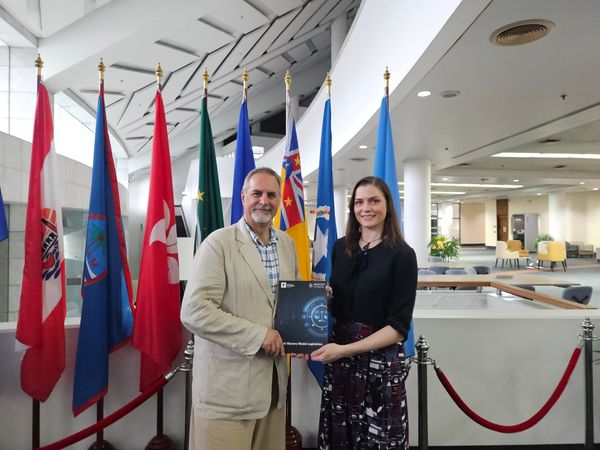
Government-to-government (G2G) cooperation on the repatriation of trafficking survivors has effectively stalled in some of the areas worst affected by trafficking for forced criminality, leaving civil society organizations as the primary groups supporting survivors escaping cyber-scam compounds. Global Advance Projects (GAP), based in Mae Sot, Thailand, is one of the only organizations coordinating and supporting survivors crossing the Thai-Myanmar border, many of whom are ultimately detained inside Thai Immigration Detention Centers (IDCs).
The breakdown in repatriation processes stems from the collapse of memoranda of understanding (MOUs) and standard operating procedures (SOPs) between Thailand, Myanmar, and China, meaning only a small number of people leaving scam compounds are currently screened through formal victim identification channels. Instead, survivors are crossing the border through irregular smuggling routes before being processed into Thailand’s immigration detention system, rather than being promptly identified as trafficking victims and assisted to return home safely. At the same time, GAP and other frontline groups report that trafficking into scam compounds continues, with people still being transported into Myanmar through routes such as the Three Pagoda Pass crossing.
In this context, GAP notes that outreach inside detention centers has become a critical intervention point. Survivors frequently report feeling abandoned and criminalized, while the lack of support leaves many vulnerable to re-trafficking. According to the organization, re-recruitment can begin inside the detention centers themselves, with traffickers attempting to recruit detainees from inside IDCs, including through messaging apps such as Line. Many survivors also express an intention to return to scam compounds after repatriation because they see few economic alternatives at home and receive little practical or emotional support once released from detention.
Yet GAP founder and International Director Judah Tana says even relatively simple interventions can significantly reduce survivors’ vulnerability, including helping them contact family members, arranging temporary accommodation, or ensuring they are met at the airport when they arrive home. For this reason, GAP and its sister organization, Acts of Mercy International, which focus on survivors of human trafficking and trafficking for forced criminality, conduct weekly visits to IDCs in both Mae Sot and Bangkok, providing immediate support and assisting with release and repatriation processes.
When many newly detained survivors arrive, they are effectively cut off from the outside world so, in some cases, GAP provides access to mobile phones and QR codes linking them to country-specific messaging groups, helping them get in touch with families, communities, and support networks. The group also provides emergency assistance inside detention facilities, where conditions are frequently described as overcrowded and lacking in adequate services. GAP additionally coordinates practical aspects of repatriation, including communication with embassies and flight bookings.
Much of GAP’s work involves helping survivors navigate the administrative and financial barriers that can significantly prolong detention. The organization notes that Ethiopia, for example, has stopped issuing free emergency travel certificates, leaving survivors’ families to pay around US$120 for the certificates through the Ministry of Foreign Affairs office in Addis Ababa, contributing to average detention periods of five to six weeks for Ethiopian nationals. Survivors also face difficult choices regarding detention-related fees. According to GAP, some detainees pay up to 10,000 Thai Baht (US$305) to accelerate aspects of their release process, while those unable or unwilling to pay may be detained for longer periods.
GAP additionally works with embassies and law enforcement agencies to alert governments when their nationals have been detained or identified among trafficking survivors. In many cases, it says, authorities were initially unaware their citizens were being held along the border. This has included cases involving unreported deaths linked to conflict around scam compounds in Myanmar – in several cases, families and governments reportedly learned of the deaths only after being contacted by NGOs.
The organization has also recently drawn attention to the case of 495 foreign nationals imprisoned in Hpa-An, Myanmar, after what rights advocates describe as deeply flawed legal proceedings. The group was sentenced in January 2026 following hearings conducted inside detention cells without legal representation or formal judicial process. According to GAP, many believed they were preparing to return home and had already purchased tickets before being abruptly transferred to prison.
For organizations working along the Thai-Myanmar border, the collapse of formal repatriation pathways has left NGOs filling an increasingly urgent protection gap. Without stronger victim identification systems, coordinated repatriation mechanisms, and meaningful post-return support, advocates warn that survivors escaping scam compounds remain at continued risk of detention, abandonment, and re-trafficking even after they manage to leave.
Here’s a roundup of other noteworthy news and initiatives:
The UK government appears to have softened earlier commitments to ensure its state-backed clean energy company, GB Energy, would operate with supply chains free from forced labour risks. The shift has intensified scrutiny of solar procurement linked to Xinjiang-related forced labour concerns, as campaigners and MPs warn that rapid renewable energy expansion is outpacing the traceability and due diligence needed to verify whether imported solar components are free from exploitation.
A new case study from The Remedy Project examines forced labour risks in Taiwan’s manufacturing sector through the lens of the 2025 U.S. Customs and Border Protection Withhold Release Order against Giant Manufacturing. The analysis argues that many structural warning signs linked to recruitment practices, production pressures, and purchasing models were visible well before enforcement action was taken, raising broader questions about whether current due diligence systems are equipped to identify and prevent harm early enough.
Fortify Rights’ new investigation shows that Rohingya refugees in Malaysia are being held indefinitely in overcrowded immigration detention centers under conditions described as inhumane and degrading, with reports of abuse, medical neglect, and prolonged detention without judicial review. The report also raises concerns that Malaysia’s new refugee registration scheme could reinforce the criminalization of refugees unless it leads to formal recognition, legal protections, and release from detention for Rohingya and other displaced groups.
A live storytelling event at Stanford University featured research from the Stanford Human Trafficking Data Lab on the use of data and technology to support anti-trafficking interventions, survivor support, and supply chain analysis. The presentation also highlighted a new collaboration with Brazil’s Federal Labor Prosecution Office to develop data-driven tools aimed at mapping exploitative supply chains and strengthening labour enforcement efforts.
A new joint project by the ILO and the European Union aims to strengthen labour protections and address child and forced labour risks in Turkmenistan’s cotton sector, an area that has faced longstanding scrutiny from rights groups over the mobilization of public-sector workers and continued reports of child labour during harvests. The initiative focuses on labour law reform, implementation of international standards, and stronger monitoring systems, while questions remain over whether workers will have safe and independent channels to report abuse without retaliation.
IOM, UNHCR and NGO network ICVA have launched a new online dashboard mapping protection and assistance services along the Western Africa Atlantic migration route, one of the world’s most dangerous mixed movement corridors. The platform is designed to strengthen coordination and identify where additional support may be needed, particularly in areas such as legal aid, trafficking-related assistance, child protection, and gender-based violence services outside major urban centers.
Justice and Care has published a report on early intervention to prevent the exploitation of care-experienced young people in the UK, drawing on findings from dozens of cross-sector experts. It calls for earlier, relationship-based and genuinely trauma-informed responses which are directly shaped by lived experience, to better protect children before exploitation takes hold.
KOK – German NGO Network against Trafficking in Human Beings is hosting an online discussion on 10 June to present a new study examining forced marriage as a form of exploitation under the revised EU Anti-Trafficking Directive (in German). The discussion will explore implications for survivor protection, support services and implementation in Germany. Register here!