NGOs report hundreds of workers imprisoned in Myanmar without due process
Workers exiting Myanmar’s scam centers are treated as offenders with no legal protection, a recruitment platform in Malaysia is dropped due to exploitation risks, and migrant workers in the Gulf are forced to continue work in conflict zones.
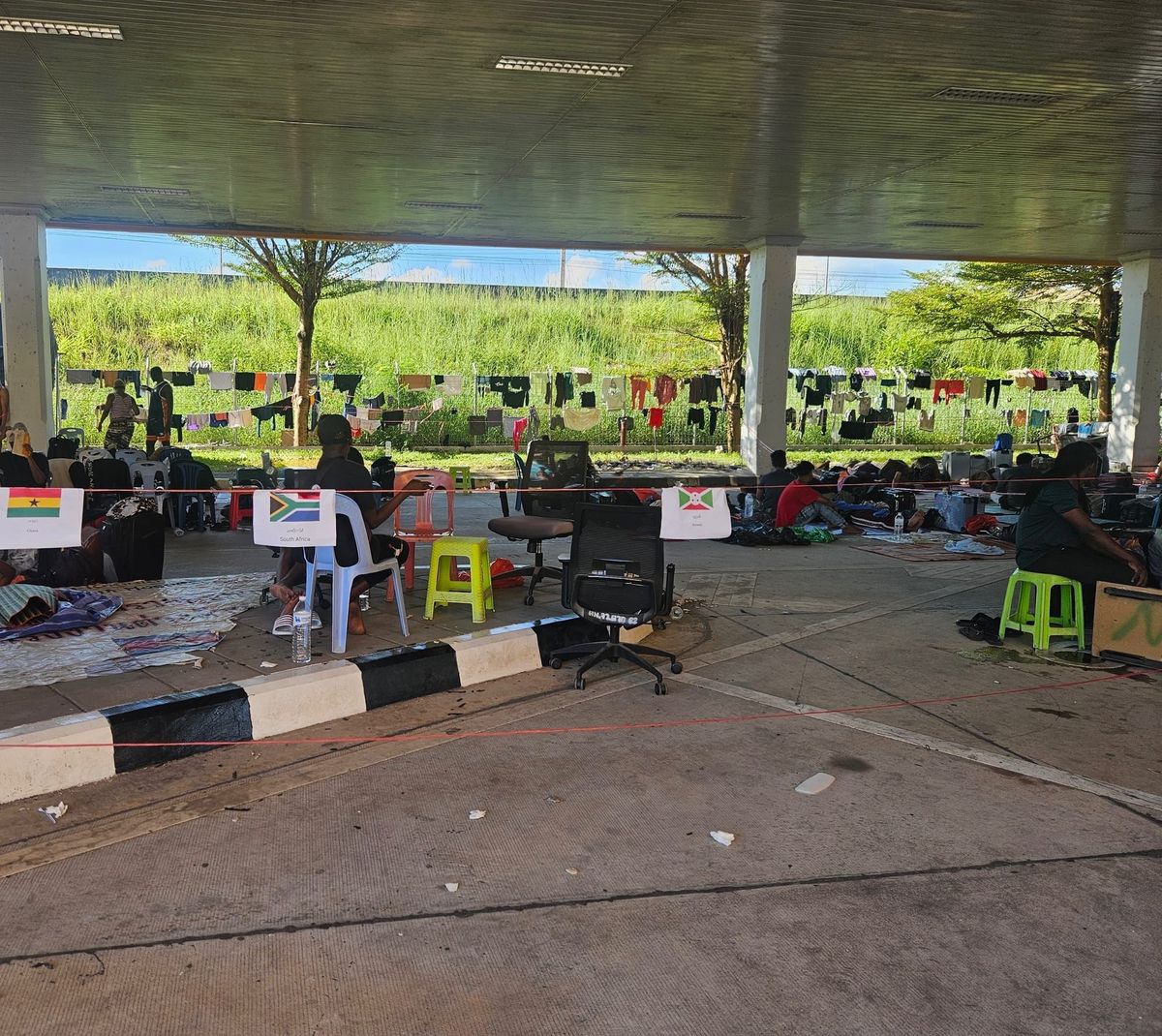
Nearly 500 individuals who escaped cyber-scam centers in Myanmar have been sentenced to at least one year in prison for fraud-related offences, in proceedings that raise serious due process concerns. Frontline NGOs say the group had initially been held in what they believed to be a rescue facility and were preparing for repatriation, when they were unexpectedly transferred to a prison after Myanmar’s law enforcement and immigration authorities intervened.
According to members of the Freedom Collaborative Trafficking for Forced Criminality Working Group, the individuals were denied fundamental legal protections. They had no access to representation, did not appear before a formal court, and were subjected instead to summary proceedings conducted inside detention cells. Moreover, their governments were not notified through official channels; in many cases, authorities only became aware of the situation after being alerted by NGOs. The group is currently being held in Hpa-An, in cramped conditions with little to no access to external assistance and significant concern for their health and wellbeing.
The report comes amid intensified international pressure on criminal networks linked to scam operations, with major announcements from the U.S. in the past week. Last Thursday, it stated its Scam Center Strike Force had taken a series of actions against organized crime groups and individuals linked to cyber-scam centers in Southeast Asia, including criminal charges and the seizure of online assets. And the Treasury Department sanctioned a prominent Cambodian senator and entities within his syndicate for stealing millions of dollars from U.S. victims, describing his scam-center network as “a base to target U.S. citizens and commit human rights abuses with impunity”. In parallel, the State Department is offering a reward of up to US$10 million for information leading to the seizure or recovery of scam proceeds relating to a compound in Myanmar’s Karen State.
While the announcements acknowledged that many scam-center workers are victims of human trafficking, there is still almost no formal support for the thousands of individuals exiting raided compounds. As outlined in our recent briefing paper, they are often discharged with few protection measures in place, leaving many to sleep on the streets with limited access to basic necessities and no clear route to repatriation. Outside of formal support structures, victims are highly vulnerable to human rights violations, prosecution, and the risk of re-trafficking.
This phenomenon is currently playing out in Cambodia, and was similarly evident in Thailand last year, when authorities, overwhelmed by the arrival of thousands fleeing raided compounds in Myanmar, suspended victim screening processes. At the same time, limited engagement from some countries of origin left many stranded without access to shelter, healthcare, or onward travel.
In the current Myanmar case, a small number of governments are believed to have conducted diplomatic visits to detained nationals, but access remains inconsistent and restricted. Many countries have refrained from public comment, reportedly due to concerns about diplomatic sensitivities with Myanmar’s authorities. The detainees represent a wide range of nationalities – nearly 200 are Chinese, with others originating from across South and Southeast Asia, as well as East and West Africa; while there are unconfirmed indications that the Philippines may be working to secure the release and repatriation of its nationals, engagement from other governments appears limited. Uncertainty also remains around potential exit routes, including whether repatriation would occur via Yangon or through Thailand.
These developments point to a broader breakdown in established operational frameworks. Following shifts in territorial control among armed groups in Myanmar, standard operating procedures have become increasingly fragmented. The previously functioning, state-coordinated repatriation mechanisms between Myanmar, Thailand, and China have effectively stalled, with only small numbers of individuals – reportedly around 10 from each country at a time – moving through official channels.
In the absence of formal systems, returns have increasingly relied on informal cross-border movements, say NGOs, with individuals smuggled over river crossings and funneled into immigration processes in neighboring countries as they attempt to return home. This approach exposes them to heightened risks, including prolonged detention, uncertain legal status, and inadequate living conditions while awaiting resolution.
NGOs have expressed concern that the current situation may signal a broader shift in approach by authorities in Myanmar. There are fears that individuals removed from scam compounds in future operations could face imprisonment rather than being processed through protection-oriented frameworks. At the same time, there is concern that limited public scrutiny, due in part to governments’ reluctance to raise the issue, may allow such practices to continue unchecked. Without sustained attention from civil society and reporting actors, these patterns risk becoming further entrenched.
Here’s a roundup of other noteworthy news and initiatives:
A proposed new migrant worker recruitment platform in Malaysia has been shelved following political and civil society pressure over links to existing systems associated with the alleged exploitation of Bangladeshi workers. The decision highlights ongoing concerns around opaque recruitment models tied to debt bondage, trafficking risks, and governance gaps, underscoring the need for greater transparency and reform to prevent systemic abuse in labour migration pathways.
An analysis by MRRORS highlights the way in which migrant workers across Gulf states are required to continue working in conflict-affected areas, often near targeted infrastructure and without adequate safety measures or evacuation plans. Testimonies point to entrenched vulnerabilities including employer control over movement, lack of risk disclosure, and limited access to remedies, raising concerns about systemic labour exploitation in crisis settings.
A new impact briefing from the Centre for Child Rights and Business highlights the expansion of Child Rights Action Hubs as a collaborative model to address child labour in high-risk, lower-tier supply chains across countries including Bangladesh, Pakistan, and the Democratic Republic of the Congo. It emphasizes growing evidence for locally embedded multi-stakeholder approaches that combine prevention, remediation, and strengthened child protection systems to tackle exploitation where traditional auditing and oversight are weakest.
An academic analysis focused on India’s Sonagachi district, where anti-trafficking efforts are shaped by a complex “hybrid governance” system involving state actors, NGOs, and sex worker collectives whose approaches often overlap and conflict, finds that, while community-led initiatives can offer more participatory and locally grounded responses, entrenched legal frameworks and unequal power relations continue to reproduce marginalization, particularly through the conflation of sex work with trafficking, and persistent caste, class, and migration inequalities.
A news investigation by The New York Times has found that isotope testing of 20 Labubu dolls sold by Pop Mart identified Xinjiang-origin cotton in the clothing of 16 samples, based on independent laboratory analysis. The findings raise potential compliance risks under the Uyghur Forced Labor Prevention Act, illustrating how even small product components can expose companies to forced labour scrutiny in complex global supply chains.
And as scrutiny of forced labour in supply chains intensifies, a legal commentary published via Thomson Reuters highlights the way in which U.S. trade authorities are expanding tools such as Section 301 investigations to target risks across multiple jurisdictions. This shift moves beyond isolated cases, embedding human rights considerations more firmly into trade enforcement and shaping how companies manage sourcing and regulatory exposure.
The Freedom from Slavery Global Forum 2026 will take place on 11–12 May in Istanbul, bringing together survivor leaders, civil society, governments, and private sector actors to advance action on modern slavery. Register here to attend in person or online!