CSOs describe authorities’ multiple failures to uphold the non-punishment principle
Experts say the non-punishment principle should cover all trafficking-related penalties, the IOM highlights the increasingly dangerous routes faced by migrants, and Indonesia passes a law to protect domestic workers.
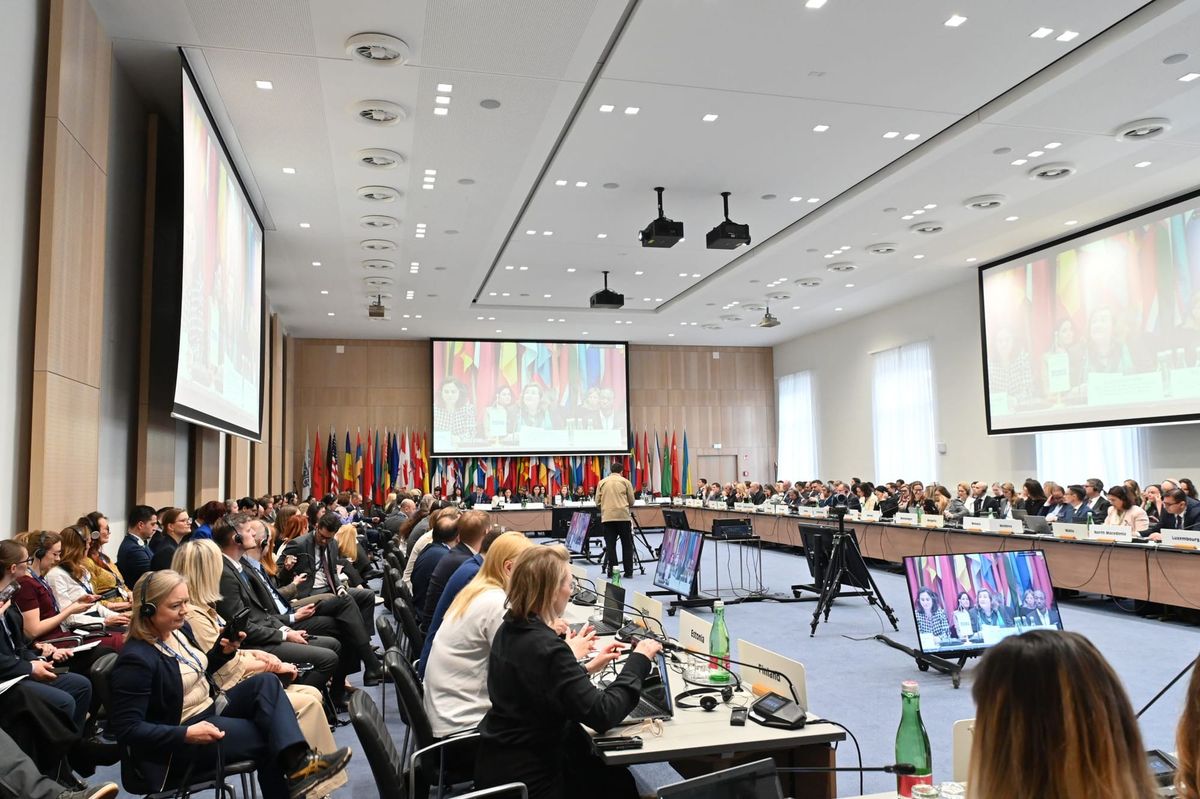
Gaps between the legal frameworks designed to protect victims of human trafficking and what actually happens on the ground, along with the prioritization of immigration enforcement over victim protection, mean the non-punishment principle and other victims’ rights are often not applied in practice, according to speakers at the Combating Trafficking in Human Beings 26th Alliance Conference this week.
The conference, convened by the Organization for Security and Co-operation in Europe (OSCE), focused on the security risks arising from forced criminality, and brought together governments, civil society and the private sector to address this fast-growing form of human trafficking. It coincided with the launch of a new OSCE study on trafficking into cyber-scam operations and the implications for OSCE countries, as well as increased attention on the issue after publication of an article in The Wall Street Journal, which stated that up to 60 per cent of Cambodia’s economy is now tied to the scam industry.
At a side event organized by La Strada International and the Global Alliance Against Traffic in Women (GAATW), speakers explained that the meaning and intent of protection frameworks are frequently not carried through in practice. In some cases, they are effectively overridden by migration laws and political pressure to remove people from the country as quickly as possible, leaving victims exposed to punishment. A system may appear strong on paper, they noted, but still fail in reality if identification is delayed, procedures are too rigid, or vulnerability is not properly taken into account.
Panelists also highlighted that, even where the non-punishment principle is applied, its scope is often too narrow. Avoiding criminal prosecution alone is not enough if victims remain burdened by fines, administrative penalties, or debts directly linked to their exploitation. In practice, some offenses may be lifted while others are not, leaving individuals still facing significant financial and legal consequences in their daily lives. For the non-punishment principle to be meaningful, they argued, all penalties arising from the trafficking situation should be addressed.
Speakers from Austria-based LEFÖ-IBF and Denmark-based HopeNow illustrated these gaps through a case they worked on. The situation concerned a Nigerian woman trafficked into sexual exploitation in Denmark, who was violently abused by her traffickers but initially avoided police contact due to fear and coercion. With NGO support, she was eventually identified as a victim and placed in a shelter. However, a misunderstanding over a voluntary return document, signed during what should have been a recovery period, led her to believe she had to leave the country. She fled and was later arrested in Austria as an undocumented migrant. Despite informing Austrian authorities that she was a victim of trafficking, she was not formally identified and was detained. Under the Dublin system, she was returned to Denmark, where she was imprisoned for more than a year and faced deportation.
Her case illustrates how immigration enforcement can override victim protection frameworks, resulting in repeated punishment rather than support, the panelists said. Only through sustained NGO intervention and legal action under the CEDAW treaty was she ultimately released. Furthermore, it demonstrates multiple, cumulative failures to uphold the non-punishment principle: the victim was first penalized in Denmark when required to sign a return agreement during her recovery period; she was then detained in Austria after not being identified as a victim, despite disclosing her situation; a further failure occurred when, under the Dublin system, Austria declined to take responsibility for her case despite clear protection gaps; finally, she was detained again in Denmark for more than a year upon her return. Each stage reflects how, in practice, victims can be repeatedly punished for acts directly linked to their exploitation.
To address these gaps, speakers emphasized the need for earlier and more consistent identification of trafficking victims, including through better training for frontline officials and a well-functioning National Referral Mechanism. The non-punishment principle must be applied consistently and, where necessary, retroactively, with protection clearly prioritized over enforcement, they said. Effective communication between stakeholders is also essential – without coordinated cross-sector collaboration, implementation remains fragmented and ineffective. Panelists also stressed the importance of trauma-informed approaches, in order for officials to identify victims accurately and respond in ways that support their recovery.
Finally, the speakers highlighted the urgent need for sustained funding for NGOs, which carry out this work with few resources and limited staff. These organizations play a crucial role in identifying victims, providing support, and advocating on their behalf, they noted. Without adequate funding for shelters, outreach, and legal assistance, the non-punishment principle cannot be effectively realized in practice, and many victims will remain invisible within the system, with no one to intervene on their behalf.
Here’s a roundup of other noteworthy news and initiatives:
New data from the International Organization for Migration shows nearly 8,000 migrant deaths recorded globally in 2025, with risks remaining high as routes shift in response to conflict, policy changes, and climate pressures. It underlines the increasingly dangerous and fragmented journeys that continue to expose migrants to exploitation, protection gaps, and fatal outcomes, despite declining arrivals in some regions.
A coalition of NGOs warns that the conflict in Sudan has driven the world’s largest displacement crisis, with millions facing heightened risks of trafficking, child exploitation, and gender-based violence across the region amid severe funding shortfalls. It highlights escalating protection risks along displacement routes and in unde-resourced host countries, and calls for urgent, coordinated regional action to prevent further deterioration and exploitation of vulnerable populations.
Indonesia has passed a long awaited Domestic Workers Protection Law, granting legal recognition and labour protections to an estimated 4.2 million workers, many of whom faced exploitation, abuse, and forced labour conditions. The law introduces safeguards including minimum age requirements, contracts, and social protections, though effective implementation will be critical to addressing longstanding exploitation risks in the sector.
Meanwhile, migrant domestic workers in the United Kingdom are calling for reforms to the overseas domestic worker visa, warning that current restrictions on visa renewal and employer mobility increase vulnerability to exploitation, trafficking, and abuse. Advocacy groups highlight systemic gaps in protection frameworks, arguing that existing mechanisms fail to prevent conditions amounting to modern slavery, and push workers into more hidden and unsafe situations.
This article discusses the persistence of the systemic repression of Uyghur populations in Xinjiang, including forced labour, mass detention, and family separation, while global accountability efforts remain stalled despite extensive evidence of abuses. It highlights ongoing exploitation risks linked to global supply chains and a continued gap between documentation and enforcement in addressing state-driven forced labour systems.
A deadly boat capsizing involving Rohingya refugees in the Andaman Sea, with more than 250 people feared dead, has prompted renewed calls for coordinated regional action on trafficking and irregular migration across Southeast Asia. Advocates warn that displacement drivers in Myanmar and conditions in refugee settings are fueling exploitation by trafficking networks, highlighting the need for stronger cross-border enforcement and protection responses.
Join the virtual launch of the Just Sign It campaign on 24 April, bringing together unions, community groups, and garment workers from Asia in a transnational effort targeting Nike to pay fair taxes and improve wages across its global supply chains. Register here to attend!