Effective trafficking prevention must offer specific and actionable information
We share insights from our prevention campaigns at the Global Anti-Scam Summit Asia, the U.S. delays funding for survivor support programs, and OSCE publishes a new issue brief on human trafficking in armed conflict.
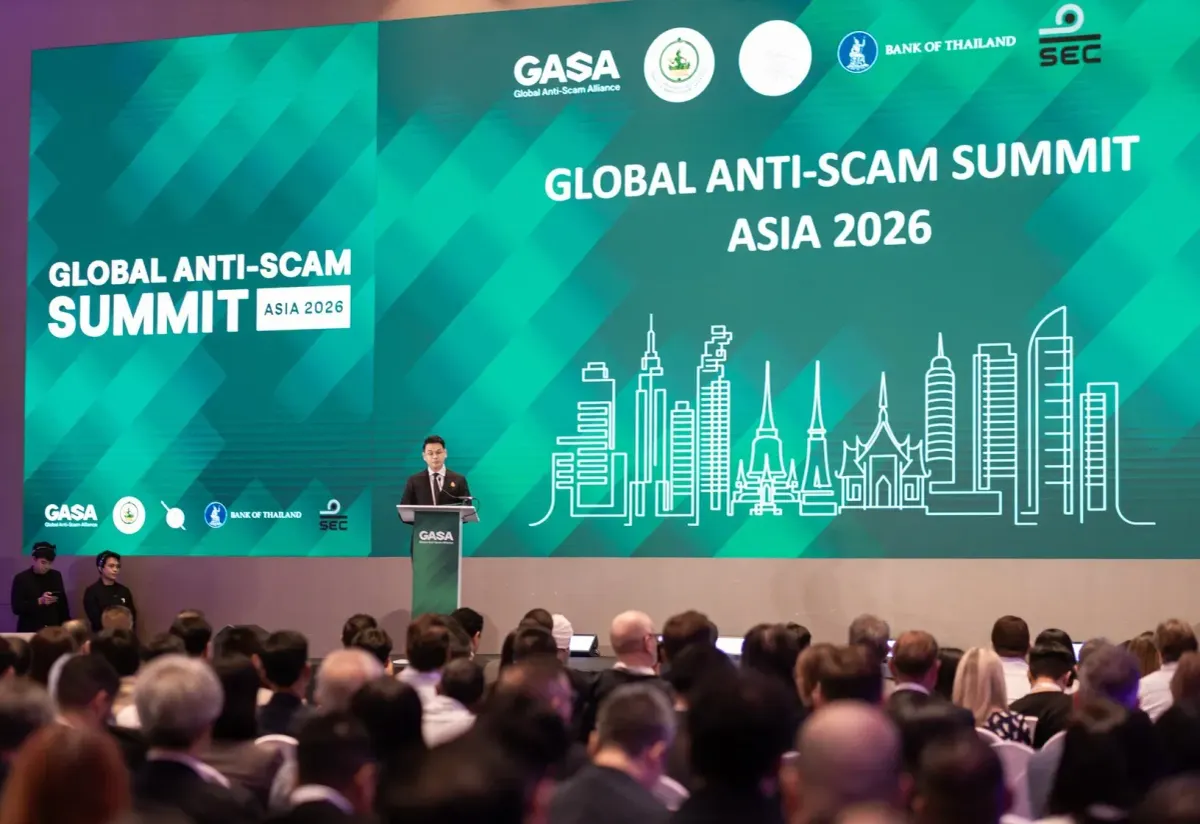
Freedom Collaborative’s Head of Partnerships, Mallika Karunan, participated in a panel discussion at the Global Anti-Scam Summit Asia last week, sharing insights from our regional work on trafficking for forced criminality into cyber-scam centers. Her central message was that effective prevention must move beyond general awareness-raising to provide specific, practical, and actionable information, informed by the experiences of individuals and communities most directly affected by deceptive recruitment and exploitation.
The panel formed part of a broader session on the human costs of scams, which explored the interconnected harms experienced by people targeted by online fraud and those trafficked into scam compounds and coerced into carrying out fraudulent activities. The discussion brought together representatives from the Southeast Asia Public Policy Institute (SEAPPI), Social & Media Matters, The Asia Foundation, and Project Aegis, reflecting perspectives across public policy, digital safety, community-based prevention, frontline anti-trafficking responses, and consumer protection.
Drawing on lessons from our prevention campaigns in East Africa and South Asia, Mallika highlighted the critical role of civil society networks, survivor-informed approaches, and cross-sector cooperation in preventing trafficking before exploitation occurs. Civil society organizations working directly with vulnerable communities often have unique insights into evolving recruitment tactics and how individuals are targeted, and their knowledge can help identify emerging patterns and inform more effective interventions.
Survivors of trafficking for forced criminality also offer essential perspectives on recruitment processes, warning signs, and opportunities for earlier intervention. However, Mallika emphasized that survivor experience and community intelligence should not be treated as supplementary inputs, but as central to prevention efforts. Meaningful survivor engagement means involving survivors in the design, development, and evaluation of strategies, ensuring that prevention messages reflect lived realities and the complexities of recruitment and exploitation.
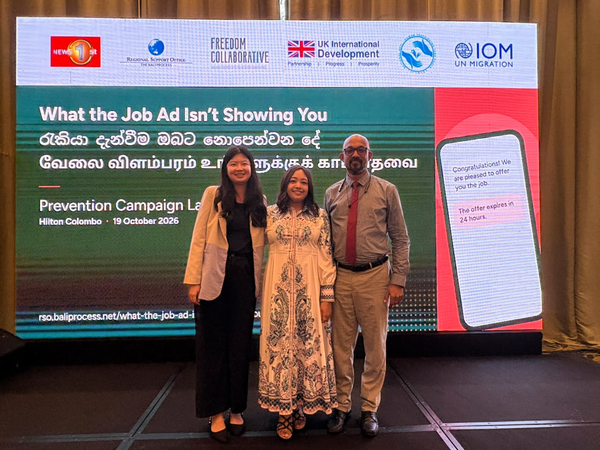
These principles have informed our What the Job Ad Isn’t Showing You campaign, developed in partnership with the Regional Support Office of the Bali Process and the International Organization for Migration (IOM), with support from UK International Development. The campaign aims to prevent trafficking for forced criminality into cyber-scam centers by equipping prospective overseas jobseekers with practical information to recognize deceptive recruitment practices and make informed decisions before accepting employment or traveling abroad.
Its development involved civil society organizations, survivors, and survivor-led groups across East Africa and South Asia, through consultations and collaborative workshops. These engagements helped identify common recruitment tactics, locally relevant warning signs, and opportunities for earlier intervention. A key lesson was the need to move beyond simply advising people to be cautious of suspicious job offers, towards highlighting specific, recognizable red flags that can help them assess employment opportunities and make safer decisions.
The panel also highlighted the importance of stronger regional cooperation, given the transnational nature of trafficking into cyber-scam compounds. Civil society organizations can help connect intelligence gathered at community level with wider regional prevention and policy discussions, and their insights are vital to developing more responsive measures and identifying gaps in existing protection systems.
Finally, the discussion considered how to measure the effectiveness of prevention initiatives beyond conventional outreach indicators, such as audience reach, campaign impressions, and materials distributed. While these metrics help assess visibility, they do not necessarily show whether messaging influences decisions or reduces vulnerability to exploitation. Mallika therefore highlighted the importance of incorporating behavioral change indicators into monitoring and evaluation, including whether prevention efforts contribute to earlier identification and intervention through community reporting, civil society referrals, and stronger cooperation with relevant authorities and private-sector actors.
Here’s a roundup of other noteworthy news and initiatives:
A Reuters investigation reports that the U.S. Department of Justice has yet to award approximately 75 per cent of anti-trafficking grants appropriated by Congress for fiscal years 2025 and 2026, delaying more than US$130 million in funding for survivor support and law enforcement programs. According to findings released by Senator Richard Blumenthal, the delays have forced organizations to reduce or close services, including legal assistance, shelter, and counseling. The Justice Department says applications are under review, while advocates warn that prolonged funding gaps are placing trafficking survivors at greater risk.
The UK Government has proposed removing the five-working-day notice period currently given to people whose asylum claims and appeals have been rejected, allowing the Home Office to carry out removals without further warning for up to six months. As reported by the BBC, ministers argue the change would prevent last-minute appeals from delaying removals, while the Refugee Council warns that the measure could cause unnecessary distress and anxiety, and calls for greater emphasis on supported voluntary returns.
The Organization for Security and Co-operation in Europe (OSCE) has published a new issue brief examining human trafficking for exploitation in armed conflict, with a particular focus on the legal status of foreign nationals recruited into combat roles. The analysis explores the ways in which international humanitarian law, international criminal law relating to mercenary activity, and anti-trafficking frameworks intersect, highlighting the complexities of identifying and protecting trafficking victims involved in hostilities.
Amnesty International’s new briefing finds that migrant workers in Amazon warehouses in Saudi Arabia continue to face exploitation despite improvements in recruitment practices, accommodation, and access to grievance mechanisms. Workers from India and Nepal reported excessive productivity demands, unpaid periods between assignments, and restrictions on changing jobs or leaving the country, highlighting the risks created by Amazon’s reliance on third-party labour suppliers within Saudi Arabia’s kafala system. Amnesty calls on Amazon to move towards direct employment and strengthen worker protections, while urging Saudi authorities to dismantle the sponsorship system.
A new investigation by Mekong Independent documents allegations of torture, forced labour, and deaths at Cambodia’s Long Bay Dara Sakor scam compound, drawing on accounts from former security guards and local residents. Former guards described being instructed to prevent escapes, physically punish workers, and recapture those who fled, while residents reported discovering bodies near the site. Although authorities say raids have dismantled scam operations in the area, the testimonies raise serious questions about accountability for abuses and the protection of trafficking victims.
Walk Free and its partners have published a new advocacy guide for faith leaders and frontline organizations in Kenya, outlining practical approaches to identifying forced labour, supporting survivors, and strengthening community-led advocacy. Developed with Azadi Community, the Inter-Religious Council of Kenya, and Global Freedom Network, the guide emphasizes safe reporting and referral pathways, meaningful survivor participation, and stronger government accountability. It also calls for improved labour inspections, recruitment oversight, a national forced labour policy, and ratification of the ILO’s 2014 Forced Labour Protocol.
On 2 December, Justice & Care and Sheffield Hallam University will launch a major new UK study exploring how to better prevent and respond to child sexual exploitation among care-experienced girls and young women. To mark the launch, they are hosting an in-person symposium near Vauxhall, London, bringing together people from across frontline practice, policy, research, and funding, alongside survivors and care leavers. To register attendance, please email hello@justiceandcare.org
The Global Initiative Against Transnational Organized Crime (GI-TOC) has launched a call for proposals offering grants to civil society organizations working to address organized crime in the Mekong region. The funding will support collaborative, community-led projects tackling illegal drugs, financial crime, and child sexual exploitation in Cambodia, Laos, Myanmar, Thailand, and Vietnam, with a deadline of 7 December 2026 for submitting pre-application questionnaires.