East African CSOs draw on frontline insights for a new prevention project
Freedom Collaborative convenes East African practitioners for a new prevention initiative, an HRC briefing shows how the scam-compound ecosystem adapts to enforcement, and Freedom Fund helps Bangladesh’s undocumented children get birth certificates.
Freedom Collaborative, in partnership with the Regional Support Office of the Bali Process (RSO), has launched a new project funded by the UK Foreign, Commonwealth & Development Office focused on preventing trafficking for forced criminality into Southeast Asian cyber-scam centers. The initiative will concentrate on East Africa, the Middle East and South Asia – key source and transit routes into Southeast Asia – and will leverage Freedom Collaborative’s civil society trust, survivor-informed framing, and grassroots insight together with RSO’s regional legitimacy, policy access, and government engagement pathways.
Co-implemented by Freedom Collaborative, RSO, and the International Organization for Migration (IOM), the initiative is the first of its kind to focus on prevention in source and transit countries as it relates to trafficking for forced criminality into Southeast Asian cyber-scam centers specifically. The project represents a strategic shift towards upstream prevention in source countries, addressing gaps in responses that have to-date focused largely on rescue, investigation, and repatriation. It centers on strengthening coordination across the prevention ecosystem at recruitment, visa application, and departure stages, where early intervention can occur before exploitation takes place.
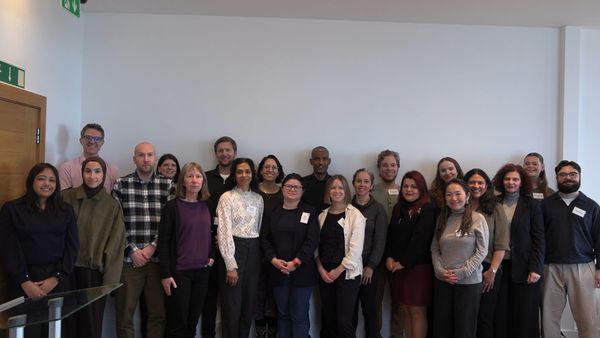
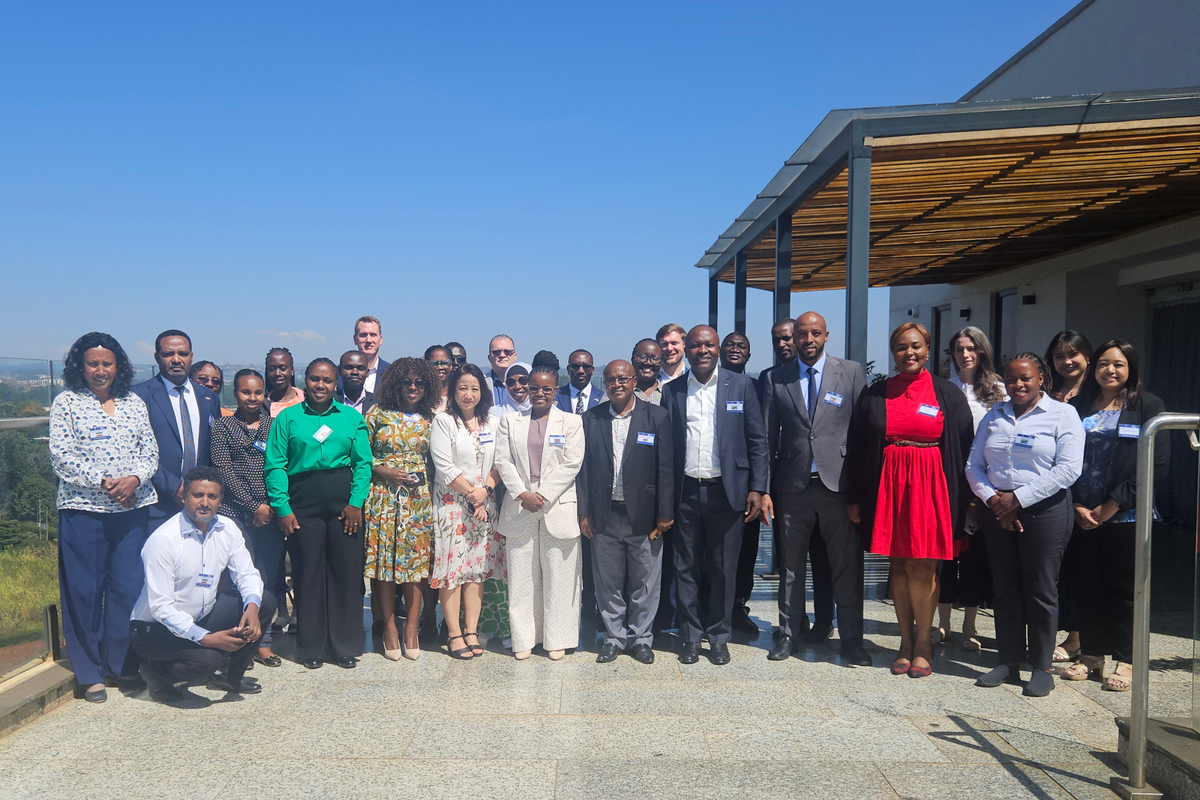
For its first event earlier this month, the team convened an ideation workshop in Nairobi, bringing together anti-trafficking civil society organizations (CSOs) on the frontline of the growing East Africa-Southeast Asia trafficking corridor, from Kenya, Ethiopia, Tanzania, and Uganda. Freedom Collaborative’s long-standing relationships with grassroots CSOs, survivor leaders, and practitioners enabled it to bring together actors who may not typically be in formal regional policy spaces and create an environment in which they felt safe to speak candidly about the current reality. This intelligence and real-time insight is crucial in the development of an effective prevention campaign based on what CSOs are seeing on the ground.
Participants, including members of our Trafficking for Forced Criminality Response Working Group, worked on a co-creation process for a prevention campaign, sharing frontline perspectives shaped by their direct engagement with affected communities. To start with, they explored recruitment patterns such as deceptive online job advertisements and the role of intermediary brokers, as well as the growing influence of emerging technologies in facilitating trafficking. They also reflected on survivor experiences, including insights from our Project Coordinator Jalil Muyeke, a survivor of forced criminality and advocate for community-based solutions.
Through facilitated ideation labs, small groups then developed prevention campaign concepts designed to disrupt recruitment at multiple points: online platforms such as social media and messaging apps, airports and transit hubs, and within communities where recruitment occurs. Participants mapped trusted messengers and influential community actors, identified key communication touchpoints, and role-played scenarios, for example as migrant job-seekers or family members, to refine tone, clarity, credibility, and cultural resonance. Ideas were stress-tested through peer-review sessions, ensuring messaging was survivor-informed, culturally grounded, and practical for real-world rollout. Overall, the workshop strengthened cross-border collaboration and laid the groundwork for next steps, including piloting campaign prototypes such as social media content and airport materials for regional testing and adaptation.
Alongside this, Freedom Collaborative and RSO convened visa-issuing officers from Indonesia, Malaysia, the Philippines, and Thailand to exchange insights on travel patterns from East Africa and the role of deceptive recruitment in shaping outbound movement. In parallel, the partnership brought together 30 immigration officers in Kenya to strengthen their capacity to identify trafficking indicators within existing procedures.
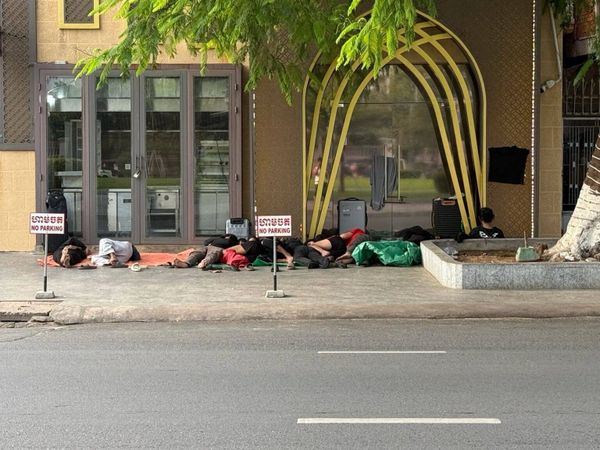
The project was launched amid the escalating crisis in Cambodia, as law enforcement raids on scamming compounds leave workers, including trafficking victims, without support, safe accommodation, or clear pathways to identification and repatriation. In the absence of protection mechanisms, individuals exiting compounds face a heightened risk of retrafficking while, more broadly, vulnerable populations worldwide continue to be targeted and trafficked into scam centers across Southeast Asia. Despite government crackdowns, online scam operations continue to thrive because the criminal networks, leadership structures, and digital and financial systems that sustain them remain largely intact.
Here’s a roundup of other noteworthy news and initiatives:
A new briefing by Humanity Research Consultancy (HRC) explains a shift in the scam-compound ecosystem towards a more decentralized service-based model, with individuals openly advertising fraud services and third-party Telegram guarantee marketplaces continuing to operate. This suggests enforcement against physical compounds is pushing the industry to professionalize and fragment rather than collapse.
Crypto payments, especially stablecoins, are increasingly being used in organized human trafficking networks, from forced-labour scam compounds to prostitution rings, with transactions growing about 85 per cent in 2025 and reaching hundreds of millions of dollars annually. The activity often occurs openly on messaging platforms, and while blockchain tracing offers investigators visibility, critics argue that companies could do more to stop the abuse.
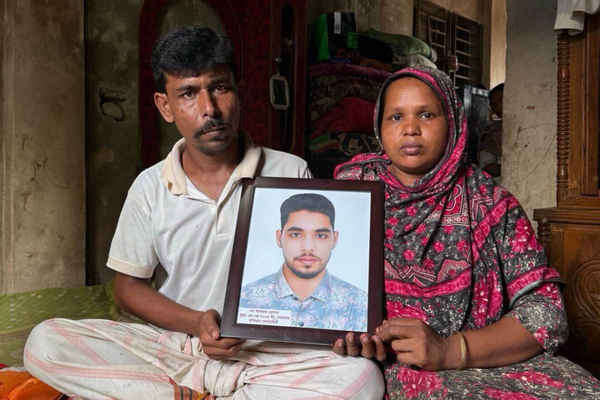
Congratulations to Freedom Fund and local civil society partners, whose advocacy uncovered an overlooked legal provision allowing children in Bangladesh’s brothel communities to receive birth certificates without naming a father. The change grants access to schooling, voting rights, and legal protection, helping reduce trafficking vulnerability after years of legal invisibility.
A new U.S.–Taiwan trade agreement contains provisions addressing forced labour risks, including an import ban tied to U.S. determinations and a prohibition on worker-paid recruitment fees. However, as Transparentem observes, unclear rules around broker/service fees and freedom of association could still leave migrant workers vulnerable without strong enforcement.
This analysis from the NYU Stern Center for Business and Human Rights notes that companies often respond to human rights abuses by terminating suppliers rather than addressing conditions, which can leave workers without remedy and drive harms out of view. It suggests effective remediation depends on sustained engagement and collaboration rather than “cut-and-run” de-risking.
The Danish Institute for Human Rights invites participants to a 3 March webinar launching the Human Rights and Environment Explorer, a free searchable database compiling treaty-body commentary and case law on states’ environmental human-rights obligations. The tool is designed to support advocacy, research, policymaking and strategic litigation by making environmental human-rights standards easier to access and apply.
Justice & Care and Sheffield Hallam University are conducting confidential research to understand what effective early support looks like in preventing the exploitation of care-experienced children and young women in the UK, and is seeking care-experienced young women (up to 25 years) who have experienced exploitation and feel emotionally ready to share their insights. Participants must be British nationals, have ongoing support, and not be involved in live investigations or court proceedings. Participation is voluntary, confidential, and paid. For more information, contact p.hynes@shu.ac.uk or Hannah.miller@justiceandcare.org