Cambodia’s scam compound crackdown exposes a protection bottleneck
Enforcement actions against scam centers must be matched by support for victims, OSCE’s report finds low conviction rates despite rising victim identification, and the FIFA Men’s World Cup could expose fans and others to rights abuses.
Our new briefing paper, published today, examines the way in which recent enforcement actions against cyber-scam compounds in Cambodia have exposed a critical gap between response efforts and real-world conditions. As large numbers of individuals leave exploitative sites, frontline actors report that the systems required to identify, protect, and repatriate survivors are not in place at the scale required. What is emerging is no longer a protection gap in principle, but a capacity bottleneck in practice.
Civil society partners and practitioners working on the ground estimate that thousands of individuals have exited scam compounds in recent months, including individuals from Southeast Asia, South Asia, Africa, and other regions, with practitioners reporting that African nationals now represent the largest group of those stranded without viable pathways for return. However, in the absence of a consistent victim identification framework, many of those leaving are not formally recognized as victims of trafficking. Instead, they are treated as immigration violators or deportees. This classification has immediate operational consequences – without victim status, individuals are unable to access assistance from international organizations such as IOM, including support for return travel, and are instead expected to arrange their own departure.
Practitioners also highlight structural constraints in the operating environment, noting that current responses are primarily focused on the removal of foreign nationals, rather than their identification and protection as victims of trafficking.
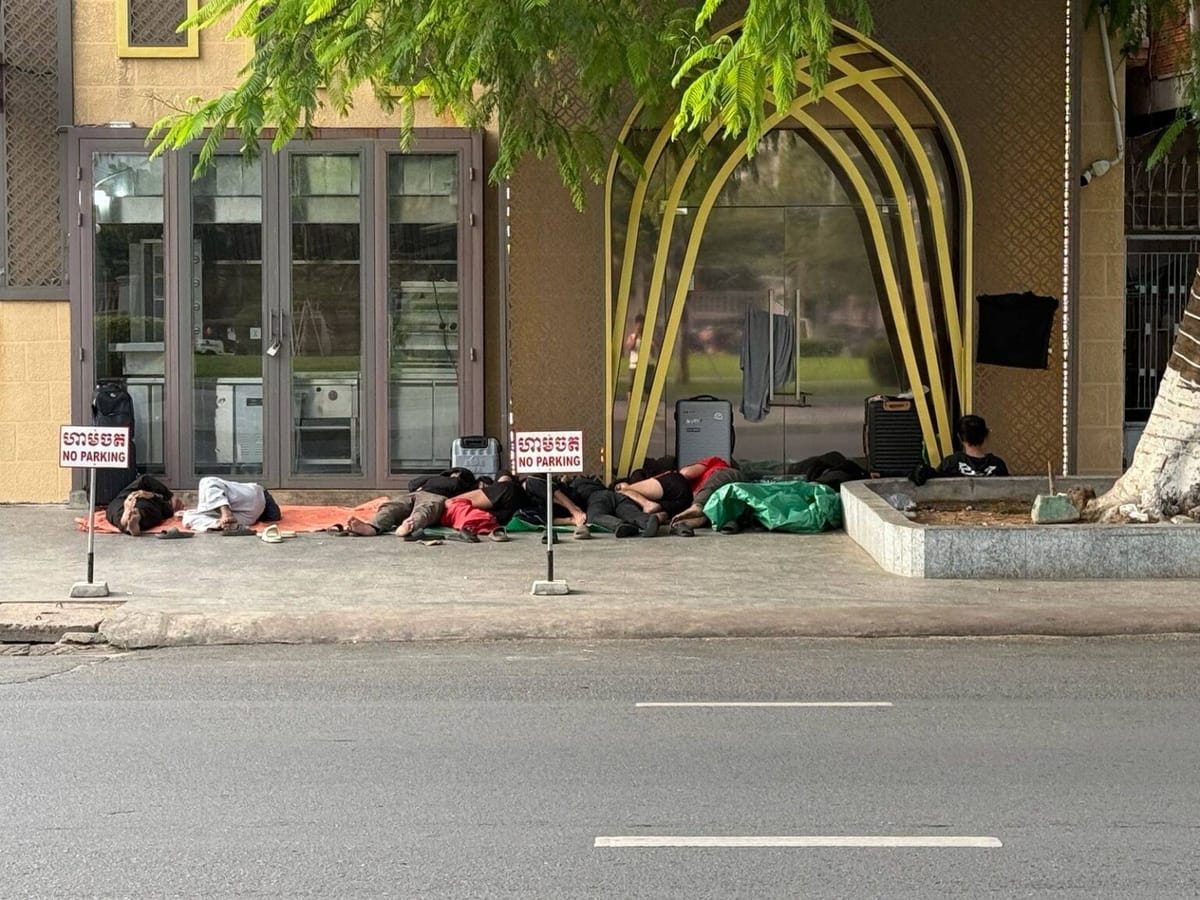
This has made the moment at which individuals exit exploitation the primary point of system failure. Survivors often leave compounds without passports, money, or legal status, and must rely on a small number of civil society actors to coordinate support. Practitioners describe managing large caseloads across multiple nationalities, while also responding to ongoing requests from individuals still inside compounds. With extremely limited formal shelter capacity available, many survivors are housed through unofficial arrangements or remain in precarious situations, including on the streets, without consistent access to food, healthcare, or basic services.
Frontline responders also report functioning in an increasingly constrained environment. Individuals leaving compounds are frequently treated as having engaged in criminal activity, and this framing can discourage assistance to those stranded without documentation or legal status. At the same time, coordination between authorities, embassies, and service providers remains fragmented, further limiting the ability to deliver support at scale.
Repatriation has emerged as the central bottleneck. In many cases, survivors are required to arrange and fund their own return travel, despite leaving exploitative environments without financial resources. Governments are, in most cases, not covering repatriation costs, and there is no coordinated funding mechanism to support large-scale returns. Practitioners report that visa overstay waivers are being granted on a time-limited basis, in some cases requiring individuals to leave the country within days, creating urgent pressure. At the same time, flight availability remains limited and costs have increased significantly. Tickets to some destinations, particularly in Africa, can exceed US$2,000, reflecting both distance and broader pressures on travel routes, including disruptions to flight corridors through the Middle East. These constraints have made departure unattainable for many, even when documentation is secured and individuals are ready to leave.
These challenges are particularly acute for certain groups. Practitioners report that large numbers of survivors from African countries, including Ghana, Uganda, and Kenya, remain stranded with limited consular support and few viable pathways for return. In contrast, some countries, including Brazil, Ecuador, and the Philippines, have been able to organize repatriation for their nationals, highlighting uneven response capacity across countries of origin.
Despite visible enforcement activity, there is limited evidence that criminal networks are being dismantled. Practitioners report continued adaptation, including the relocation of workers, infrastructure, and operations across the region. As a result, while individuals are moving out of specific compounds, the broader system sustaining scam operations remains intact. These developments highlight a structural challenge at the core of the response – while enforcement actions have created visible disruption and enabled individuals to leave exploitative environments, they have not been matched by investment in the systems required to identify, process, and support survivors at scale, or protect them from further exploitation.
Addressing this bottleneck will require strengthening victim identification processes, expanding civil society response capacity, and establishing coordinated funding and logistical mechanisms for repatriation. Without these measures, enforcement actions risk continuing to generate displacement at scale without delivering meaningful disruption to the networks responsible.
Here’s a roundup of other noteworthy news and initiatives:
The Organization for Security and Co-operation in Europe (OSCE) 2026 Survey Report, launched last week, finds rising identification of trafficking victims across the region, driven by improved detection, with labour exploitation now the most prevalent form and forced criminality among the fastest growing. However, it warns of persistent implementation gaps, low conviction rates, and a widening digital divide as traffickers increasingly use advanced technologies, highlighting ongoing failures to translate legislative progress into effective protection and enforcement.
Amnesty International warns that the 2026 FIFA World Cup risks exposing fans, migrants, and local communities to heightened human rights abuses, particularly linked to aggressive immigration enforcement, mass detention, and restrictions on protest in host countries including the United States, Mexico, and Canada. It highlights systemic risks including racial profiling, displacement, and repression of civil society, raising concerns that without urgent safeguards the tournament could exacerbate exploitation vulnerabilities and undermine protections for at-risk groups.
Meanwhile, this case report highlights the detention of an alleged trafficking survivor by U.S. Immigration and Customs Enforcement, raising concerns about due process violations and the treatment of victims within immigration enforcement systems in the United States. The case reflects broader trends under recent policy changes, with increasing reports of trafficking survivors being detained or deported despite legal protections, potentially undermining victim identification, cooperation with law enforcement, and access to protection.
A coalition of NGOs has warned the UNHCR Executive Committee that Europe’s asylum landscape is increasingly shaped by externalization policies, shrinking civic space, and funding shortfalls, with rising risks of refoulement, expanded detention – including of children – and weakened access to legal protection. It highlights critical protection gaps, including statelessness, declining child protection systems, heightened trafficking risks, and cuts to gender-based violence services, warning that current EU Pact implementation could drive systemic rights violations unless stronger accountability, independent monitoring, and sustained investment in community-led protection are put in place.
The International Organization for Migration and the Riyadh-based Princess Alanood Foundation have signed a new agreement to expand cooperation on counter trafficking, humanitarian protection, and capacity building, with a focus on improving identification and referral of trafficking cases. The partnership signals increased investment in training, awareness, and youth engagement in humanitarian action, while reinforcing global policy commitments under the migration compact, and positioning Saudi actors more prominently in international anti-trafficking efforts.
A new analysis highlights the expansion of Chinese organized crime networks in Chile, where groups such as the “Bang Clan” are using legitimate businesses to mask activities including human trafficking, labour exploitation, and drug operations. It points to increasingly sophisticated, low visibility criminal models, including tech-enabled scams and transnational drug distribution, raising concerns about exploitation risks for migrants and gaps in law enforcement capacity to respond to complex, embedded trafficking networks.
The latest annual report from the Centre for Child Rights and Business highlights expanded efforts in 2025 to scale child labour prevention and remediation through collective action models and deeper engagement in lower tier supply chains where risks are highest. It points to a shift towards more practical, upstream interventions including safe pathways for young workers and increased focus on family friendly workplace measures as core to reducing exploitation risks.
Applications are open for side events at the Freedom from Slavery Global Forum 2026, with submissions due by 15 April, on themes including protection systems, supply chains, survivor engagement, accountability, criminal justice, and migration governance.