The reintegration gaps that heighten the risk of re-trafficking
East African CSOs join discussions on reducing vulnerability to re-trafficking, the U.S. investigates dozens of countries over forced labour in supply chains, and the use of AI and crypto for exploitation is highlighted at the Global Fraud Summit.
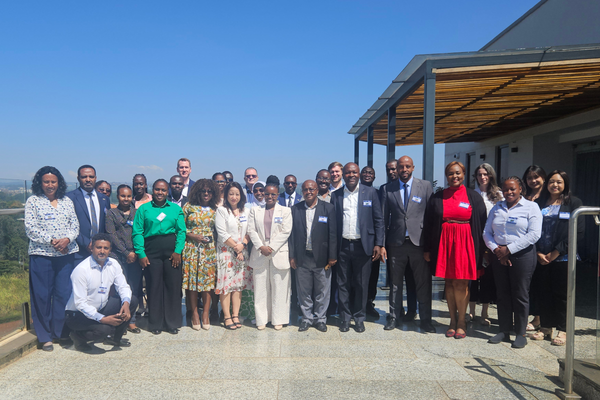
The prevalence of re-trafficking and the response gaps that can drive it have emerged as key findings from our East Africa routes mapping report, and remain a central focus of ongoing discussions with CSOs and other stakeholders across the region. The report, produced in partnership with the East and Horn of Africa Anti-Trafficking (EHAAT) Network, analyzed nearly 400 trafficking cases submitted by civil society organizations (CSOs) between January 2024 and April 2025. Among cases in which previous trafficking history was recorded, nearly half of individuals had been trafficked before.
While this figure is striking, re-trafficking remains poorly documented in official statistics – not only in East Africa but globally. Most trafficking data systems are designed to identify victims at a single point in time rather than track long-term outcomes after they leave exploitation. The hidden nature of trafficking, fragmented data systems, and survivors’ fear of engaging with authorities all contribute to the lack of reliable figures. As a result, repeat exploitation often remains largely invisible in official records, even as practitioners encounter it regularly in their work.
The latest edition of the report, created with support from the Better Migration Management Programme and funding from the EU and Germany, also expanded its focus to include information on survivor outcomes. Participating CSOs reported on the types of support survivors received, whether they were referred for services or successfully reintegrated, whether they had access to compensation, and the barriers they faced when seeking assistance. The aftercare gaps highlighted in this data help explain why re-trafficking appears so frequently within this group of cases.
One major challenge involves return and repatriation. When East African nationals are trafficked across borders, bringing them home can be difficult and delayed. Many governments in the region lack dedicated budgets for repatriation flights for trafficking survivors, creating logistical and financial barriers. In practice, a small number of frontline CSOs often shoulder the majority of these costs in order to facilitate survivors’ return.
Even after survivors come home, reintegration support is often limited. CSOs across East Africa face overwhelming caseloads, and the relatively small number of organizations providing specialized anti-trafficking services creates additional pressure. Furthermore, not all CSOs have the capacity to provide comprehensive reintegration support, leaving service gaps even in areas where organizations are present. Coordination challenges can further complicate reintegration efforts – limited communication between destination countries, East African authorities, and civil society actors can leave organizations scrambling to mobilize support at short notice.
CSOs also report significant challenges in facilitating survivors’ access to justice. Limited information sharing, the complexity of cross-border trafficking cases, and survivors’ often impaired ability to recall details of their experiences can reduce the likelihood of successful prosecution. Criminal justice actors frequently lack sufficient resources or the specialized capacity to handle trafficking cases effectively, meaning perpetrators are rarely held accountable.
Social stigma creates an additional barrier to reintegration – feelings of guilt and shame may discourage some survivors from seeking or accepting support services. This dynamic appears particularly pronounced among male survivors, who may face strong social expectations to support their families financially. In the dataset, 61 per cent of male clients were reported to have been trafficked before, compared with 36 per cent of females. While these figures reflect only the reported cases in this study, survivors confirm that returning home without financial resources can create intense pressure that sometimes pushes people back into exploitative situations.
The report shows that re-trafficking rarely has a single cause, highlighting instead the compounding nature of vulnerability. For instance, all individuals who reported family instability or peer influence were re-trafficked. Although these findings are based on a very small number of cases, they demonstrate a marked contrast with cases in which the primary vulnerabilities were economic – these showed significantly lower re-trafficking rates of around 50 per cent.
While these figures cannot establish causality, they underscore the importance of recognizing the complex and intersecting risks survivors may face after leaving exploitation. The findings highlight the need for stronger long-term reintegration support, including trauma-informed services, individualized reintegration planning, and sustained follow-up after identification or return. Without these measures, many survivors remain vulnerable to falling back into the same cycles of coercion and exploitation they had hoped to escape.
Here’s a roundup of other noteworthy news and initiatives:
The U.S. Trade Representative’s office has launched investigations into 60 countries over alleged failures to address forced labour in supply chains, signaling a more assertive use of trade enforcement where voluntary corporate action has fallen short. While this move could increase pressure on governments and companies, its impact will depend on whether measures go beyond tariffs to support worker-centered remediation and build the capacity of states, labour groups, and civil society to identify and address forced labour.
A new threat assessment by INTERPOL, launched at the Global Fraud Summit, warns that AI-enabled fraud – including sextortion and crypto scams – is rapidly expanding and increasingly intertwined with human trafficking, cybercrime, and forced criminality in globally dispersed scam centers. The report also highlights growing law enforcement coordination, including new task forces and tools, while calling for stronger cross-sector action to disrupt fraud networks and address their human and financial harms.
And a paper by the Organization for Security and Co-operation in Europe (OSCE), also presented at the Global Fraud Summit, examines how cryptocurrencies are being used to facilitate trafficking-related activities, including payments for child sexual exploitation and the financing of cyber-enabled scam compounds where victims are forced into criminality. It highlights how AI and blockchain are enabling traffickers to scale operations and move funds across borders, while identifying regulatory gaps and proposing practical guidance to strengthen detection and investigation.
A report by the UK House of Commons Home Affairs Committee warns that proposed “earned settlement” reforms, including extending routes to settlement to up to 10 or 15 years, risk increasing exploitation, poverty, and insecurity among migrant workers and their families. The committee highlights particular concerns for careworkers and children, noting that longer employer-tied visa pathways may deepen power imbalances, raise child poverty, and create barriers to integration despite potential short-term fiscal gains.
This article in Foreign Policy argues that restrictive migration policies under the Trump administration are increasing migrants’ reliance on smugglers, exposing them to heightened risks of exploitation, abuse, and trafficking along increasingly dangerous routes. The author contends that enforcement-focused approaches are driving irregular migration underground and calls for a shift toward rights-based, protection-oriented responses that address migrants’ vulnerabilities.
A new bench book developed by UNODC, in partnership with IOM, provides practical guidance for judges and prosecutors in Bangladesh on strengthening criminal justice responses to human trafficking cases. Supported by the European Union and KOICA, the resource aims to enhance the effectiveness of Anti-Human Trafficking Tribunals in handling trafficking prosecutions.
The U.S.-Asia Law Institute at NYU School of Law will host an event on 17 April to explore whether U.S. courts can provide remedies for forced labour in Asia under the Trafficking Victims Protection Reauthorization Act, including its use in cases involving global supply chains. The discussion will bring together legal experts to examine recent cases and ongoing debates over the law’s extraterritorial reach; register here to attend in person or online.