Survivor insights highlight protection gaps for victims of forced criminality
Freedom Collaborative’s survivor expert joins a discussion on scam-center trafficking, ATEST praises a new report from the U.S. Advisory Council on Human Trafficking, and Bangladesh strengthens its anti-trafficking legislation in line with UN protocols.
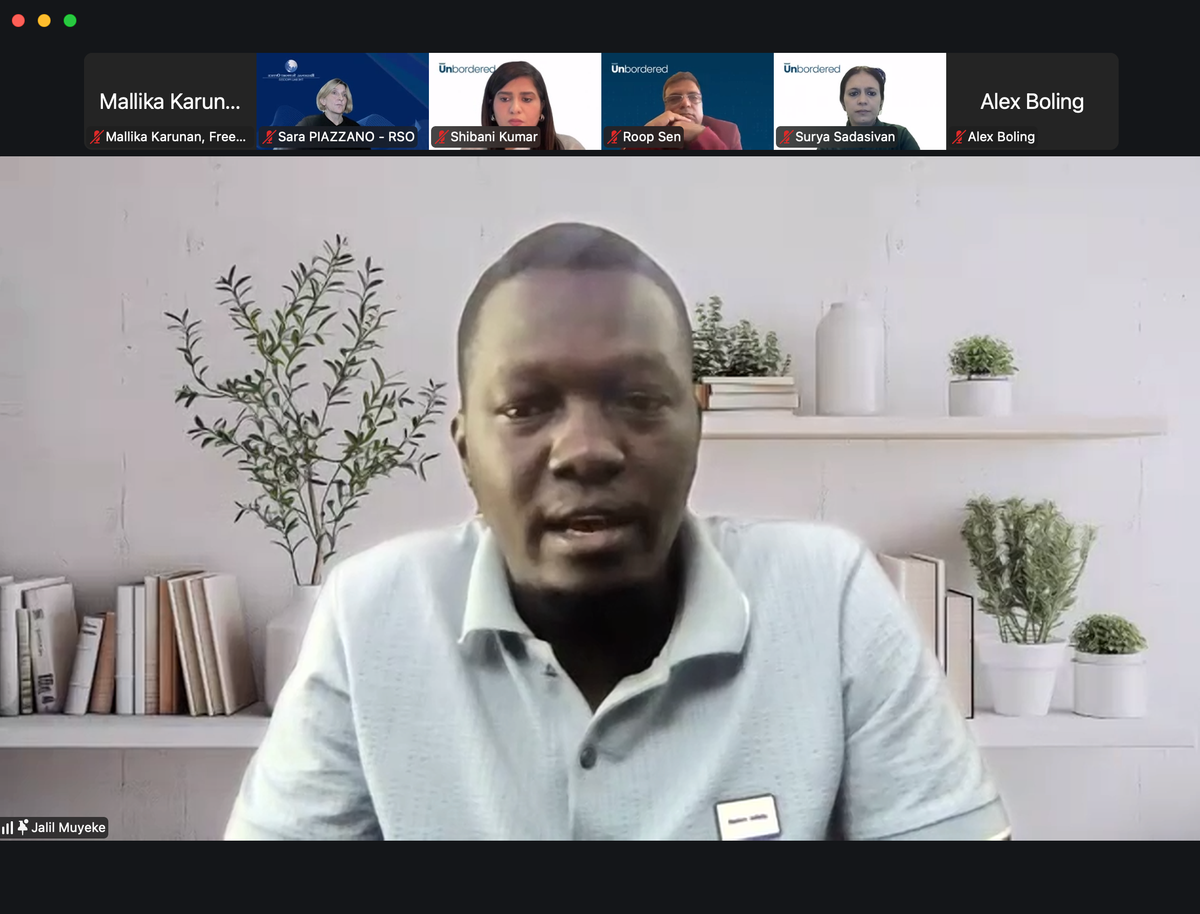
Experts on trafficking for forced criminality came together last month for a regional conversation on the lived realities behind scam-center exploitation and the need for sustained cross-sector collaboration to build an effective response. Hosted by social development organization Torii International as part of its “Unbordered” initiative, the discussions examined the lack of protection and support available for people leaving cyber-scam compounds, and the way in which they are frequently misidentified as criminals rather than recognized as victims of trafficking.
Freedom Collaborative’s project coordinator Jalil Muyeke, a survivor of forced criminality who now supports survivor reintegration and advocates for community-based solutions, contributed insights grounded in lived experience and frontline work. Having navigated the system as a victim and later supported others through recovery, he reflected on both the prevention failures that allow trafficking into scam compounds to persist and the protection gaps survivors later encounter.
Jalil emphasized the lack of targeted education that could help people recognize and avoid trafficking risks. While fraudulent job advertisements generate significant profits for technology platforms, regulation alone is unlikely to prevent recruitment, he argued. Instead, there is a need for proactive outreach in schools and universities, particularly given that university graduates are frequently targeted. This is especially important, he noted, as recruitment often occurs through friends, relatives or trusted community members, making informed, independent judgment critical.
Protection gaps become even more pronounced once people leave scam compounds – actions taken under threat, surveillance and abuse are often misinterpreted as deliberate criminal behavior, shaping how cases are handled and whether individuals receive support. Jalil described the impossible choice he faced during processing in Thailand – either enter the months-long National Referral Mechanism (NRM) process for possible victim identification or accept immigration charges and deportation. With a choice between prolonged confinement in overcrowded, unsanitary and prison-like conditions, or swift repatriation, many survivors prioritize returning home as quickly as possible, he said. While grey areas exist within identification frameworks, current systems fail to reflect that the majority of people leaving scamming compounds are victims of trafficking, and most are sent home without support service referrals or guidance on where to seek help.
Repatriation, he observed, is frequently the most complex and destabilizing stage of the process. Many survivors leave their home countries due to financial hardship and return with nothing, often burdened by debt incurred to finance their journey home. Upon return, they face unemployment and intense social pressure, particularly in contexts in which men are expected to provide for their extended families. These pressures, combined with trauma and lack of support, can push some survivors back into exploitative situations, where basic needs such as food and accommodation are at least guaranteed.
Stigma further compounds the problem. Jalil noted that many survivors are reluctant to speak openly about their experiences, fearing blame or judgment for having been trafficked despite their high levels of education. As a result, knowledge about scam compounds remains limited in many communities, resulting in a lack of informed understanding and meaningful social support for those who return.
Jalil emphasized the central role of civil society organizations (CSOs) in responding to trafficking for forced criminality, arguing they are often the only actors equipped to provide sustained survivor-centered support. While governments frequently lack the capacity, political will or accountability to address survivors’ needs, CSOs continue to carry out much of the practical work. Supporting CSOs, he suggested, would be the most effective and realistic way in which to strengthen the response, particularly in contexts affected by corruption or limited resources. Without adequate investment in civil society, survivors are left navigating recovery alone, and opportunities to disrupt trafficking cycles are lost.
Here’s a roundup of other noteworthy news and initiatives:
Cambodia has extradited Chen Zhi, chair of the Prince Group, to China following his arrest. This marks the first time the country’s most prominent alleged cyber-scam figure has been removed, after years of assumed political protection. The case signals a potential shift in Cambodia’s tolerance of large-scale scam operations, following sustained international pressure including coordinated U.S. and UK sanctions and heightened regional scrutiny.
The Alliance to End Slavery and Trafficking (ATEST) has issued a statement applauding the 2025 report of the U.S. Advisory Council on Human Trafficking, commending council members for their survivor-led 10th-anniversary assessment and helping amplify the report following its low-visibility holiday-period release. The statement reinforces the report’s authority and urgency, highlighting the need for federal anti-trafficking efforts to address structural drivers of exploitation and meaningfully embed survivor leadership across policy and practice.
Bangladesh has enacted the Prevention and Suppression of Human Trafficking and Smuggling of Migrants Ordinance 2025, a landmark reform drafted by Justice & Care that clearly separates trafficking from smuggling, aligns national law with the UN Trafficking Protocol, and significantly strengthens investigative and prosecutorial powers. The law corrects long-standing systemic misclassification that undermined convictions, while introducing robust non-criminalization and protection measures for survivors. Justice & Care will now work with government and law enforcement partners to support effective nationwide implementation.
Recent research from the Foundation for Defense of Democracies documents how Russia’s “Alabuga Start” program recruits 18 to 22-year-old women from Latin America with promises of education and wages, then channels them into coercive, closely surveilled labour linked to drone production at SEZ Alabuga. The memo details deceptive recruitment practices, movement control, wage deductions, and working conditions consistent with forced labour in facilities producing Iranian-designed drones used by Russia.
This new research article argues that the world has moved with striking speed from “peak aid” to a credible post-aid era, driven by collapsing donor confidence, geopolitical realignment, and sustained cuts by major OECD donors. The analysis is notable for framing the current moment not as a temporary downturn but as a structural legitimacy crisis for Official Development Assistance (ODA), with profound implications for the ways in which global development cooperation will be financed and governed going forward.
The Mekong Club is seeking local consultants to translate and deliver in-person forced labour and responsible recruitment training for suppliers across six Southeast Asian markets in 2026. Interested experts are invited to get in touch directly to support context-specific, supplier-facing capacity building.