How foreign nationals are trafficked to Russia’s front lines in Ukraine
The EU Parliament adopts a resolution on trafficking linked to Russian military recruitment, GI-TOC reports a sharp rise in unaccompanied Sudanese children in Libya, and a Malaysian minister criticizes wage delays for migrant workers.
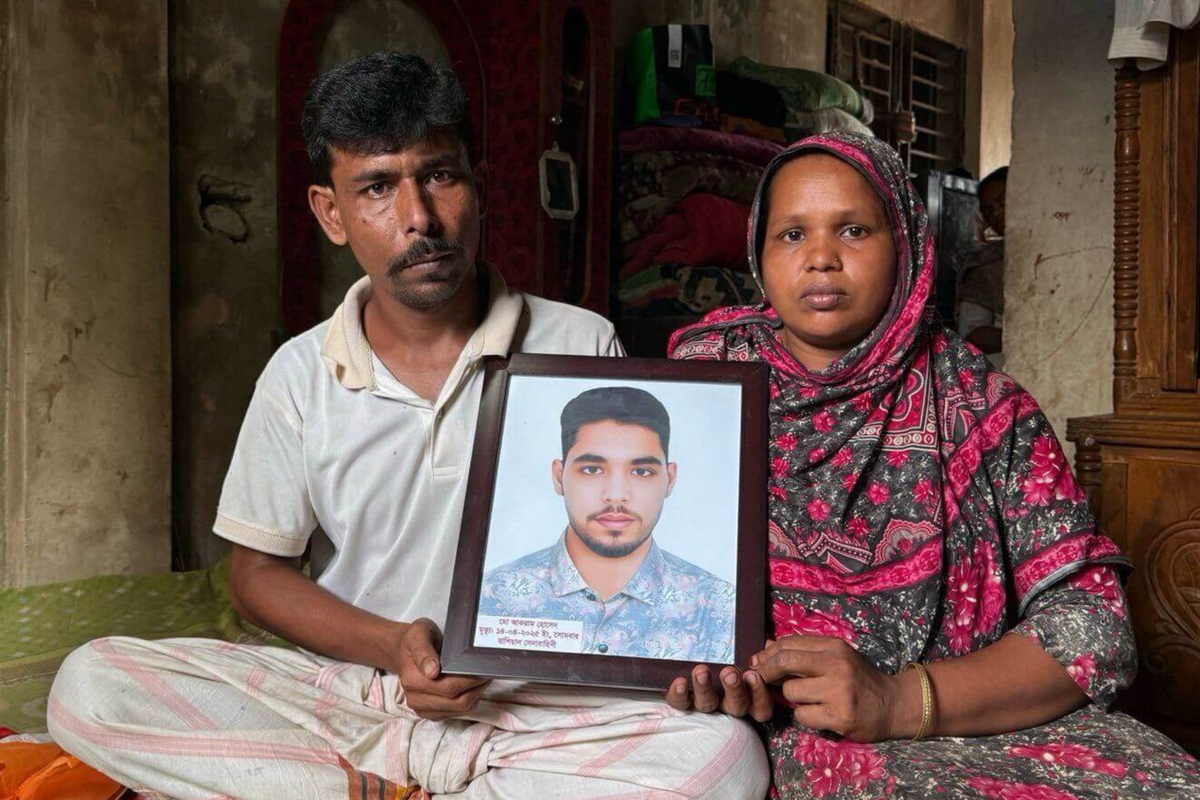
Russia is using deceptive practices and coercion to enlist thousands of foreign men from third countries, particularly across Africa and South Asia, to sustain its war against Ukraine, according to investigations and survivor testimonies. The issue is now the subject of a cross-party motion in the European Parliament, which warns these practices may amount to human trafficking, war crimes, and crimes against humanity.
A recent report by Fortify Rights and Truth Hounds documents how brokers systematically target individuals from low-income areas in Bangladesh, Nepal and Sri Lanka, mainly through social media platforms, with promises of civilian or non-combat jobs. Upon arrival in Russia, however, they are frequently stripped of their documents, denied pay, and deployed to the front lines with little or no training – survivors describe being injured by landmines and drone strikes, beaten by commanders, and threatened with death if they attempt to escape. Meanwhile, families are left in crushing debt after paying recruitment fees – often the equivalent of thousands of U.S. dollars – only to later receive news of a son or husband killed on the front lines.
While the report is mostly focused on Bangladeshi recruits, its findings and recommendations are relevant to Russia’s broader abusive recruitment practices in Africa, Asia, the Middle East, and Central Asia, the authors note. Further accounts indicate that hundreds of African women who were deceived into traveling to Russia for work are exploited in drone assembly factories under hazardous conditions.
Investigations suggest that Russian state-linked companies, intermediaries, and military structures facilitate or enable this recruitment, while Russia’s expanding influence in parts of Africa has coincided with an increase in such practices. Meanwhile, Russian officials and pro-government narratives have portrayed foreign recruits as willing, ideologically motivated fighters, while online campaigns frequently depict individuals receiving citizenship or embracing Russian culture as evidence of voluntary participation. However, survivor accounts tell a different story – many describe being deceived, coerced, or effectively “sold” into military service, documenting conditions consistent with trafficking and forced labour.
Despite clear indicators of trafficking, those caught in these systems are rarely identified as victims. Instead, they are processed through military or migration frameworks that lack even basic screening mechanisms. This represents a critical systems failure: individuals trafficked into conflict are not recognized as victims of exploitation, but treated as combatants or irregular migrants. As a result, they are denied access to protection, legal remedies, or safe return.
The European Parliament motion, which has a particular focus on Africa, calls on governments to address this gap by strengthening trafficking detection, warning citizens about fraudulent recruitment schemes, and facilitating the repatriation of affected individuals. It also urges authorities in targeted countries to dismantle recruitment networks, prosecute those responsible, and provide support and reparations to survivors and the families of those killed. It further calls on the Ukrainian Government to screen foreign fighters held as prisoners of war for indicators of trafficking and to work with international organizations to ensure victims receive protection.
Moreover, the proposal calls on social media platforms to take greater responsibility for identifying and removing content linked to deceptive recruitment, as online pipelines remain largely unchecked and allow traffickers and intermediaries to operate in real time with minimal disruption. It also urges governments to hold platforms accountable for failing to prevent exploitation facilitated through their services, highlighting the fact that brokers and contracting agencies currently operate with relatively low risk despite clear evidence of coercion, fraud, and abuse. This underscores the message from advocacy groups, who are calling for stronger enforcement against both private actors and the state-linked entities enabling these networks.
Finally, the European Parliament resolution strongly condemns the trafficking and coercive recruitment of foreign nationals and calls on Russia to immediately cease such practices and ensure the unconditional repatriation of affected individuals. It also urges the European Union and its member states to engage with countries of origin, support anti-trafficking efforts, and impose targeted sanctions on those responsible.
Here’s a roundup of other noteworthy news and initiatives:
A new report by the Global Initiative Against Transnational Organized Crime (GI-TOC) has found the number of unaccompanied Sudanese children in Libya rose sharply to around 10,000 by late 2025, highlighting evolving displacement routes via Chad and increasing exposure to smuggling networks. It underscores escalating, system-level exploitation risks inside Libya, including trafficking for ransom, forced labour, detention abuse, and coerced begging, warning of a growing “humanitarian time bomb” without urgent protection interventions.
This new MSF report, written with partners Save the Children and We Are Monitoring, warns that Poland’s proposed anti-trafficking framework risks institutionalizing unreliable and harmful medical age assessments, leading to migrant children being misclassified as adults and denied protection. It highlights growing concerns that these practices, already used at the Belarus border, are unethical, scientifically flawed, and could exacerbate pushbacks and protection failures for unaccompanied minors.
Atlanta’s 2026 FIFA World Cup Human Rights Action Plan has been criticized for lacking clear enforcement mechanisms, raising concerns it may fall short despite its anti-trafficking provisions. Critics also challenge the dominant focus on sex trafficking in event planning, pointing instead to the more prevalent but under-recognized risk of labour exploitation linked to increased demand for temporary work.
A recent review of the book “Advocacy, Inc.” explores the premise that increasing alignment between anti-slavery NGOs and corporate approaches may, in some cases, limit NGOs’ ability to address structural drivers of exploitation and advocate independently for workers. At the same time it notes ongoing debate within the field, highlighting both the risks of business-oriented strategies and the potential for more balanced, worker-centered and regulatory approaches.
French hotel group Accor has launched an internal and external investigation into allegations of child trafficking linked to its properties in Ukraine and other countries, following claims by a research firm that some hotels facilitated the transfer of Ukrainian children to Russia. The company denies any involvement, but the case has raised concerns about potential exploitation risks within global hospitality networks and the adequacy of existing safeguards. (Paywalled)
Malaysia’s human resources minister has called for swift enforcement action against a Johor-based company accused of delaying wages for migrant workers, with investigations revealing months-long payment delays affecting dozens of people. The case highlights the ongoing risks of wage exploitation, with significant unpaid salary claims filed by both migrant and local workers and authorities indicating continued monitoring and legal action.
A landmark probe into Australia’s New South Wales government procurement finds ongoing modern slavery risks in electric bus and lithium-ion battery supply chains, despite progress on due diligence frameworks (see reports). The findings highlight significant gaps in supplier oversight and call for a comprehensive, government-wide strategy to strengthen slavery-free sourcing as large-scale green investments accelerate.
Today, March 24, at 4pm EDT, a CSIS “State of Play” webcast will examine the wider economic, food security, and humanitarian impacts of the war with Iran, focusing on less visible consequences such as supply chain disruptions, displacement, and rising energy costs. The discussion will explore both the short and long-term implications of these intersecting crises. Register here.