A new report shows labour laws must be backed by practical safeguards
Uzbekistan’s labour reforms fail to protect farmers from abuse, a UN report details the lived experiences of scam-center trafficking victims, and the UK Government rejects recommendations guarding against migrant worker exploitation.
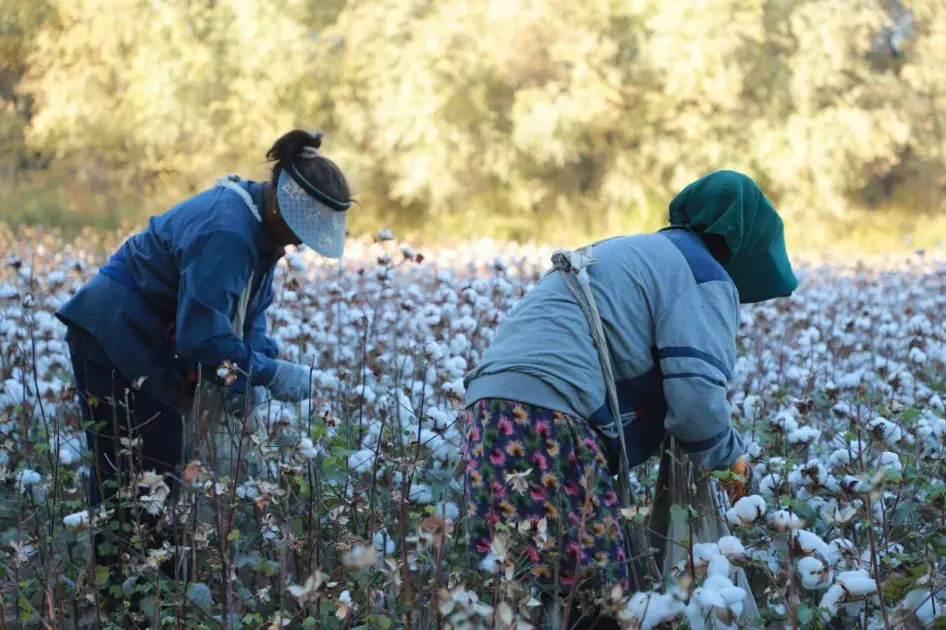
The Uzbekistan Government is violating the human and labour rights of cotton and wheat farmers despite recent agricultural reforms, according to a new report by Human Rights Watch and the Uzbek Forum for Human Rights. The report documents how a coercive state production system continues to subject farmers to abuses, even though the government has formally ended state-imposed forced labour and committed to agricultural sector improvements. This case illustrates a broader systemic challenge across sectors and countries where protective laws exist on paper but fail to translate into real change, allowing forced labour to persist despite stated intentions.
Over the past few years, Uzbekistan has eased direct state control over agricultural production and processing, taken steps to eliminate systemic forced labour, increased wages for cotton pickers, and strengthened labour inspection capacity. These reforms have produced noticeable improvements, but the remaining system of strategic crop cultivation and state-set production pressures continues to create conditions that leave farmers vulnerable to coercion.
Cotton and wheat farmers still operate under quota-based expectations on land leased from the government, with crops to be sold at centralized, fixed prices. When yields fall short of these targets, they face penalties, violence, or even detention. They also report that private cotton, textile and wheat companies often delay or withhold payments, which can lead to fines, financial hardship, or bankruptcy — yet authorities frequently fail to enforce contracts or legal rulings. Farmers who contest land seizures rarely find redress in courts and, even when judicial decisions go in their favour, local officials often ignore them. Together, these dynamics prevent cotton and wheat farmers from exercising meaningful control over their work, effectively making them subservient to the state, the report finds.
The situation in Uzbekistan illustrates a broader challenge: even when governments adopt protective laws, those laws may not go far enough if the legal and policy framework still leaves the system structured in a way that allows coercion to continue. Laws that reduce direct state control or create modest improvements cannot fully protect workers when power imbalances leave them with little real choice. Without reforms that align legal protections with the realities of work and access to remedies, rights exist only on paper.
Beyond systemic change, meaningful engagement with the very groups reforms are meant to protect is also critical. In Uzbekistan, for instance, farmers’ voices are often excluded from policy discussions, and independent farmer organizations are constrained or absorbed into state‑created bodies that lack genuine representation. Without effective freedom of association or collective advocacy, reforms can fail to address the lived realities of those at risk of forced labour. Empowering civil society and worker‑led organizations, and ensuring they can operate independently, helps translate legal standards into lived protections. Workers in supply chains across industries are better protected when they have real mechanisms through which to report abuses, participate in monitoring, and influence the design and implementation of regulations that affect their livelihoods.
A third major gap lies in addressing the economic and structural drivers of coercion – in Uzbekistan, quota systems, fixed pricing, and state‑determined production requirements create conditions where farmers have little margin for error or autonomy, making them vulnerable to coercive practices even if overt forced labour is formally banned. Instead, reforms must go beyond prohibitions and penalties to reshape economic relationships – pricing mechanisms that cover the cost of production, contract terms that protect small producers, access to competitive markets, and diversified economic opportunities that reduce dependence on exploitative systems. In other sectors, similar structural reforms, such as fair purchasing practices, transparency in subcontracting chains, and accountability for buyers and intermediaries, can reduce pressure on vulnerable workers to accept exploitative conditions.
To bridge the gap between intention and impact, governments and international partners can complement legal reforms with concrete institution‑building, transparency, and accountability measures such as: strengthening the independence and capacity of labour inspectorates and judicial bodies; creating inclusive, accessible grievance mechanisms; ensuring the active participation of workers and communities in monitoring, policy design and evaluation; and aligning economic policy with labour rights protections to alter the structural incentives that underlie forced labour risks.
Here’s a roundup of other noteworthy news and initiatives:
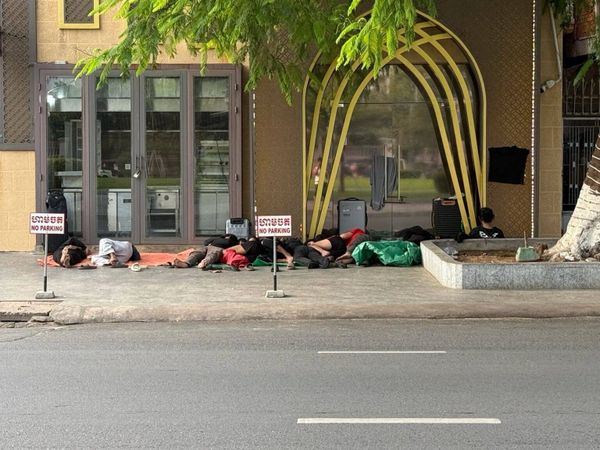
This recent UN Human Rights report deepens prior documentation of trafficking into scam centers with new survivor testimony, satellite imagery mapping, and evidence of escalating torture, coercion, and forced criminality across multiple regions. It also introduces a behavioural science and systems analysis of recruitment pathways and calls for explicit recognition of forced criminality and application of the non-punishment principle within anti-trafficking frameworks. Meanwhile, the death of a Cameroonian woman who escaped from a compound and traveled to Phnom Penh but was reportedly unable to access healthcare, has spread concern among workers trying to return home.
A new UN (BINUH/OHCHR) report documents the systematic trafficking of children by at least 26 Haitian gangs, detailing coercive and incentive-based recruitment pipelines targeting marginalized and displaced children, with gender-differentiated patterns of criminal and sexual exploitation. It calls for a shift from predominantly security-led responses to a prevention-focused, human rights–based framework that treats gang-involved children as trafficking victims and addresses structural drivers alongside accountability.
This investigation reports that the UK Government has rejected or diluted key recommendations from its own Migration Advisory Committee on reform of the Seasonal Worker visa, including proposals for guaranteed minimum pay and stronger enforcement to reduce debt bondage and abuse risks. Critics warn that without mandated employer-paid recruitment costs, meaningful inspection powers, and structural safeguards against tied-visa dependency, migrant farmworkers will remain highly vulnerable to exploitation, retaliation, and trafficking-related harms.
Abuses against migrants, asylum-seekers, and refugees in Libya amount to a systematic, profit-driven trafficking model involving armed groups and state-affiliated actors, with widespread arbitrary detention, torture for ransom, sexual violence, enforced disappearance, and mass graves documented. A new UNSMIL/OHCHR report calls for accountability, the release of arbitrarily detained migrants, and a moratorium on interceptions and returns to Libya, identifying detention and pullbacks as central to the exploitative system.
Development leaders are grappling with how to protect and sustain support for international cooperation in an increasingly security-focused world. Speaking on the sidelines of the Munich Security Conference (behind paywall), the GIZ Managing Director warned that German aid cuts risk undermining long-term global stability, arguing that scaling back development cooperation is short-sighted and will carry future geopolitical and security costs.
The Dignified Futures Network will launch on 25 February at 17:00 CET/11:00 EST, introducing a collaborative global platform advancing community-based, survivor-informed human trafficking research. The event will explore how research evidence can better inform community-led interventions and promote safe, meaningful participation across the research cycle.